
Previously by Jacqueline Steiger: 16 Gemstones Renamed Correctly
I have always considered myself a reader: always stuck in a book, always escaping into another world. As a child, I would read during dinner, at night under the covers, in the car. We had a rule that if I picked out a book at the bookstore, I could not start reading it until we exited, because my mother said she was tired of me “finishing the goddamn book ten minutes after we leave.” In second grade I got in trouble for reading during reading class — we were in the middle of one of Frog and Toad’s many benign adventures, and I had stopped listening to my classmates. The book hidden in my lap was The Giver. Faced with Jonas’s discovery of all the pain and ecstasy of the world, I had no fucks to give for Frog and Toad’s antics. My indignant second-grade self wanted to know what exactly was the point of school if not to, you know, read. I got a “red card,” the bane of all eager-to-please high-achieving students at my school, for failing to respond on my turn during a popcorn reading.
I could go into great detail about my love for words and language, wax poetic about the curve of a “u” before explaining how the Great Vowel Shift caused our orthographical representation of that sound to stray from its original, but a hundred people who read could also tell you that. The part of my story that involves reading and my love of words is familiar to every quiet girl who has ever identified with Matilda or Hermione, everyone who loves Jane Austen more than life. I became an actor, and later a linguist, and later a writer, for all of those familiar reasons. I believe in the transformative and powerful magic of stories and words and names. I could write endless missives about the beauty and intricacy of language. But you are here; you know. I am not alone.
What is different for me is my vehement dislike of listening to a book. I have always hated audiobooks. No matter how old I get, auditory media will always bring me back in time to one summer vacation during elementary school when I was recovering from eye surgery. I picture myself in the living room, curtains drawn, with a patch over my eye, listening to the Tales of the Old Republic cassettes. It will be days until I’m able to see again. Now, the room might be in a different house, the cassette tapes are now digital media, but the sense of being trapped inside my head — cut off from the world — is the same.
Unfortunately for me, history has repeated itself. I’m recovering from yet another surgery, eyes closed in the dark with the curtains drawn. Sith Lord Exar Kun has been replaced with comedy podcasts, and I’m not eight years old anymore, but I still feel like I haven’t escaped. I have a patch over my right eye again — not a cool black pirate-like one, either, but a pink and mesh medical one that makes me look as if I have a small colander attached to my face. I get a little more kindness when it takes a while to read a menu, a few double-takes when I’m out in public. Temporarily slipping into the space of the visibly disabled is uncomfortable but not unbearable; I’ll get to leave eventually, and I know that I’m one of the lucky ones. Lasers do leave scars on your eyeballs, but they’re only visible if the light catches them just the right way.
***
Have you ever seen one of those goggle-eyed babies or toddlers with glasses strapped to their faces? That was me from the age of six months onward. I was born seeing triple. I spent probably a good third of my childhood recovering from five surgeries for countless complicated-sounding eye problems: exotropia, myopia, amblyopia, strabismus, Duane’s syndrome. I wore patches on my dominant eye to strengthen my weak one, embellished with Aladdin and Jasmine stickers or felt cut-outs. I must have incited pity in mothers, but much of the time I felt like a tiny pirate — albeit one with a constant headache due to eye strain.
I can’t recall many of my childhood haunts, but I could guide you through the pediatric ophthalmology wing of the Jules Stein Eye Institute blindfolded. You go up the elevators, make a right, a left, and another right in a quick zigzag. Impressionist paintings hang on the walls — no portraits or landscapes to mock vision-impaired children, only the most soothing colors and paint strokes. Step through to Pediatric/Strabismus and you’ll see the carpeted castles on either side of the room, the old cartoons of Woody Woodpecker on the walls. The exam rooms have stuffed animals to focus on and a fly whose 3-D wings you are supposed to pinch, the bane of my 2-D existence. I can tell you that the worst flavor of gaseous anesthesia is bubble gum, and the best flavor of post-surgery-intubation popsicle is lemon-lime.
My grandfather and I would go for very long walks around the block that were fully immersive, tactile experiences. He would get reprimanded by my mom and grandma for letting me touch absolutely everything, no matter what: snails, leaves, flowers, beetles, candy wrappers, mud, rocks, rusty metal bits. Anything I wanted; nothing was off-limits to my tiny grasping hands when I was with my grandfather. Of course, touching every object ever is what allowed me to see, in my own way.
The edges of everything are always vaguely blurry — maybe that’s why I used to be so terrible with emotional boundaries? — but once I can feel an object’s dimensions, it takes on luminous clarity. That, or I can put it absurdly close to my face. If allowed I will touch your sweater, run my hand along every object on a shelf, put my face obnoxiously close to a painting so that I can see the form and not just greedily drink in the color.
I’ve never considered myself disabled or impaired; that feels like appropriation. I can see. I wear glasses, but so does half the world. The most recent procedure I had, however — an emergency one to prevent retinal detachment — has brought all my deeply-squelched quirks and neuroses around eyesight back to the surface. I have always had a strange relationship with my eyes, with vision. Now, once again, I’m that weird girl with the eyepatch, and I’m more drawn than ever to my childhood obsession with colors.
***
As a rule, I can’t tell people apart by their faces. Game Of Thrones is not a good show for me. Nor are most news programs, or any show during which a group of white men in suits quietly argue. Without my glasses, the faces of most people are merely blurs that emit words. I can see eyes, a nose, a mouth. All the facial features are there, but not different enough that I can tell you apart with them. I can’t count the number of times I’ve asked a friend or lover, “Hey, is that person [on the tv][across the street][behind us at a party] X person?” The answer is almost always “No,” and then I can often see in their eyes their whole concept of me as an intelligent observer crumble.
Mostly I explain this as being “face-blind,” as that has become a better-known concept. If you have particularly cool hair, a beard, facial piercings, or that one scarf you wear all the time, you make me feel safe. I know you and can recognize you. Haircuts and makeovers are my nemeses. My partner is bearded and pompadour’d, with a penchant for flannel; as a result I’m terrified of speakeasies, record shops, and microbreweries. I can imagine dozens of scenarios in which we’re walking around on a date and then I get distracted and lag behind. I hurriedly catch up, still chatting, and grab someone’s hand only to discover that I’ve latched onto some other hipster boy whose whimsical girlfriend I must now duel to the death due to my impertinence.
I tend to remember laughs, crooked smiles, and patterns of speech rather than facial characteristics. Faces are just a horribly inefficient marker of distinction for me. So I cheat: If I meet you and I know we’re going to interact again, you’re assigned a color based on your personality or my mood or the color of your hair or shirt. Some of the New-Age-ier circles that I run in like to say that it’s someone’s “energy,” or that I’m reading their “aura.” But it’s not that, exactly, since books and mugs of tea and philosophical concepts don’t have auras.
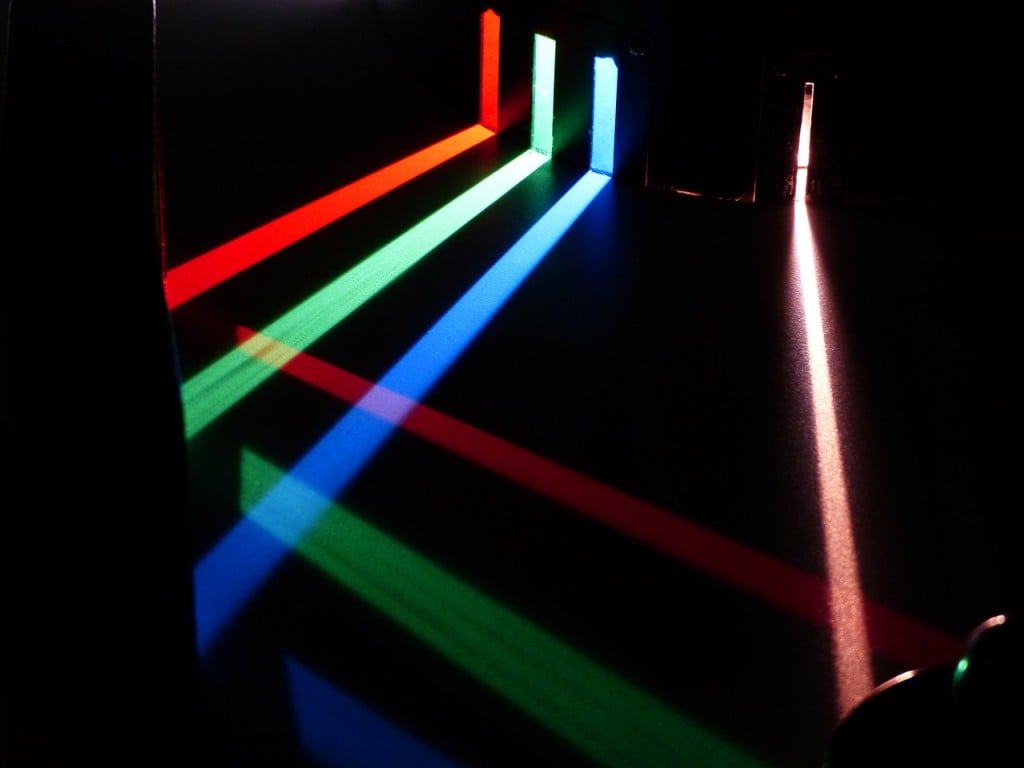
 Assigning colors to people, objects, and events is the system by which I navigate the world. You could probably analyze my relationship to colors and say, well, they are the easiest thing for my faulty eyes to distinguish, so I formed an intense emotional attachment. But I have always considered colors a gift, and don’t want to pathologize my relationship to them. I don’t really give a shit about shapes or patterns; architectural clean lines or the curves of a hill make no impact on me. Colors, though — every shade has a feeling, a tangible weight to it that resonates with me.
Any time I have to categorize something, it gets color-coded. Wednesdays are a sort of rusty-burgundy color. You’ve made it this far, says Wednesday, but you have a ways to go. The honey-butter of a Sunday morning fades to the sad mustard-and-tan of a Sunday night. No fun left here. Everything can be expressed through colors, from the comfortable whiskey-citrine “aura” of my partner to the red-bruise of words shouted in anger or the exploding-behind-the-eyes-black-purple-white-fireworks of a good orgasm.
Colors evoke feelings and judgments in me, while every other sense or idea invokes colors. My system is especially helpful when dealing with acquaintances and extended-circle friends, as I am excellent at names and attaching them to specific people-hue-blobs, but awful at being startled in a crowd by someone I should remember. My best girl friend is amethyst purple for her penchant of witchy skirts and moon-themed jewelry, while an ex that I’m close to is the deepest forest green it’s possible to be before night.
I don’t bring it up to most people, except to say I have very strong opinions about colors. I’ll wrinkle my nose at a flat orange or brown, squeal in delight if your dress is a happy turquoise. My favorite color is the searing neon yellow of highlighter markers, the best and color-est color that exists.
If you ask, I can tell you the shade you have been assigned, whether or not it’s particularly flattering. It’s tough explaining the difference between cappuccino and cardboard (only one is a compliment) to someone who already knows how you feel about the color brown. I don’t necessarily talk about the particular color of the heartbreak of unrequited love – a dull periwinkle-lavender – or explain how mint green is nice, but a little bit of a judgmental priss. But I know it’s true. Just as I know that mornings are a soft pastel color (depending on the day of the week: Mondays are orange, Thursdays are blue) full of possibilities. As the day is shaped, the shades of events are drawn in until all the memories are color-mapped in my head. A concert with a group of close friends is the electric-purple beating heart of music. A particularly fuzzy night full of bad decisions is the vomit-tomato color of micheladas.
***
There are numerous scientific studies that show that colors influence our thoughts, behaviors, and moods. I know to “paint an accent wall to brighten up your home!” and I’m not alone in finding the colors of the sea soothing. However common the idea may be, my own inner landscape is brighter for these associations. My world is richer. Pink isn’t just a calming color; a dusty rose is the comfort of grandparents, shiny oyster-pearl pink is love that has stood the test of sickness as well as health.
Colors were my organizational mechanism for so long that I took them for granted. Not anymore, though. After this most recent operation, I am more reflective. I could have ended up blind; I might have lost my connection to colors, one of my life’s most valuable treasures. The invincibility of my early twenties has given way to the uncomfortable idea that I need to do the things I’ve dreamed of now before it’s too late; I’m more and more grateful for little moments with my partner and friends, mini-adventures that we’ve stolen in the middle of the day. A bout of depression regarding the trajectory of my life cleared right the fuck up after my operation. My own personal narrative is that my world is better simply because I can see. It is not anyone’s story but mine, and I am still the screenwriter, cinematographer, and editor of my own experiences. There is still peach-colored poetry. There are still crystalline and green tide pools. There are still shiny black Lego Batmobiles.
Now it’s a butter-yellow Sunday afternoon. My partner and I adventured out to the library the day before, returning with armfuls of sci-fi novels and nonfiction books about the craft of world-building (him for a D&D campaign, me for prose). The novel I’m currently reading is an electric teal color, about space and robots and a fascinating study of gendered language and cultural barriers. There are little brown birds peeping and twirring outside our window, flitting from tree branch to tree branch. The promise of Monday isn’t quite as orange as usual, because I will hear from my optometrist later in the day that my new glasses with their post-op prescription are ready.
My partner hears the electric kettle pop before I do, and brings me a mug full of tea before I even realize the water has boiled. I accuse him of being a wizard and he grins – our standard joke for my overwhelming lack of awareness. The colors populating my inner landscape and the ones that my recovering eyes can perceive are mirroring each other today. There are bright sun rays and yellow happiness beams; there is fragrant green tea and the bright green smell of caffeine about to hit my system. I’m thrilled with the bright cerulean blue excitement of possibility. Soon I’ll be able to swim and run and camp and ride in cars for six hours to watch meteor showers in the middle of the desert. And I’ll be able to see — and write about — it all, a thrilling silvery thought.
Tags: childhood, colors, eyes, eyesight, health, jacqueline steiger, magic, personal history





I don’t have anything to say here except YES. YES. I thought I was weird for expressing everything in color/having strong emotional attachments to specific colors and I’m so happy to have found another person who does this. It’s a cool synesthetic quirk that I haven’t found very often elsewhere.
I promise I’ll be more coherent later on but YES
THANK YOU COHERENCE NOT REQUIRED ONLY EXCITEMENT
Beautiful!
While most people (myself included) have a “happy place” to picture in their minds in times of stress, I also have a “happy color,” reserved for higher levels of anxiety. Where I just close my eyes and don’t picture any physical place. Just my color.
Ooh, I want to know how the author feels about instagram filters.
Or as Florence Nightingale put it: “Don’t you feel, when you are being read to, as if a pailful of water were being poured down your throat, which, but that it comes up again just as it goes down, would suffocate you?” (from Leah Price’s How To Do Things with Victorian Books, p. 214, which has lots of other entertaining complaints about reading aloud, too)
Oh, I like this so much!
This was beautiful! Also, I am exceedingly pleased that someone else in the world comes to the conclusion of “and then I would have to duel to the death” when imagining worst-case public scenarios.
The honey-butter of a Sunday morning fades to the sad mustard-and-tan of a Sunday night.
PERFECTION.
I was going to use a gif here but that seemed…inappropriate.
Truly lovely. Not exactly my experience, but I’m really almost there with you. I think I’m just not as consistent about colors as you are… sometimes for me it’s musical instruments, for example, but those are tied to colors as well. It’s just less direct. (And I truly hate it when people I sort of know change their hair styles. Argh!)
(And… I have to ask… what book were you referring to?)
I’m betting $5 on Ancillary Justice, which is fantastic. (And if I’m wrong, then you should absolutely also read it, because it is also about those things!)
I DID IN FACT READ ANCILLARY JUSTICE. SO SO SO GOOD.
The audiobook I listened to was Snow Crash, because Partner hadn’t read it.
The “people being colors” thing reminds me of a friend who has a form of synesthesia–when she meets people, she gets a taste in her mouth, and that person is forever after that taste. She admitted this at a party and we all had to know what we “tasted” like. I apparently taste like coconut macaroons, which I find delightful. She reported that once someone tasted of liver and onions to her, a food she hated–and indeed, he turned out to be a jerk.
So glad I’m not the only person who hates being read to. I have friends who record audiobooks of fanfiction (aka podfics) and I always feel slightly guilty that I can’t bear to listen to them. For that matter, once my job as a mail carrier ended, I found that podcasts were mostly useless to me as well. I have to be doing something physical that requires a specific kind of focus in order to listen to podcasts, even ones I enjoy! Neither walking or knitting work. Hmph.
Yes, I’m particular about them too. I used to love audiobooks until I moved from a city with busses to a city with a subway. Somehow they’re not the same on the subway, possibly because I have issues hearing bass tones over the wheels. Still trying to buy enough audiobooks so I can cancel my audible subscription without wasting credits :/
Oh, beautiful! I love this piece. Thank you!
I just started laughing out loud at the part about getting in trouble for reading during reading class. When I was in seventh grade I did the same thing, except The Giver was the book the class was reading. I have no idea why my teacher had a seventh-grade class read the whole book out loud, but we did. I had read it already, years before, and I read quickly enough that I could actually get through the whole book during the 90-minute class period we spent reading it out loud… slowly.
After one class period of this I started reading something else on my lap, but of course I was caught pretty quickly. Also being an eager-to-please overachiever I returned to my original activity of reading the book cover to cover each class period, for a total of eight times before the rest of the class finished reading it out loud.
It never occurred to me to explain to anyone that I had already read the book (twice). At least it’s a good book to reread.
I just started laughing out loud at the part about getting in trouble for reading during reading class. When I was in seventh grade I did the same thing, except The Giver was the book the class was reading. I have no idea why my teacher had a seventh-grade class read the whole book out loud, but we did. I had read it already, years before, and I read quickly enough that I could actually get through the whole book during the 90-minute class period we spent reading it out loud… slowly.
After one class period of this I started reading something else on my lap, but of course I was caught pretty quickly. Also being an eager-to-please overachiever I returned to my original activity of reading the book cover to cover each class period, for a total of eight times before the rest of the class finished reading it out loud.
It never occurred to me to explain to anyone that I had already read the book (twice). At least it's a good book to reread.
I have severe keratoconus, have recovered from one eye surgery and I’m gearing up for another. My mother limited me to only 10 books at a time when we went to the library and had to unscrew the hallway light to stop me using its dim glow to light the pages of my illicit post-bedtime reads. I too am mostly face-blind- I have hugged strangers so many times, I’ve developed permanent emotional Kevlar to protect me from the shame of it (happily most people are cool with mistaken hugs and sometimes, they’ve even hugged me back knowing they didn’t know me) Like you, I often speak and think in colour and have tempestuous feelings about audiobooks
….all of which is to say, everything you wrote evoked such a ringing sense of sky-on-sea connection, this massive wave of “OMG me too” that I have been smiling from the second paragraph and I’m still smiling now. Thank you!
AAAH I HAVE A TWIN.
It is lovely to know you are real! Thank you so much for your kind words. Good luck on your next operation!
HELLO omg this article is so recognizable to me that I sent a link to my friend telling her she had to read it.
I too am a visually impaired person who used to spend hours in the bookstore (my mother would leave me there and go do the rest of her mall shopping), got caught reading in class, and can’t tell even close family apart in a crowd unless they’re within 3 feet of me or are wearing distinctive clothing. (In fact, that was my strategy in school–note clothing and then wait til someone else called them by name, then I’d know who they were the rest of the day).
Tl;dr: I am SO glad you wrote this article!
Wow, this was so great! And yes, I totally feel you on the getting in trouble for reading in class. The class was always so far behind!
Wow, this was so great! And yes, I totally feel you on the getting in trouble for reading in class. The class was always so far behind!
This is beautiful. And true. And so so familiar. As a fellow amblyopia / strabismus / basically one-eyed 2D girl I can relate.
2D strabismus solidarity!
Yes, I'm particular about them too. I used to love audiobooks until I moved from a city with busses to a city with a subway. Somehow they're not the same on the subway, possibly because I have issues hearing bass tones over the wheels. Still trying to buy enough audiobooks so I can cancel my audible subscription without wasting credits :/
“I’ve never considered myself disabled or impaired; that feels like appropriation. I can see. I wear glasses, but so does half the world.”
I can really relate to this. I’m mildly hard of hearing and have some brain things that sometimes makes differentiating speech from noise difficult. I can usually compensate by looking at people’s lips when they talk, and I don’t consider myself deaf or hearing impaired. I *can* hear most of the time, I just sometimes need to use a pen and paper in noisy places. Its so interesting and strange to see a similar experience reflected in a different sense – I use visual cues to hear people’s words, and you use aural cues to recognize the speaker! And that interpersonal awkwardness that comes from our respective stuff- you accidentally hold a stranger’s hand because you thought he was your bf, I give people answers to the wrong questions because I’m guessing at what they said…