
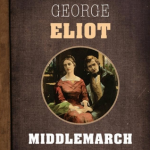
 After many, many months of gearing up to this by reading Middlemarch together, today we will begin talking about My Life in Middlemarch.
We literally could not have given you a more manageable chunk to start with (up to page 73, or the end of Chapter Two), but since the book has only been out for a few weeks, it is very understandable if you have to slide more gradually into our discussion.
What I’d love to talk about today (though we can definitely talk about whatever you want) is the gawky adolescence of ourselves as readers; the time in our lives (I am saying “our,” but you may never have done this, you lucky thing) when we were busily using books to construct ourselves as people. That may have been translated into either being too smart and UNBEARABLE and performative (I, Rebecca Mead, and George Eliot fall solidly into this category) or being very, very quiet as you tried to amasss information about the world in which you were about to live.
If any of you saw An Education, which was that great Carey Mulligan movie from 2009, I found myself thinking of it frequently during these early chapters of My Life in Middlemarch, in the showiness of Rebecca/Mary Ann Evans, the ambition, and the play-acting, essentially, of our lives while waiting for “our lives to start.”
***
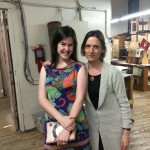
My conversation with Rebecca Mead about said august book was taped (which I did not realize, hence being mildly indiscreet in the opening MINUTE), and it’s not exactly a den of spoilers, so you can watch it without fear:
Tags: books, middlemarch book club, my life in middlemarch, rebecca mead



Oh dear, I read the whole thing when it first came out and now I don’t know how to only discuss a snippet of it.
I will say that I read Madame Bovary and A Sentimental Education over and over again as a teenager and was super annoying.
Unbearable is an understatement. I remember very seriously considering naming my firstborn Amory after reading This Side of Paradise. Man, I was the absolute worst.
You should see the vows my unbearable husband and I wrote. This, my friends, is the problem with marrying when young & far far too close to the pretentious college years.
My only comfort is in imaging how much our friends and relatives must have suffered trying to hide their smirks and giggles during the whole thing.
Unbearable is an understatement. I remember very seriously considering naming my firstborn Amory after reading This Side of Paradise. Man, I was the absolute worst.
While waiting for my life to start I read and reread Gone With the Wind and Gregory Maguire’s Wicked. If only I had fixated on something as timeless as Middlemarch! I buried my copy of Wicked my parent’s basement somewhere because the margin notes and underlining of the Feelings were too embarrassing.
Jolie Kerr actually gave me the courage to reclaim my love of GWTW, despite the problems. Scarlett and Melanie are two of the most wonderfully drawn characters in American literature and I’ll fight anyone that says different.
I adored – ADORED – hearing about Eliot’s teenage diary. (I recently found my own teenage diary and fell about laughing at what a goddamned prudish little snot I was.) And honestly, I love thinking about how someone’s world view can grow and change and evolve into something diametrically opposed to earlier passionately espoused beliefs – yet still those beliefs are intrinsic, somehow.
I just want to announce that I loved reading My Life in Middlemarch. I wasn’t expecting to, as biography and memoir aren’t really my genres, but of course MLIM is neither of those things and more. In the end I was enjoying The Toast Middlemarch discussion so much that I downloaded the free e-sample of MLIM so I could continue, and of course I was swept up in it and read the whole thing in a couple of days. I’m sorry i doubted, Toast-friends.
Oddly, the section about adolescence is the part I identified with the least. I mean I am sure I was an obnoxious teenager, but I wasn’t a hungry or ambitious or high-minded one. I loved An Education, but I didn’t relate with that character at all either. I do remember reading books and feeling like my life had changed–I felt that way when I read Their Eyes Were Watching God, because it made its world come so vividly alive, and when I read T. S. Eliot’s poetry, which reflected the sort of lonely crotchety person I felt like on the inside. But these were private experiences I couldn’t or at least didn’t share at the time, and I don’t think I fervidly wished to be elsewhere. I ended up going to college in the city where I grew up for family reasons, but I felt relieved that I wouldn’t have to make such a life-changing decision at that age.
I did like reading about George Eliot’s moral rigidity. I always felt that she was a person who must have learned a lot about how to be; she gives so much sympathy even to unsympathetic characters’ motivations, I felt that she related very deeply.
I just want to announce that I loved reading My Life in Middlemarch. I wasn't expecting to, as biography and memoir aren't really my genres, but of course MLIM is neither of those things and more. In the end I was enjoying The Toast Middlemarch discussion so much that I downloaded the free e-sample of MLIM so I could continue, and of course I was swept up in it and read the whole thing in a couple of days. I'm sorry i doubted, Toast-friends.
Oddly, the section about adolescence is the part I identified with the least. I mean I am sure I was an obnoxious teenager, but I wasn't a hungry or ambitious or high-minded one. I loved An Education, but I didn't relate with that character at all either. I do remember reading books and feeling like my life had changed–I felt that way when I read Their Eyes Were Watching God, because it made its world come so vividly alive, and when I read T. S. Eliot's poetry, which reflected the sort of lonely crotchety person I felt like on the inside. But these were private experiences I couldn't or at least didn't share at the time, and I don't think I fervidly wished to be elsewhere. I ended up going to college in the city where I grew up for family reasons, but I felt relieved that I wouldn't have to make such a life-changing decision at that age.
I did like reading about George Eliot's moral rigidity. I always felt that she was a person who must have learned a lot about how to be; she gives so much sympathy even to unsympathetic characters' motivations, I felt that she related very deeply.
I, too, finished all of MLiM because I couldn’t wait to enjoy the whole thing, though I will try to stick to only discussing the beginning here. The beginning, like Middlemarch itself, was a bit slow to get into and was not my favorite part, but it did set up the balance between biography, memoir, and lit crit that really crescendoed over the course of the book.
Let’s see– I remember learning about *themes* and different types of conflict, and making a conscious and painful effort in my earlier years to get into Greek myths and epics. While I think I enjoy them much more now than I did when I was younger, I would not profess to be an expert the way I (embarrassingly) tried to do in English class. Then I read Les Miserables and got quietly sad about everything for awhile. The early teenage years were a time of extremes.
Also, say what anyone will about the myriad “problems” therein, but Ayn Rand? Anyone else get that weird teen fixation on Ayn Rand books?
I was into Ayn Rand for a couple years as a teenager. I placed in that essay contest thing. I wish I could ERASE all of that now. My definitive book wasn’t meaningful or endearing, I was just a little shit who thought she knew about the world and was very wrong.
I also finished My Life in Middlemarch (last night!) (after being behind for the entirety of the Middlemarch discussion!) and LOVED it. So excited to watch this interview later.
I found myself really jealous during the youth portion because even though I read a lot, and was unbearable in some of the same ways, I didn’t have A Book. One book that made me who I am, one book that I return to over and over. The closest I come is the Little House series, which I LOVED like only a 9-year-old can (young me did not pick up on any libertarian themes and my politics definitely don’t lean that way now).
Yes, our gawky adolescence as readers. That was me. So SERIOUS, so EARNEST, so SELF-IMPROVING (and JUDGEMENTAL of those who were not, like me, developing their minds with well-chosen literature).
My particular affectation was reading whatever I thought would be the most bleak and depressing books – anything that reeked of world-weariness and despair. T.S. Eliot, Kafka, Sartre, George Orwell, Sylvia Plath…
I cringe to think what a mopey, pretentious little poseur I was, but it’s also kind of comforting to picture adolescent me as part of a long line of bookish girls going back to George Eliot’s day. Rebecca Mead has helped me find some (Eliot-like) compassion for my younger self.
Oh, God, that was me too. Painfully earnest and priggish about Reading Great Books. (But with a side of shame and prickly self-consciousness about how weird and nerdy and socially inept I was.) Ironically, I don’t think I would have liked Middlemarch if I’d read it back then. So much of it would probably have gone over my head.