Screams echoed through the woods around the towering play fort at Camp Tanasi, where dozens of Girl Scouts in denim shorts and ‘90s-bright T-shirts chased each other over logs and under branches, some shrieking as they ducked and dodged, some cackling with triumph as they tackled other girls to the ground.
I watched the mayhem from my haven inside the fort’s base, receiving periodic dispatches from my deputy, a red-haired, round-faced girl named Felicia.* “There are more aliens than ever,” she panted, bursting in from the battle. “The humans are losing. We’ll win any second now!”
“Excellent.” I looked down at my broken pink-and-green calculator, which flashed a variety of cryptic symbols when its buttons were pressed. Earlier in the summer, when I met Felicia, a fellow “indoor kid” who had, like me, exhausted the drama camp programs in her area and been exiled to Camp Tanasi for some involuntary sunshine exposure and lanyard-based bonding, I had convinced her that it was an alien communication device, a transmitter that I used to send news to my native planet of Dolphineaglea. The device had remained our secret until this outing in the woods, when Felicia had urged me to reveal my alien nature to a group of the other girls, and I had, reluctantly, agreed.
“See, Felicia’s my human helper,” I’d explained, keeping my voice low so that only those gathered closest could hear. “But there are other aliens in this camp—even some of the counselors are aliens. Some of you might be aliens, too, and don’t even know it.” Pulling the calculator out for everyone to see, I let my finger hover over the enter button, making eye contact with four or five of the girls before I pressed down, watching them tense as they prepared to jump up and run, knowing I held them in the alien-transmitter-holding palm of my hand. “Until…right…now.”
 It wasn’t the first time I’d told someone about Dolphineaglea. Back at my small Catholic school in Knoxville, where I’d just been bumped from second to third grade, mid-year, I’d told my best friend Eiko all about the planet I came from: about its purple and many-mooned skies, about its gray and green mountains and magical rivers, and all about the creatures who lived there, who were much more like me than anyone I’d met in Tennessee.
I explained to Eiko that because I had revealed my true nature to her, she would soon start receiving signs from Dolphineaglea: like a special book, wrapped in mummy’s bandages, hidden under her bed, or messages in mysterious languages, scrawled on the underside of her desk. Every morning, I’d ask her if she’d received the latest communiqué, and Eiko would nod, solemnly, picking up the story wherever I’d left off with the prompt. “It was all covered with mummy dust, and I couldn’t read the writing at first, but then I brushed it off, and I found…” We sometimes used Dolphineaglea as a setting in games with our other best friends, Erin and Sarah, but we didn’t tell them the whole story: the details and lore remained between us.
 Before Dolphineaglea, I told people I was a 207-year-old vampire named, for some reason, “Zoe,” or a royal exile, or a witch who lived in a lair beneath the monkey bars when not attending classes. For as long as I could remember, I’d tried to explain the gap between me and most of the people around me with these stories, trying on all kinds of different, outsized identities, figuring out which ones fit. I was a kid who loved storytelling and performing, and inventing various fantastic backgrounds came easily to me. Some of the details I fabricated, however, were more mundane, like telling classmates I’d been born in Massachusetts, where my mother was from, or in Canada, where my parents had lived before settling down in the South. The scope or content of the lie didn’t matter as much as what I was trying to say: I’m different. I don’t know why, and I don’t know how else to tell you. But I’m trying to name it, and “alien” or a “vampire” or “shape-shifting spawn of a time-traveling unicorn” is the closest I can get.
People like me weren’t on TV. Girls who preferred to be Aladdin instead of Jasmine when singing “A Whole New World” didn’t make it onto Nickelodeon, and girls who chopped their hair short and dreamed of owning a Harley Davidson were never featured in Disney movies. And no one had a limp, like I did, unless they were old or evil or brought onscreen for a few moments of comic relief. I wasn’t just a queer little girl: I was one with a joint disability, a genetic legacy I couldn’t find representation of anywhere outside my family.
But I knew there were worlds where people’s bodies were different, where they’d evolved for different means and landscapes: I read about them in books. I saw less of them in film, but in the books of Madeleine L’Engle and Ursula K. Le Guin, I learned about places where people seemed like they might be more like me. These fantastic realms had to be real, I reasoned, because how else could I explain what I was? I never heard the words “lesbian” or “gay” unless they were used as epithets, or as a marker for an unseen group of people that I’d been made to understand didn’t, and couldn’t, have anything to do with me. I didn’t read books where girls had crushes on other girls, or where bodies were considered “graceful” or “beautiful” even if they occasionally lost their footing.
 It was no coincidence that I named a planet after two creatures that could fly and swim, respectively, two forms of movement that wouldn’t be hindered by my malformed joints: no surprise, in retrospect, that I wanted identities to explain my difference, to make me feel comfortable with it. But what was fundamentally unfair, and what I didn’t realize until much later, is that there is no lack of people like me in the world. Queer people, people with disabilities, people of non-normative shapes and colors and sizes: we make up most of this large and varied world. It is our planet. The images beamed into my living room were the alien ones, the transmissions from a planet where only the pale and hetero and physically hale triumphed, where everyone else existed only as a punch line, a lesson, or a tragedy. I didn’t know what world that was, but I didn’t want to live there. So I made up my own.
This is why representation is crucial: to evince what already exists, and give voice to those who find their realities erased and denied by the mainstream. The only spaces that broke the binds of gender and normative ability for me in childhood were fantasy spaces, which other kids would usually enter into willingly. But those spaces proved unsustainable: childhood was ending, and those illusions couldn’t hold.
It happened with Eiko, a year and a half after Camp Tanasi, when I transferred to a school across town and came back to St. Joseph’s for the fall festival. She had become closer to Sarah and Erin the year before I left, choosing to play house with them over my “let’s be people-eating dragons” game. They showed up at the festival with matching side scrunchies and won handfuls of red game tickets, which they used to get me thrown into the “jail” set up by the festival runners, taking turns with their tickets in order to keep me locked up as long as possible. Why this was a feature at school festivals back then, I’ll never know: at my new school, a few years later, the same event would occur with another girl on a much grander scale, with dozens of kids paying to keep her locked behind the cardboard bars. She eventually left the school due to bullying: at least one girl a year did, from fifth grade through eighth.
 Some adult realized what was going on and let me out of the ersatz jail, leaving me less upset than bemused. I found Eiko hanging out with Erin and Sarah near the jungle gym and demanded an explanation, which she refused to give, while the two other girls looked on, snickering.
Finally she grabbed my arm and pulled me in, whispering: “I’m not weird. You’re weird. I don’t even know if you’re an alien, but you’re definitely weird. So you can’t be friends with us anymore.”
She stepped back, shaping her hands into a “W.” “I’m a winner—“ Her hands transformed into double “L”s— “you’re a loser” –and back to the “W”— “so whatever.”
They all laughed, and I walked away, perplexed. I thought we’d had a kind of pact, those other girls and me, but we didn’t: they were just playing. I wasn’t. I lived on Dolphineaglea, and couldn’t quite seem to get through to Earth.
But all of that was months away as I sat in my wooden hideout, watching the chaos Felicia and I had sown among the Scouts outside, hearing the cries in made-up languages from newly identified aliens echo through the trees. Later there would be a reckoning, and questions from the counselors, and punishments for humans and aliens alike. For now, though, I marveled at the unveiling going on around me: all of these yawping creatures, who I’d thought were normal and straight-laced and merit badge-obsessed, casting off their manners and their affectations and everything they’d already been taught about what it was to be a girl and revealing their loud, messy, genuine, unpredictable selves. The aliens hadn’t landed: we’d always been here. And for these few sun-soaked moments, we were shouting it with joy.
*Names changed to protect the human.

I can’t even form the words for how much I identified with this, so I’ll just say, hey, thanks for writing this, fellow (bullied in the Girl Scouts, gender-nonconforming, Aladdin-loving, basically pathologically lying) Tennessean kid.
Oof. This is really good.
Just when I thought I couldn’t love the author more, I realised that the picture accompanying her bio was taken at the Musée d’Orsay. <3333333
This was awesome, although I’m having trouble wrapping my brain around the concept of the jail thing at the school festivals. Why? Who would… what adult would even think to make that a feature? I just…. what?
We had that at my school, but you could only lock up the teachers/staff. Much better.
For some reason, there are a large number of adults who think that the best way to entertain children is to provide them with ways to bully and abuse each other.
we had actual SLAVE AUCTIONS at summer day camp. the older kids got “auctioned off” to be the “slaves” of the younger kids for an afternoon. so jail at the school festival doesn’t surprise me, either. (yes, i’m also a tennessee kid.)
This was wonderful. So perfect and heartbreaking and uplifting, and just…EVERYTHING. Thank you.
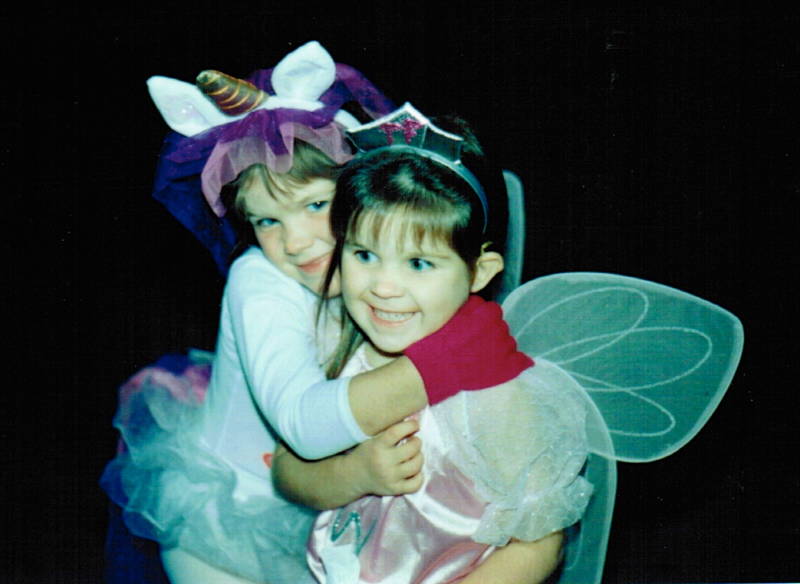
I am proud beyond measure to be the Mom of this queer, Sci-Fi-loving, Southern alien child. And, I still have that awesome unicorn headband.
I never realised just how much of my early deep fantasy life was an attempt to… storify what I already felt about myself.
I really identified, THANK YOU.
This is beautiful and rings so true. I’m also 100% confident that my little 9 year old weirdo nb self would have definitely never doubted your alienness, had we been lucky enough to be friends.
OMG I told people I was an alien too (I was probably the only poc disabled queer at my tiny primary school) and later transformed into a more ‘compulsive’ liar with the more mundane lies as well. I really enjoyed reading this. I cannot believe the prison thing – what the fuck was your school thinking??
They probably justified it the way people justify all kinds of oppression: “I did this/had it done to me when I was your age, so if I put a stop it now, I have to admit that what I did/experienced was evil and wrong. If I let it keep happening, I can call it ‘normal’ and I don’t have to feel the guilt or the hurt.”
This is the second piece I’ve read recently where a woman confessed that as a child a girl took her aside and told her she was weird and they couldn’t be friends any more.
I had no idea there were so many of us. I hope every one of us grows up as magnificent as the author.
“The aliens hadn’t landed: we’d always been here. And for these few sun-soaked moments, we were shouting it with joy. ”
So beautiful! Thank you for beaming into my day a lovely narrative, some of which I have been, all of which I can empathize with.
"The aliens hadn’t landed: we’d always been here. And for these few sun-soaked moments, we were shouting it with joy. "
So beautiful! Thank you for beaming into my day a lovely narrative, some of which I have been, all of which I can empathize with.
Oh, this made me tear up. Beautiful piece.
And middle school kids can be such little shits.
That was lovely. It’s quite a common experience, it seems, to use fantasy to make sense of why you feel different. I did it as a child too, although I leaned more towards fantasies about what was going to happen when I grew up – I was going to be a rockstar, or an actress, or a bestselling author (still working on that one). I thought of myself as rare and special rather than not fitting in. You know the bit in Sk8r Boi by Avril Lavigne when she says about the girl feeding the baby and watching the skater boy on MTV? Whenever the ‘popular girls’ made me feel awkward or unlovable, I just used to imagine that with them feeding the baby and me on the TV, and them telling their boring friends that they used to go to school with me. It might happen yet.
Wouldn’t really have thought about that or put it into words without reading this, so thank you.
“But what was fundamentally unfair, and what I didn’t realize until much later, is that there is no lack of people like me in the world. Queer people, people with disabilities, people of non-normative shapes and colors and sizes: we make up most of this large and varied world. It is our planet.”
I want to print this and hang it on my office wall. Amazing.
I apologize if this is super weird, but are you about 25-26 years old? Because I think you might be my half sister. I know my birth mother was Catholic and I’m fairly certain she stayed in the South (I was born in Texas) and you look remarkably like me.
Even if that’s entirely off base, you and I had very similiar experiences. I, too, pretended to be an alien with a made-up language between my best friend and myself (but we were from Weirdo 5000) and also went to Girl Scout camp while quietly crushing on my friends.
Hi Sarah, I don’t think so–I’m 27 and was born in the South, but my parents aren’t from there, originally. But cool to hear that you identified! Weird 5000: also an awesome planet name. I love hearing about all the weird fantastical places people created when they were misfit kids.
Hi Sarah, I don't think so–I'm 27 and was born in the South, but my parents aren't from there, originally. But cool to hear that you identified! Weird 5000: also an awesome planet name. I love hearing about all the weird fantastical places people created when they were misfit kids.