
Nicole Nolan last wrote about scrubbing in on a penis implant.
 The first plastic surgery operation I ever saw was breast implants. Our patient was young, pretty, twenty-six. She had recently lost about a hundred and fifty pounds, and consequently went from an E cup down to a C cup, and she wanted her old breast size back. She had paid up front for the operation—six thousand dollars, in cash. “This lady is already paid,” our attending physician announced to the OR staff, before she even arrived. That meant we didn’t open extra equipment, because we couldn’t charge her for it later. It meant the implants we picked out beforehand had to be just right, because we couldn’t throw them away and open another package later. I have never before or since seen surgeons so cost-conscious in the operating room as when their client has pre-paid in cash.
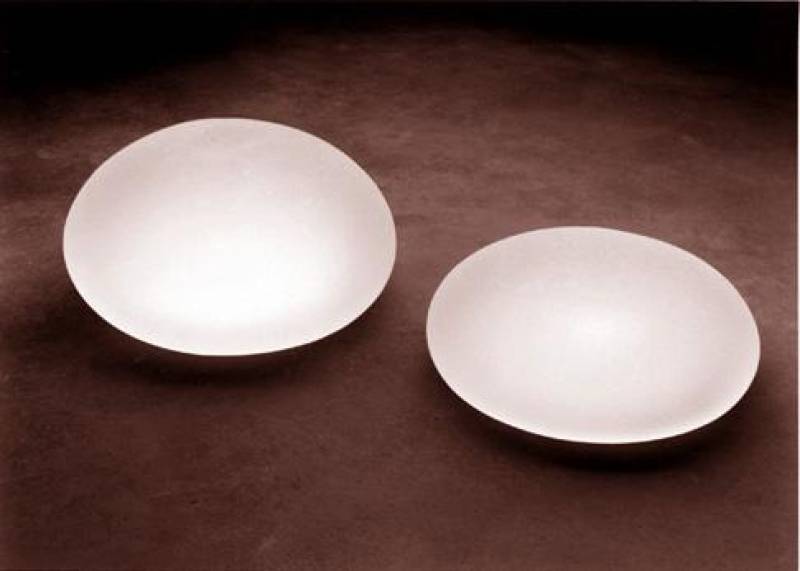
There are many ways to do a breast reconstruction (which is usually post-mastectomy) or breast augmentation (implants). Some of them involve using artificial implants—the ever-popular silicone implant, which is what our twenty-six year old client wanted, is just one option. For many women, especially post-mastectomy, we start out with what we call “tissue expanders”, which are plastic bags that we fill with saline. They have a rubber valve over one surface, and with a special needle you can go through the skin, through the rubber valve, and inject more saline into the plastic bags, so the implants gradually get bigger over weeks or months. This stretches out the skin incrementally, allowing it to accommodate without the stretch marks. With tissue expanders, breasts can also reach a larger volume than would be possible with a one-and-done implant job.
You come back and see your plastic surgeon once a week. You get to know them. My residents and attendings spoke very fondly of their patients, clients they worked with for months before surgery and sometimes years after. They consider themselves artists, and any artist dealing with the human body has to deal with the fact that your body is constantly changing.
“What are the two forces that keep plastic surgeons in business?” my attending asked me, during that surgery, as we sat our patient up on the operating table to check that both breasts fell evenly. “Gravity,” I guessed. “Gravity and entropy.”
“Entropy?” he asked. “How do you define entropy?”
“Things get worse as time goes on,” I said, and he laughed.
Later that week another patient came back with failed breast implants. She had tried silicone, post-mastectomy, after a series of tissue expanders. Her expanders had gotten infected before she got full implants, and so the first time she went to the OR they took out the expanders, sucked out a puddle of pus from her chest where the expanders had been, irrigated with antibiotic solution before putting the new, sterile implants in place. My attending warned her, then, that the possibility of re-infection was real and that the consequences could be serious. But she wanted her breasts back. If we stopped then, after the tissue expanders got infected, all that progress would be lost. It would mean that the breast implants failed, that she would have to go another six months or longer with bandages across her chest, until we could try another type of reconstruction. She just wanted her body to look like it did before—before she had cancer.
When I saw her she was back because again, her breasts were red, swollen, itching, painful. We took her back to the OR, cut open her old incision site, and immediately saw the implants—again covered with creamy, greenish pus. We took them out, sucked out as much fluid as we could, irrigated each pocket with antibiotic solution five times. This time we didn’t put anything back. We sewed her skin back together and it flopped loosely across her chest, too much skin with nothing underneath. “She can do a flap later,” my attending said, but she went home with long-term antibiotics and her flat chest wrapped in bandages.
Like any foreign object in the body, breast implants are very prone to becoming infected. Any bacteria on the implant have a new environment full of nutrients to grow. On any foreign object, from breast implants to a deep access IV line or a Foley urinary catheter, bacteria can form what are called biofilms—tiny cities of bacteria that form a gelatinous matrix growing on the foreign object. Once they form this biofilm they can keep growing indefinitely, because antibiotics can’t penetrate biofilms. The only way to get rid of a biofilm is to remove the infected foreign body, whether it be an elective breast implant or central venous line keeping a patient alive in the ICU. The infection in her chest could have easily gotten into her blood. In a hospital, where MRSA is on everything, the step from infection to sepsis is so small. She was lucky that the infection remained local, lucky that we could take out the implants and eradicate the bacteria with antibiotics, lucky that the infection didn’t seed her blood and give her sepsis.
She was unlucky because her second attempt at breast reconstruction, after she already had bilateral mastectomies for breast cancer, had failed. She was unlucky because she had to have three separate surgeries for these implants. She was unlucky because she had to have radical mastectomies. She was unlucky because she had breast cancer.
Implants are not the only way to do breast reconstructive surgery. What the plastic surgeons prefer is taking another piece of muscle, covered with skin and with its own blood supply, and moving it around to cover the chest—usually the rectus abdominus (six pack muscles) or the latissimus dorsi (a large broad muscle covering your back and sides). Because it’s the body’s own native tissue, there is very little chance of rejection or infection, and there’s less sagging and tissue settling with time, unlike implants. Silicone implants, my intern informed me, often give you a problem called “Snoopy’s Nose Deformity” (a thing you can google image search if you are very curious). This occurs when the nipple, over time, slides down to the bottom of the implant, leaving the silicone bag as a bulge on the top of the breast. To fix this we can do another surgery, called a mastopexy, to raise the nipple. In the plastic surgery lounge this procedure was drawn on the whiteboard, a crude drawing of breasts with dotted lines marked ‘cut here.’ Skin around the nipples is cut out in concentric ovals and then the nipple is threaded, like a drawstring purse, and sewn into its new position. The ovals are longer on top than bottom, to pull the nipple higher up on the breast. You can get augmentation without mastopexy—that’s what our twenty six year old patient chose, and throughout the surgery my resident kept saying: “She’s not going to be pleased with her nipple in a year.” It’s even possible to get a mastopexy without breast augmentation surgery, if you feel like your nipples are too saggy, but like your breasts the size they are. But since you’re going to be under anesthesia anyway, why not go ahead and get everything done at once?
I learned, on my two weeks rotating through plastic surgery, that you can have surgery for almost every aspect of your breast. Do you want smaller breasts? Larger breasts? Smaller nipples? Nipples that are higher up? Is there too much tissue on the outsides? Do you want fat taken out of your abdomen and put in your breasts? (That one’s tricky, because you have to get fat stem cells–if you just transfer fat, it will die in the new location and grow back in the old one.) I had never before thought that my nipples might be in the wrong position, or too big, or too small. I had never thought about how many milliliters was in a standard cup size (it’s about 150). I had never thought about average nipple size (4 centimeters). I became more aware of my own breasts, the way they were asymmetrical, one larger and more off to the side. I measured my nipples to see if they were average. When, I thought, do women start to think that their nipples are too large? Who tells them that things about their breasts are wrong or abnormal? Having reconstruction after cancer, obviously a surgeon has to think about how to recreate a normal look of an entire breast. Even having breasts that you think are too large, or too small, or two different sizes—those things don’t seem too far a jump to corrective surgery. But when do you think that in addition to your breast implants, you may need your nipples moved? Is it something your partner says to you, or a friend comments on? Is it a suggestion your plastic surgeon makes when you ask about implants in the first place? Is it a problem created post-surgery, when your implants are in but nothing looks the way you wanted it to, and your plastic surgeon is just trying to help? Many plastic surgeons spend their career just doing breast surgery—mastectomies, reconstructions, implants, mastopexies. There’s a lot of business, and it’s often elective procedure with more than one surgery, which means money.
In the plastic surgery lounge, where they have three computers, a table with a candy bowl, a recliner couch, a TV and an Xbox, I and our one female intern spent an entire call day watching Gossip Girl. Between episodes of Serena & Blair wearing thousand dollar dresses in Manhattan we, dressed in scrubs from a vending machine, walked in our ugly expensive Danskos down to the ER to see consults. Kids who had fallen and needed stitches across their temporal bone. A 50 year old chain-smoking landscaper with a chainsaw injury to his left palm, a ragged, four inch gash right through his hand that we, two twenty-something, attractive young people, sewed up under procedure lights in the ED. Afterward we went back upstairs and made fun of Chuck’s scarf, critiqued the way he wears polos with popped collars under button downs with his white suits. We rounded on our patients: three different women with bilateral radical mastectomies, a 24 year old male who had had a total perineal reconstruction for Crohn’s disease, and a forty four year old woman with squamous cell carcinoma in her mouth who had had part of her mandible removed, leaving her with just a skin flap covering half of her face, now missing its underlying bones and muscles.
My residents talked a lot about what they’d do after they got out of residency. Most of them wanted to go into private practice, where the hours were shorter, the caseload was lighter, and the money was better. They spent a lot of time doing breast cases, reading up on reconstructive surgeries, talking about former colleagues who just ran botox clinics. They used the word “money” as a synonym for “awesome” or “good job”. “That’s money,” they’d say to me, as praise, when my stitches looked good. I started carrying my credit card tucked into my bra, next to my breast, because my scrub pockets were too big and I was afraid the card would fall out. I lived off clif bars at 10am and cafeteria soup at 3pm, at 6am eating leftover Panera bagels from the plastic surgeons’ morning conference. Only one of my residents was a mother. On rounds she always seemed harried and annoyed, but in the OR she taught the entire time, quizzing me on anatomy, explaining surgical procedures. I asked her how she managed being a resident, working 80 hour weeks, with having a two year old. “There’s no extra time in my life,” she said. After I left the hospital at 7pm, after a 13 hour day, I was lucky if could somehow both heat up a can of soup and take a shower.
My residents were always tired. The call room gossip was always about life after residency—all the breast jobs they’d do, the short facelifts, not having to deal with insurance premiums. “Cosmetics is where you make 80% of your money,” they told me. “It pays for the reconstructive work.” One night we stayed until midnight because a man came in with his hand chopped off. We spent an hour cleaning up the amputated hand, cutting out dead tissue, dissecting nerves & tagging muscles so that we could reattach them. When our patient came in, what was left of his arm, from his elbow to his shoulder, was completely shredded. They had to amputate at the shoulder. “When I get in private practice, I’ll never have to do hands again,” my resident said.
Plastic surgeons take call, at my institution, every other day for hand and face. We switch off with orthopedics for hand injuries, and otolaryngology (ENT—ear, nose & throat) for face. We’re always on call for burns. We do skin grafts, free flaps, bone grafts, tendon reattachments, laser therapy—sewing up kids’ faces, injecting wrinkled faces, filling holes when tumors get cut out, taking out breast tissue, filling in breast tissue, removing adipose, injecting adipose, getting rid of spider veins, cutting out burned skin, recovering the exposed tissue underneath. Plastic, as an adjective, means malleable, “capable of being shaped or formed”. For every skin incision we sewed up, they told me again and again that the scar matters more, that patients will never see what you did inside their body, but they will have to look at this scar for the rest of their lives.
Our twenty six year old patient did well. She went home after one day in the hospital, pleased with her new breasts. I saw her once, after her operation—she had hair the same color as me, and a new tattoo on her left arm, and she smiled at me when I asked her how she was doing. I don’t know if she had any complications, if she got infected, if she decided to come back to get her nipples raised later. I never saw her again. I made friends with my intern, the one who introduced me to Gossip Girl—when I see her in the hallways now she smiles and waves at me. I kept watching Gossip Girl. When one of my friends made a comment about how hot Blair was, I said: “but her breasts are so small.” I scrubbed into a lot of breast surgeries, on patients aged 13 to 85. I spent my last night on call, slept for two hours in the plastic surgery lounge on the couch in front of that TV, then got up at midnight to work on a presentation I had to give the next day on burns. The other student on service with me presented two different approaches to breast reconstruction. In my last case, my resident let me do the stitches, telling me how to hold my needle, how to pull skin together to leave the smallest possible scar. “That’s money,” he said, when I had tied the knot in my suture. Later I found myself judging other surgeons by how well they closed skin, how big were the scars they left behind.

Love this series (is it a series?) and I hope Nicole keeps sharing her medical school thoughts and experiences with us.
Breasts have had a big impact on my life. 34DDD by 16 (only 5′ tall), I’ve wanted a reduction for more than half my life. Today and tomorrow are my consults for reduction surgery, and the operation in the next month. I”m a bit nervous, and have definite selfish feelings (but also excitement feelings). All my experiences are from breast cancer related surgeries for my mother. I was with my mom through a masectomy gone bad (MRSA infection, negative pressure therapy), an iGap rebuild, then a butt->boob rebuild. 5 years and I don’t even know how many surgeries. It was a nightmare for her.
I too am a small woman affected by large boobs. I had breast reduction surgery and it has been wonderful for me. I can’t recommend it enough if you’re struggling.
Good luck with your consult. Your poor mom – that is a hell of an experience.
FWIW, people I know who’ve gone through surgery for breast cancer have dealt with a multi-headed-hydra thing, and my reduction was a completely different, milder creature.
It’s not a walk in the park, but compared to what breast cancer patients deal with it may as well be.
Good luck! I’m 5′ tall too, and a 30H; I know what it feels like to want a reduction, and I hope yours goes smoothly.
I had a reduction 20 years ago. I went from being able tuck my breasts into the waistband of my jeans to a respectable C cup. It was honestly the best thing I have ever done for myself and I am thankful for it every day.
I wish you good luck and many years of buttoning up your blouses. 🙂
I had hand surgery ten days ago! My cat got into a fought with a paper bag and lost, and panicked. I was trying to free her – shed got the handles wrapped right around her middle- and she thought I was on the bag’s side and bit down hard on my index finger, right to the bone. So we went to A&E and they cleaned and dressed it, but when I came back 48 hours later it was sufficiently infected that I needed surgery to clean it out.
Amazingly quick – 35 minutes, local anaesthetic, hurt like hell for three hours afterwards and then I went to sleep and when I woke up it was already improved. Plastic surgeons are amazing!
oof. boobs. as body poitive as I am, about myself and others, thinking about my boobs (and reading this piece…’When one of my friends made a comment about how hot Blair was, I said: “but her breasts are so small.”’) makes that body hate demon start to whisper. My demon, my work to do. I also realize having this hang-up seems ridiculous in the face of women wanting their breasts back after mastectomies. Complicated. This piece evoked a lot of feelings and thoughts, thanks for it 🙂
I’ve always struggled with feeling lousy about my small chest, and thought if the money fell out of the sky, I’d probably get implants. But actually, after reading stuff like this: nope! God bless my non-infected, MRSA-free itty bitty titties.
This is so good! You write about the medicine with clarity and about the patients with humanity. Will you write a post about each of your clerkships? Pretty, pretty please??
Fascinating.
I can answer the question about when you feel your nipples are too big, and it for me it was pretty much the first time after my breasts had stopped growing that I saw someone else’s and realized how much smaller theirs were (the nips I mean, the breasts themselves were about the same I’d say). Then I sort of started noticing nipples everywhere, like when you get a new car and suddenly see tons of other people driving that same car, except all the nipples were smaller than mine. So I wasn’t SURE mine were too big the first time the idea occurred to me, but boy, I was sure not too long after that. I’m actually still really self-conscious about them.
I think mine was seeing American Pie or some National Lampoon movie or maybe Harold and Kumar – one of those ilk. I couldn’t have been more than 14 or 15. There were three girls, topless in a shower, one who was white, one who was black, and one who was asian. They had body types as different as can be while still adhering firmly to our cultural norms of beauty, with different types of breasts, but I immediately noticed that their nipples were all alike – very small aereolas, perfectly round, with small, tidy nipples. I immediately thought of mine, large aereolas and flat nipples, and have been extremely self-conscious ever since. Every breast I see on screen instantly reminds me that mine are WRONG and BAD and as soon as I am done having babies, I intend to have cosmetic surgery done, because it seems much cheaper and more expedient to fix them rather than spend the necessary years in therapy to work through my body image issues.
Is that wrong?
fellow giant-areola-haver here. do not like. and my boobs are starting to sag. at different rates. geez.
i won’t say i hate my boobs but they could use some sprucing up so i’ve decided to get myself a boob job for my 40th birthday. i’m also hoping that larger breasts will make my areolas look smaller, all things being relative.
so, no. it’s not wrong. feel how you wanna feel. do what you wanna do. it’s your body and i see nothing wrong with using body mods (i have tattoos and piercings and artificially colored hair, too) to make yourself happy in your shell.
(i’m also planning to get itty bitty titties when my implants age out. i’m not gonna spend my golden years wearing bras. fuck that noise.)
I’ve got small breasts and puffy nipples, and all through my teens I thought the first time someone saw me naked, they’d be grossed out because I’d never seen any nipples like them on TV, films, anything. I remember reading a book where a woman’s nipples were described as being like mine and being so excited that clearly I wasn’t the only one that I told my friend (who kind of looked at me like ‘So…?’) But then all of my sexual partners have specifically said that they like them (without me raising the issue) – it’s been the clearest indication to me ever of how media bullshit warps our self-image and creates self-loathing out of thin air. I’m not saying like ‘Now just don’t be self-conscious any more!’ but I get where you’re coming from.
Hi, hey, fellow self-conscious-about-giant-areola person here.
I think for me it was when I realized that the pasties I had bought as a joke would in no way cover my entire areola area. For a long time I thought there was something wrong with me because nobody else had breasts like mine, and I am still super self-conscious about it. I don’t know if I ever won’t be.
ah, yes, the pasty thing. we go to lots of fetish events and i’ve always wanted to be able to get away with pasties or electrical tape. alas, it is not to be *sad face*
Did anybody else start clutching their boobs about halfway through reading this?
Failed TRAM reconstruction patient here – I don’t even have boobs to clutch, but yes.
yes! (with affection, not horror) my lovely, sagging, well loved breasts, that have fed babies and pillowed friends and lovers. I’m grateful to mine for services rendered, although at this point I’d be perfectly happy to unscrew them and hang them on the wall. I mean, not to change them? but i feel kind of over needing them. kind of.
Hell yes! *CLUTCH*
SHH MY DARLINGS EVERYTHING IS FINE
I moved my laptop from the coffee table to my lap so I could hang onto my boobs, well before the first page turn. Didn’t even realize I was doing it.
I’m a 38DD+ (it varies) but my right boob is nearly a full cup size bigger than my left boob, so in a bra it is so much fuller and I have lopsided cleavage, and out of a bra it hangs a lower and my nipples don’t match – there is visible boob underneath my left nipple when I’m braless, but not under righty – you know, the boob that points outward and isn’t tucked away against torso ends with my right nipple? How do I describe this? And lefty also points more up and out. I really like them though. They actually used to be a lot more even back when I hated myself, and coincidentally their journey into lopsidedness has been on the same timeframe as my journey into self adoration and body positivity.
I’m a D, but my right boob, like yours, is also smaller than my left. I feel your pain re: ill fitting bras and lopsided cleavage.
I am also of the flat nipples and large areola persuasion.
13?
…
13???!!!
Probably a reduction or reconstruction for medical reasons, not a fun boob job for baby teens. (I say this as someone who has wanted/needed a breast reduction since that age. I wear a 38L and cannot get one because I am fat).
that particular patient had Poland Syndrome, which is a congenital absence of breast tissue and underlying muscle on one side of the chest. http://en.wikipedia.org/wiki/Poland_syndrome
As a medical student you have to learn not be squeamish, but probably the most terrifying surgery I have ever seen was for a squamous cell carcinoma of the roof of the mouth. They cut out your fibula from your lower leg and use it to reconstruct the area. If you have never seen somebody’s face flipped kind of semi-inside out count yourself as very lucky!
On the subject of what makes women think their breasts are abnormal, the cultural emphasis on the horrors of saggy breasts has always made me feel that something was weird about mine. Since I got them, they have been large (currently 30H) and heavy, and hang down against my chest rather than sticking out. (I never understood how people could fail the pencil test, because that is just not how my body works.) It does make me feel a bit like there’s something wrong with mine, because the idea of having breasts that are perky and don’t hang down is just completely alien to my experience, but the way breasts are depicted in the media makes it seem like it’s the norm.
I had a cyst removed from my chest and the doctors were obsessed with scarring, I shouldn’t exercise afterwards so it wouldn’t scar badly. I kept saying, you don’t understand, I don’t care if it scars. I am tattooed and don’t wear revealing clothes anyway and a chest scar does not bother me, and they said, we understand, but we don’t want scars.
Hi, hey, fellow self-conscious-about-giant-areola person here.
I think for me it was when I realized that the pasties I had bought as a joke would in no way cover my entire areola area. For a long time I thought there was something wrong with me because nobody else had breasts like mine, and I am still super self-conscious about it. I don't know if I ever won't be.
My mother was a mammographer (When people asked her what she did for a living, she said, “I squash boobs.”) and her stories of trying to get images for women with breast implants put me off the idea forever. It sounded like torture for everyone involved.
Hi I’ve read your article and you mention breast implant on breast reconstructive surgery,
does it leave anyone with pain in future years? for example with the reduction does it tighten the chest?