
I still remember my first.
Later, I would realize it was not exemplary in the genre. Hell, it was pretty subpar for the genre. But your first is your first, for better or for worse.
My first was Boys Over Flowers.
I came to Korean dramas at the age of eighteen — late, if not late to the TV melodrama. My grandparents, with whom I spent my early summers, had General Hospital and One Life to Live on, every day, without fail. My childhood yaya, along with many Filipina women of her generation, was devoted to Marimar, the ’90s telenovela. With my teenaged smug superiority, I thought melodramas were dumb, shallow, smutty, and sentimental — the rap the “weepies” have gotten since the days of now-critical darling, “Hollywood Golden Age” director Douglas Sirk and his women’s pictures — even as I guiltily peeked at all the beautiful, wealthy white people falling in and out of each others’s beds (and down stairs) on General Hospital. I was too smart for these shows, I thought, too ironic, too hip.
It was a steamy June in the Philippines, my eighteenth year, when my branch of the family was back in the homeland. Clustered in an air-conditioned bedroom with my siblings, my cousins, and my cousin’s yayas, at first I was only vaguely paying attention when they popped a DVD in and started a show. The familiar strains of melodramatic music floated into my ears, and I glanced toward the screen and saw a wide-eyed girl staring at an admittedly extraordinarily attractive guy as he unbuttoned his shirt on a beach, waves crashing behind him.

“Ah, he is so handsome,” cooed my cousin’s yaya Divina, in that squealing tone I used to deride as both “overly emotional” and “horny” (I was such a pleasant adolescent to be around).
“This looks really dumb,” I said, my eyes drifting towards the screen in spite of myself. I don’t know exactly how it happened (okay: abs…fluffy hair), but my eyes locked there.
Click.
Boys Over Flowers, I later discovered, was a phenomenon of tsunami-like proportions in South Korea and the rest of Asia. Based on the Japanese manga Hana Yori Dango and earlier televised versions in Taiwan and Japan, the show tells the story of a spunky, poor girl named Jan-di who finds herself admitted into a super-swank school for the rich and powerful, where she draws the ire of Jun-pyo, powerful leader of the F4 (Flower 4 — just go with it; “flower boy” is a way to describe a pretty boy, particularly in South Korea and Japan), the school’s ruling clique. You know what happens next: They fight; he sics the entire school of frighteningly entitled and borderline-sociopathic trust-funders on her; he falls for her; she falls for his best friend (the infinitely nicer — and more boring and robotically acted — Ji-hoo); she eventually falls for Jun-pyo; his mom finds out and is pissed; they get separated; she gets kidnapped a couple of times and he rescues her; other love rivals pop in; he gets amnesia — the couple meet all the usual roadblocks on the way to a proposal on yet another beach, while the waves crash and romantic music swells.
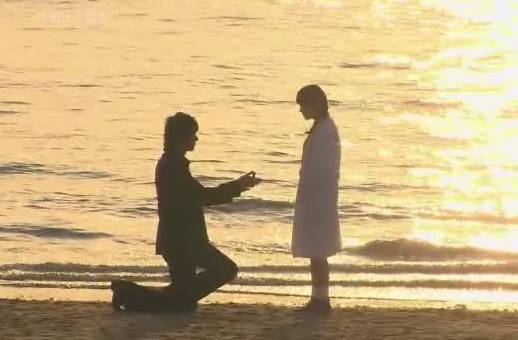
It is not a particularly good show. The plotting is haphazard; less a series of character-driven choices and consequences and more an explosion of drama, with random kidnappings, amnesia, and near-drownings in waist-high water to drum up excitement. The music choices are repetitive, laughter-inducing at all the wrong moments. Most of the actors are either flat (Ji-hoo) or prone to overacting (Jan-di). You can see why Jun-pyo’s actor, Lee Min-ho, is the only one out of the cast who truly shot to super-stardom, as he plays an objectively horrible person but emits such powerful waves of charisma that he overwhelmed all my qualms. Furthermore, Jan-di and Jun-pyo, to be real, have all the chemistry of two sticks and kiss like it, too (which is apparently endemic throughout the genre).
Despite all of these flaws, the show was…amazing? To watch? I don’t know. At any rate, I found myself enraptured, despite the “rational” part of my brain railing against every single plothole. For all of Boys Over Flowers’s real problems with story construction and character development, it tapped into a well of primal, scream-y feelings that I had heretofore rarely let myself experience, lest I be confused with those shrieking girls at boy-band concerts. I never finished the show itself — while I periodically rewatch some episodes, I always stop about halfway through the 25-episode run of Boys Over Flowers, finally done with the sheer ridiculousness of what’s going on.
But Korean dramas? I was hooked.
I fiercely clung to the few Asians I could find on American TV growing up: Shelby Woo; the one Planeteer on Captain Planet; and most blessedly, Min, the little Filipino girl on Barney, who once sang “Happy Birthday” in Tagalog during an episode — an ordinary occurrence for me, but one I don’t think I’ve seen anywhere else on American television. If I looked, I might find one or two Asian people in the background of a scene. I couldn’t even begin to imagine shows with entire casts whose faces resembled mine.
Until Korean dramas.
After Boys Over Flowers, I got addicted to the oeuvre of the wacky Hong Sisters, a sister duo who write some of the hottest romantic comedies (or ro-cos) around: Best Love (A-Lister falls for a disgraced D-Lister — imagine something like Ryan Gosling and Lindsay Lohan hooking up, while D-Lister participates in a celebrity dating show); You’re Beautiful (nun-in-training poses as her twin brother to debut with a popular boy band while he recovers from botched plastic surgery and falls in love with the grouchy, guy-linered lead-singer); and Master’s Sun (sleep-deprived lady who sees ghosts finds practical guy whose touch chases away ghosts; they fall in love). Still rather emotionally stunted, still prone to cracking jokes and being mean to boys I liked instead of, you know, actually expressing my feelings, the Hong Sisters’ shows were my perfect gateway to still more Korean ro-cos. The sisters also dislike dalk-sal-ment, which more or less translates to “goosebumps caused by mushy romantic verbal goop,” and prefer to couch their characters’ terms of endearment in bizarre metaphors such as “pig-rabbit” and “blooming potato” (which totally makes sense in context!). I also tried my hand at watching serious psychological dramas like Liar Game and White Christmas, and got painfully obsessed with Shut Up Flower Boy Band (which also has a sexy quartet of boys, but is infinitely better than Boys Over Flowers and its F4 — and also Sung Joon is mine. Forever). My list of Watched dramas on YouTube and Netflix grew ever longer.

I do not consider myself a connoisseur, by any means. And yet: I peruse the recaps and reviews on Dramabeans, a website run by Korean Americans who helpfully explain cultural and linguistic nuances to non-Korean, English-speaking fans. I have watched enough by now to know that Boys Over Flowers isn’t truly representative of the Korean drama. There’s so much more than the romantic comedies and melodramas that those not in the know tend to associate with Asian television, if they claim to know anything about it at all: there are sitcoms, legal and police procedurals, sageuks (historical shows), variety shows, reality shows. Even within the romantic comedy and melodrama genres, Boys Over Flowers isn’t all that great. The show I’m obsessed with now, Marriage Not Dating, has deliciously witty writing, a fantastically acted lead couple with sparkling chemistry, and quirky visuals. (They kiss better, too.)
Yet despite the illogical plot twists, wrist-grabbing, frequently uncomfortable depiction of gender roles, and kissing with all the romance of dead fish, I am still all about the ro-cos. There are many reasons why: Korean dramas have a clear end-date, and multiple seasons are rare, so each show usually feels complete in and of itself after 12 to 100 episodes. Korean ro-cos and melodramas are inundated with romance and have the time to develop credible relationships, which ultimately makes them more satisfying. I would even argue that the sociocultural constraints on Korean broadcast shows can make the romances more interesting, as the Hays Code did for the Golden Age Hollywood screwballs, because writers and directors frequently have to feint towards sex without actually depicting it (otherwise, we’d just have the corpse-like kissing to look forward to).
But when I nudge at the long unexamined reasons why I scorned Korean dramas — and, to a larger extent, soap operas, old Hollywood women’s pictures, and romantic comedies — while guiltily consuming them in secret, like candy bars stashed in a sock drawer, I wonder if it has something to do with the twin burden of growing up female and Asian in the U.S.
“I wish my eyes were like yours,” sighed an Indonesian high school student to a white male colleague of mine as we sat in the school’s canteen together, when I taught in Indonesia as a Fulbright English teaching assistant.
My friend’s eyes were blue — a bright, searing, ocean blue. The student’s eyes were the duller brown of mine. I heard similar comments from other students:
“I like that she has white skin.”
“I like his pointy nose.”
I wished that I had blonde, curly hair as a little girl. I wished that I was white.
Before I found Korean dramas at eighteen, I had lived in a culture where the pictured ideal was white — or at least as white as it could possibly be. You rarely found girls and boys who looked like me kissing onstage, on the silver screen. You rarely found girls and boys who looked like me at all.
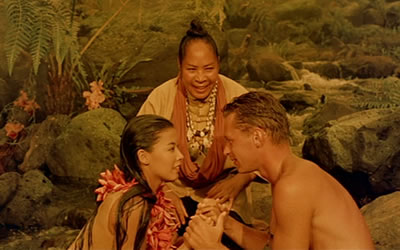
If Asian girls were present, particularly in a romantic scenario, they were usually a) in a relationship with a white man, and b) romanced on. They were the object of pursuit, often an accented, exotic, passive lotus blossom from the East — nothing like the American-born, mouthy Asian girls of my own extraction. Think Suzie Wong without her delightful, defiant tall tales. Think Liat from South Pacific, who barely speaks at all. These depictions of Asian women in romantic relationships were all created by white men and tinged, uncomfortably, with “yellow fever,” even if some were intended to critique the stigma against interracial relationships.
I sometimes wonder if that — plus the Catholic guilt and my conservative Filipino upbringing — is why I was so discomfited by overt displays of sexuality and bald yearning, especially in romantic films. That somehow, that expression of sexuality, of emotion, of pursuit was clearly not meant for me. I could never be the actor, I could never be the pursuer, I could never be the one falling head over heels.
I also wonder if this is why I specifically derided Asian dramas for a long time. Throughout my life, I have struggled with wanting to be accepted, “cool,” in American society. Korean dramas frequently don’t traffic in the conventions that make for “good” Western television. There’s little irony in a lot of the shows, and the most popular ones tend to unabashedly revel in romance and big emotions, even the cheesiness-averse Hong Sisters’ programs. While there are anti-heroes in darker dramas — like the lauded Gaksital, which takes place during the Japanese occupation of Korea — those aren’t the shows mocked on MADtv. There is violence, sometimes, but restrictions do apply on Korean broadcast TV; again, overt sexuality is kept to a minimum, especially with female characters. I wonder if I saw Korean dramas as uncool because, to a certain extent, I saw being Asian as uncool.
That is, until I started watching Korean dramas and finally saw them as they were.
I am not saying that Korean dramas are all that progressive in terms of gender, class, or depictions of romance. People who are far more knowledgable about the genre and Korean cultural mores than I have criticized the colorism that pervades Korean celebrity culture, the way heroines are often written passively, the frequently disturbing and unequal relationship dynamics, and noted how resolutely heterosexual dramas tend to be (with all that wrist-grabbing, goddamnit!). That being said, as the times change in South Korea, the dramas sometimes change with them. What once was popular (the semi-incestuous yet chaste tear-buckets like the “She’s my sister! Wait, she’s not!” of Autumn in My Heart) is being pushed aside by sexier, wittier ro-cos (like cable drama Marriage Not Dating, whose leads actually kiss with tongue).
I am also not of Korean descent, though as a Filipino-American we share a continent and a few cultural behaviors and beliefs. I cannot claim Korean culture or claim to understand it. I’m a consumer of its pop cultural products, that’s all.
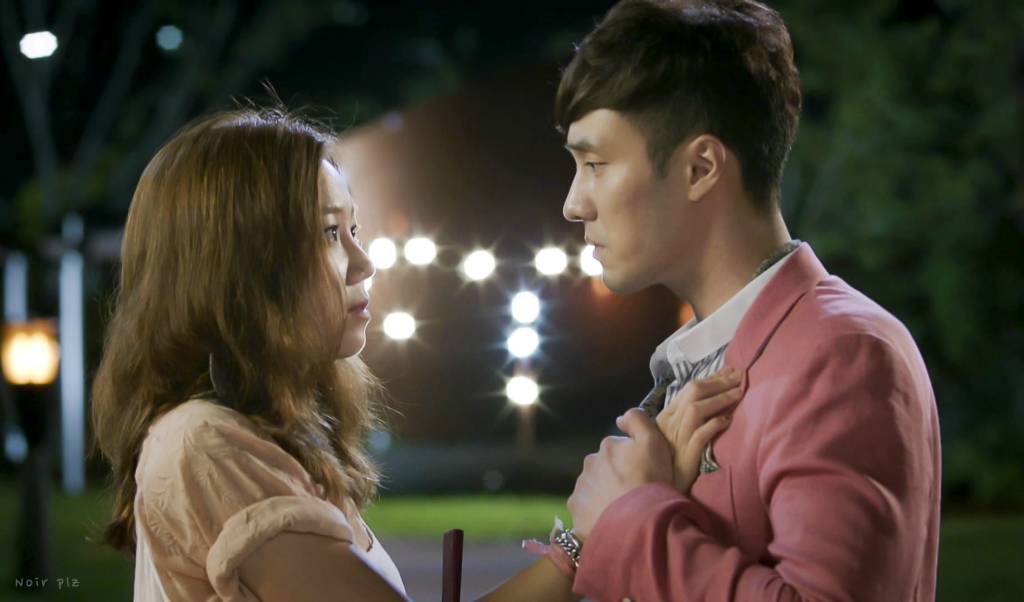
But the fact remains that my first Korean drama was also the first time I saw a) two reasonably well-rounded and developed, human Asian characters b) falling in love on screen c) in a way that was not filtered through the Western world’s view of how Asian characters should act. I saw, for the first time, an Asian man falling in love with an Asian woman, and the Asian woman falling in love with him right back, as regular, rounded people. I can’t help but feel grateful for the arrival of Korean dramas in my life, grateful that I was finally able to see women who looked more like me than the pleasingly blonde Meg Ryan, Kate Hudson, and Katherine Heigl getting the guy onscreen. Grateful that Korean dramas were there to help me on the tentative way to owning my sexuality and my romantic feelings; to help me see myself as a sexual, emotional being who could be an agent, not just an object.
There have been rumblings of a change in American TV on the horizon: Twenty years after Margaret Cho’s All-American Girl, we have two sitcoms with Asian American casts, Fresh Off the Boat and Dr. Ken. Despite M. Night Shyamalan’s whitewashed The Last Airbender movie (may we erase it from our collective memory, Amen), we still have Avatar: The Last Airbender and The Legend of Korra (with its groundbreaking depiction of a lesbian couple in Korra and Asami, though the revelation of their romance came only after the show aired). We had Sun and Jin on LOST and we still have Daniel Dae Kim on Hawaii Five-O. We (briefly) had John Cho in Selfie, and Crazy Ex-Girlfriend has a Filipino American romantic male lead. Aziz Ansari, Priyanka Chopra, and Mindy Kaling are headlining shows, portraying complex lead Indian characters with agency, even though all of their characters’ serious romantic relationships thus far have been with white or white-coded characters.
Even if this current explosion of shows that take the lives of Asian Americans seriously is only a flash in the pan, it’s a welcome change in the television landscape. On the other hand, we still don’t have that many Asian people loving people romantically, sexually, on American television screens — much less loving other Asians or other people of color.
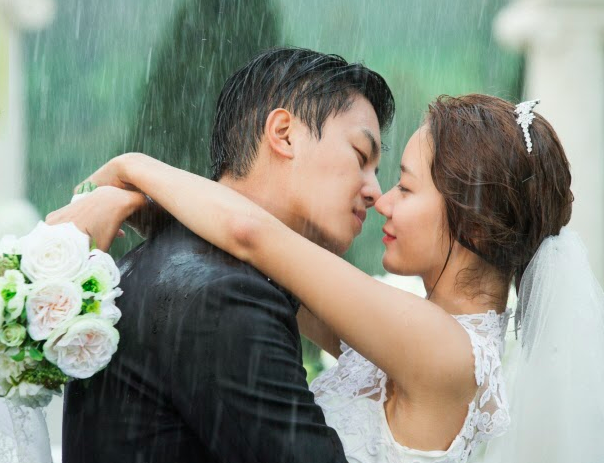
When I think of people falling in love on TV or in the movies, my thoughts first pop to Casablanca, to Castle, to Twilight, to Moonlighting, to the uber-white Holly Golightly and Paul kissing in the rain while, in the background, we see Mickey Rooney in bad yellowface play the desexualized, ridiculous buffoon. When I want my throat to catch, when I want my heart to swell, when I want to swoon, I have to turn to Viki, to DramaFever, to Netflix, to YouTube, to black-market DVDs procured in crowded markets overseas. If I want to feel like I, too, can be the center of a love triangle — or be proposed to on a beach with the swelling of waves and orchestral music — or be Cinderella (or better yet, Candy) and everything I once derided, everything I thought I could never get or ever be, I have to turn my eyes away from the glittering white lights of Hollywood and look across the ocean, to a country that I hold no claim to and never could.
It’s not ideal. But it’s what I have. As too many brown girls like me know, you take what you can get, and maybe it’ll be enough to keep our shriveled hearts warm until the day when our princes or princesses arrive, and we can kiss and live happily ever after like our favorite stars — the ones who look just like us — do in the movies.

Love this! And yay for the Seoulbeats shout-outs, I used to run SB!
“nun-in-training poses as her twin brother to debut with a popular boy band while he recovers from botched plastic surgery and falls in love with the grouchy, guy-linered lead-singer”
Please, please, please tell me this is on netflix/amazon/hulu.
It’s on Netflix! And it’s amazing!
It’s one of my favorite dramas, Korean or otherwise. It helps that the Hong sisters like to subvert expectations/cliches–so if you’ve seen a lot of kdramas, you think you know what’s coming, but then you’re wrong (that’s why I also loved Master’s Sun, and My Girlfriend is a Gumiho, and Best Love). But You’re Beautiful is just funny. Goofy, silly, funny.
Kdramas can have a lot of traditional gender norms–even when they are more progressive, they often aren’t actually progressive. But man oh man, some of them of a LOT of fun.
Does anyone else here also like Two Weeks and/or Queen Inhyun’s Man? I love those dramas to pieces.
I have not seen two weeks but I looooooove queen inhyun’s man. Fantastic show.
MARRIAGE NOT DATING IS SO GOOD THOUGH. <3 definitely put me on a TvN kick…for a long time. Yay, cable dramas!
This was such a great article, thanks for writing it!
Marriage Not Dating is awesome. And TvN is producing some of the best dramas out there right now, as are other cable stations. One of my favorites from last year was The Lover, which was an MNet show, and a mix of romcom and sex comedy…definitely pushed a lot of boundaries.
Are y’all watching Cheese in the Trap? It’s tvN’s rendition of a super popular Korean web-comic.
It’s got Park Hae Jin as the male lead (he was the second lead in You From Another Star) and gifted young actress Kim Go Eun as the female lead. I’m really liking it a lot!
It is currently on air in Korean, and Dramafever has six episodes up (with more to come). Check it out!
I am! I’m discussing it with my k-drama fan squad right now, in fact. LOL.
This summer I was obsessed with Coffee Prince . It was my first Kdrama and I’ve never found another one that I liked as much, the bar was set too high.
I loved Coffee Prince! I then watched something like the first 15 out of 25 episodes of Boys Over Flowers before hitting my limit. Maybe I’ll try You’re Beautiful next.
I just started Coffee Prince and I love it and am also so confused most of the time!
So much love for Coffee Prince! Can I please take a moment to force on everyone the headcanon that Eun Chan is trans, possibly nonbinary?
She seems at bare minimum genderqueer. She’s so completely uncomfortable with any of the trappings of femininity. Her “pretending to be a man” wardrobe is just her wardrobe, and it makes more sense that part of the reason she puts off telling the truth so long, is that she likes Gong Yoo to think of her as boy.
The most frustrating moment of the whole show for me was when she shows up after her years in Italy with a giant purse and curly hair. No Eun Chan! Be your beautiful masculine self!
I know! Yoon Eun-hye is so good at being visibly uncomfortable in girl clothing and trappings earlier on (unlike, say, Park Shin-hye in You’re Beautiful), and then of COURSE, she has to become more stereotypically feminine at the end. Grrr! You could have had it all, Coffee Prince!
I have no idea how networks work in Korea, but I choose to believe that it was network executives who forced them to have a traditional happy ending where she turns into a conventional, feminine woman instead of staying the beautiful, androgynous person she was . Because it didn’t fit in with the character or the story they told up until that moment.
Weeelll, the show did get a two-episode extension because it had great ratings (which is why the story feels paced weirdly at the end there) so maybe that played into it?
See, I didn’t have a problem with it because I didn’t think she became *that* girly at the end. Maybe I’m remembering it wrong, but she just seemed to have longer hair and a polo-ish shirt that was her actual size.
And I was ok with it because in that scene where she was uncomfortable all dressed up for art show, it didn’t look like she was uncomfortable because she didn’t like it. It seemed like she just didn’t know how to be someone who wears dresses and does her makeup. Maybe it’s just because I’ve known a few women like that, who would have liked to do more stereotypically girly things in their attire but never tried to do the makeup/girly clothes thing because they didn’t feel like they could pull it off.
I would have 100% been fine with it if she had stayed as she has always been. The only reason I was ok with what they did do was because the changes seemed in line with what I’ve seen in actual women I know. I would have thought it was really disappointing if she was totally girly at the end, though, with super long hair and a dress on with heels.
Wanted to clarify that I’m not at all suggesting that women who don’t dress “girly” secretly want to. That’s obviously not the case for the vast majority of women who don’t conform to gender stereotypes in their attire.
Yeah, Coffee Prince is what got me hooked on k-dramas, years ago. There are plenty that I’ve seen since then that I’ve really liked, but none quite as perfect in every way.
I would watch the shit out of Best Love.
Best Love is *so* cute.
It’s so great! Gong Hyo-jin gets some of the best dudes; her chemistry with So Ji-sub in Master’s Sun was scorching, for all that it was relatively chaste.
And you should. 😉
Now that I know such a wonderful thing exists, I will!
You should DEFINITELY watch it. It’s actually laugh-out-loud hilarious because of Cha Seung Won, the male lead’s, over-the-top antics.
It also doesn’t hurt one bit that Cha Seung Won is one of the most attractive actors I’ve been blessed to lay my eyes upon.
oh my gosh oh my gosh oh my GOSH
My Princess legit got me through a terrible breakup. I also broke into the genre w/Boys Over Flowers but something about My Princess — I think the way she just keeps picking herself up and getting over stuff — really picked me up. I went on a long bender of K-dramas a few years back and now that I’ve read this I just want to curl up on the couch and binge-watch one. (Brilliant Legacy! That was also one of my favorites.)
I have nothing else of consequence to add except YESSSSSSSS
I love Lee Seung-gi with the fire of a thousand suns–but like the little brother I wish I had. I want to pat him on the head and tell him everything will be ok and pack his lunch for him.
I loved watching him evolve on 1N2D from obedient rule-follower to game playing saboteur. I don’t see how anyone could watch that show from the years he was on it and not love him.
I almost cried when I read he’s leaving for the military in 10 days. NO, PUPPY, you can’t leave us yet
WHAT NOOOOOOOOOOOOOOOOOOOOOOOOOOOOOOOOOOOOOOOOOOOOOOOOOOOOOOOOOOOOOOOOOOOOOOOO
I mean, I knew he was going this year thanks to New Journey to the West, but I’m still not ready.
I love this bit:
I sometimes wonder if that — plus the Catholic guilt and my conservative Filipino upbringing — is why I was so discomfited by overt displays of sexuality and bald yearning, especially in romantic films. That somehow, that expression of sexuality, of emotion, of pursuit was clearly not meant for me. I could never be the actor, I could never be the pursuer, I could never be the one falling head over heels.
Depictions of Asian people in North American film/TV/books/pop culture are so limited and it ends up limiting how we think of ourselves. Thank you so much for writing this.
Thanks! Kdramas were so important to me at a certain point in my life for normalizing Asian people on TV. It’s startling how if I think of most Western media I consume, it’s so difficult for me to insert Asians in “hero” or “romantic lead” roles without attendant stereotypes, when with Korean dramas, it’s easy! They’re just people.
Boys over Flowers is so terrible. It just is. Maybe it’s because of my age, or maybe I’ve seen too many cliched dramas to swoon over it, or maybe I am just too troubled by the gender dynamics.
But I still loved it, and I still watched the whole thing, along with all the previous versions from other countries. And it’s what got me to watch other dramas with Kim Bum (hello, Woman Who Still Wants to Marry, SUCH a great drama and one with much better roles for women) and Lee Min Ho, and also dramas with Jerry Yan, he of the amazing hair. So even though I still can’t believe how ridiculous that drama was in places, I still love it, and I’m still grateful for it.
It’s pure crack, that’s what it is. I dunno what’s in it.
So true. I complained about it the entire time I was watching it. My sister and I had countless variations of the “Then quit watching it!/I caaaan’t!” conversation. I couldn’t stop. But then she would never watch it (even though she is the one who started me watching kdramas all those years ago) because she heard me complain so much about it.
Edit: I totally recommend it to people despite it’s ridiculousness because the crazy parts are enjoyable just for the fact that they are so nonsensical, and because it’s so addicting despite all its problems.
This is so great! Side note, I liked Boys Over Flowers, in part because the main girl’s best friend has the most amazing collection of cute coats that I have ever seen. Very odd thing to stick in my memory, but hey, I like coats. (She also ended up with the cute guy who was a potter and also a Duke Silver-esque saxophone player? The article is definitely right about the insane plots of that one. And I love it.)
Kim Bum! I commented above about him–if you thought he was cute, you should watch The Woman Who Still Wants to Marry. And also, he’s grown up nicely since then.
That whole saxophone thing was one of the more insane parts of that drama. I had to fast forward through that part in that club, it was so ridiculous.
The club scenes in general are hysterical and odd; to be real, that club really did look boring. Also, Kim Bum is not a particularly charismatic or convincing saxophonist.
Okay, I just started The Woman Who Still Wants to Marry and it is FANTASTIC. So you definitely just made my weekend.
Thanks, all, for reading! I appreciate it. <3
Secret Garden almost had a non-heterosexual side plot in Oska but didn’t commit. Would have been awesome.
Pretty much the story of any k-drama with a potentially queer subplot, alas. The exceptions are so welcome. One of the reasons I appreciated The Lover—even though the show seriously shortchanged the couple that had a queer loveline, it was still a loveline! And handled better than I feared.
I haven’t watched Seonam Girls High School Investigation Club, but there’s a teen lesbian couple—which alone makes it the equivalent of a pegasus with a unicorn mama in the k-drama world, if there’s a queer storyline of any kind it’s almost guaranteed to be between men—and they actually *kiss* with like moving lips and everything!
K-dramas got me through one of the most difficult years of my life. Especially the plots that could not possibly happen in real life. Oh, you’re a 9 tailed fox who put your life force into a cute guy to save his life and now have to follow him around whether he likes it or not. Sign me up! Oh, you’re a high school boy pretending to be your older brother at his new job while trying to keep up your hockey career and falling into a love triangle with your ditzy secretary and her younger sister. Awesome! You’ve been sucked into a game show run by a megalomaniac psychopath and have to rely on a convicted murderer to help you navigate it? I’m all in! I’m not saying it’s never problematic but it’s fun.
I also enjoy the emphasis on relationships. Not just between men and women but between family members and generations as well as friends and coworkers.
Consuming media from another culture has also been eye-opening in a lot of ways as well.
What is the hockey one called? I’d like to check it out.
I believe fictionaltubers is referring to High School King of Savvy (which has Seo In Guk in it who is just fantastic)
I end up watching k-dramas (really k-comedies–shows that look like they’ll have a sad ending need not apply) whenever I’m going through difficult times and I’ve talked with others who do the same thing. There was one particularly horrible year where I watched K-dramas endlessly for several months.
I love Kdramas too, in the same way that I love eating certain candies: I binge on them until I make myself sick, then keep away for a while, but inevitably return to do it again. I haven’t finished all too many series since I usually get burnt out before they end, but I’ve loved Coffee Prince, Flower Boy Ramen Shop (the second lead guy is sooooo handsome!), Let’s Eat (so much food, so many chewing noises!), and Wild Romance (a troublemaking baseball player and a bodyguard!). I’m just starting She Was Beautiful and really enjoyed the first episode, even though it has such a cringe-worthy premise. Literally, the main girl used to be beautiful when she was a kid and, now that her first love is back into her life (and himself newly not-fat and now-hot), she is SO UNATTRACTIVE. Which in the shorthand of kdramas (and visual media in general) means that she has fluffy curly hair and obviously-artificial “bad skin”.
I think I love these shows because of their outrageous plots and their dedication to outsized emotions, especially joy and embarrassment (man, people get so awkward when they are embarrassed in these shows). It’s also the pleasure of seeing people I don’t see on American shows on the screen and resetting my sense of “normal”.
Oh, also, the smugness I feel when the hot, arrogant guy shows off his English to hit on someone and it is terrible and how I could totally take him down a peg – then my much-less-smug reflection that my [any other language] would be worse.
Oh! and how the villain does something awful, gets caught, and then doubles down, outraged that they’ve been caught. I also agree about the awkward. I’m watching Cheese in the Trap right now and it is the epitome of awkward.
I also love that so many shows have at least one grandma character that everyone loves yet also fears and respects. She’s often really warm and down-to-earth but has no patience for BS or for the staple Arrogant Guy Character’s misbehavior and there are typically a few scenes where she gives him the what-for and he becomes meek and apologetic.
Can I put in a vote for Full House (the Korean show, not the John Stamos and spleen twins show from the 90s)? It was the first Korean piece of pop culture I ever watched in my stupidly insular white youth and it was AMAZING. Our entire flat of Uni students used to obessessively watch it together, sing it’s catchy theme song, and throw things at the screen when Young-Jae did stupid things and pushed Ji-Eun away
Wow, these sound fantastic. I wonder if I can get any of them in the UK…
You can! Take a look at Dramafever.com or Viki.com. ^_^
This is amazing timing – I just started watching my first k-drama, Boys Over Flowers, a few days ago and I’m obsessed! If this is the worst of the genre, I am so so excited for the rest of my tv-watching life. Because even if it’s the worst, it’s still 400X better than any american drama I’ve seen. I’ve watched 9 episodes in three days!
My K-drama phase lasted 4 months. Coffee Prince and Queen In-hyun’s Man were my favourites-I thought Eun Chan really didn’t change in that dramatic makeover way. And Secret Love Affair which is a more grown up drama. The rest were iffy. The Hong Sisters shows are great and yet somehow also lame? I always feel something is missing to make me love it more. I also felt I should have loved The Painter of the Wind – one of Korea’s most famous painters was actually a woman plot is a fantastic premise – but couldn’t.
Surely there is nothing wrong in acknowledging that the source material for Boys over Flowers is Japanese and some people prefer the original?! A bit surprised to see that part of the comment removed.
No one removed any part of your first comment — I don’t know what happened to it, but moderators don’t really edit comments here. If we don’t like them, we just delete them.
No worries, I know its never edited so I was surprised!
This article turned up just as I decided to investigate K-dramas for myself, and I was actually going to e-mail Nicole and ask her if she could write something EXACTLY LIKE THIS so I could figure out where to start. So thanks, Anna and Toastie commenters!
A quick tip for those who don’t speak Korean: while most of these shows seem to be available on Hulu (even if it’s via a link to Viki or Dramafever), they aren’t all called by the names listed here, and they’re not cross-listed under the literally- vs colloquially-translated names. For instance, ‘The Woman Who Still Wants to Marry’ can be found as ‘Still, Marry Me’; ‘Best Love’ = ‘The Greatest Love’; and ‘Boys Over Flowers’ = ‘Boys Before Flowers’.
Google was very helpful for this, but if any posters know other alternate names for shows they’d recommend, that would be awesome!
I loved You From Another Star, which is also known as You Who Came From the Stars.
Shoutout for My Lovely Samsoon.
I loved You From Another Star, which is also known as You Who Came From the Stars.
No one removed any part of your first comment — I don't know what happened to it, but moderators don't really edit comments here. If we don't like them, we just delete them.
Ohhhhh my god I just started ‘Marriage, Not Dating’ and it is AMAZING WHERE HAS THIS BEEN ALL MY LIFE???
I couldn't stop watching "Boys Over Flowers", even though I wanted to. So bad. I haven't seen one of my absolute favorites mentioned yet: "Bottom of the 9th with 2 Outs", also sometimes seen in terrible translation: "9 End 2 Out". Older (so, like, 30) best friends end up having to live together for several months, and eventually realize they're in love. It's really sweet, but more mature than most of the high-school-aged ones.
Oh, wow.
So my only encounter with Korean dramas was Autumn In My Heart. I was nineteen, white Australian, and in India for two weeks. I’d made friends with a sixteen year old Indian girl, who was so shy she barely spoke a word to me. One afternoon she turned up at my room with the DVD. We started watching. I was scornful and superior. By the end of the series, we were both in tears.
One of the weirdest crosscultural experiences of my life. It was awesome.
Now I’m definitely going to hunt down more on Netflix.