
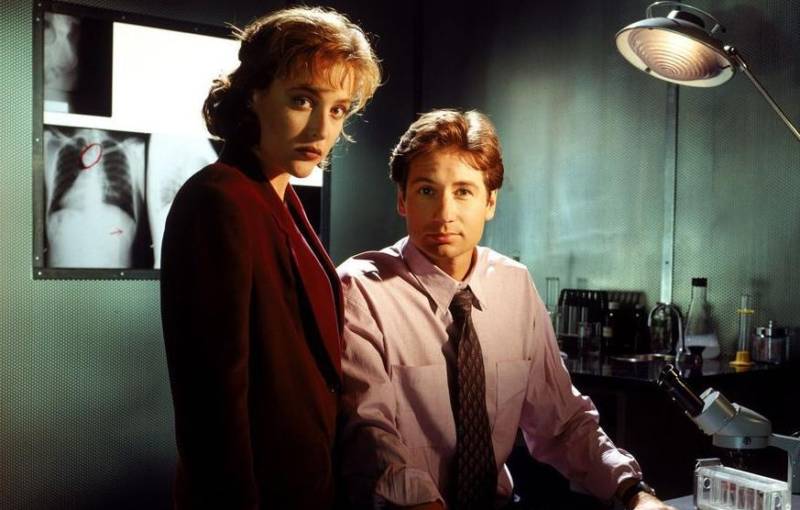
What is truth? Pontus Pilate asked. It’s out there, The X-Files promised two millennia later. A suspension of disbelief is required for both religious faith and for the faith that life exists beyond our planet. The former is the kind of faith I am seeking to maintain, partly because it has been established as the capital T-Truth. I’ve lost the certainty I once had — the Biblical, childlike faith — and exchanged it for a quiet plea that echoes Fox Mulder: “I want to believe.”
But first, what is the truth?
The answers are not as simple as I once thought. In The Art of Cruelty, Maggie Nelson noted that theologians have argued “there is truth in its everyday sense, and then here is ‘Truth-truth,’ and it is the duty of the God-fearing to tell the difference.” Further and more to the heart of it: “Pursuit of the latter may, in fact, necessitate a willing seeing past or disbelieving of the former, if and when local truths appear inconvenient or inconsistent with Truth-truth.” It’s this specific intersection that manifests itself in the world of Mulder and Scully, and in my own life.
I only began watching The X-Files this year, over twenty years late, and at first, it was out of curiosity. But now, as I enter the fourth season, I watch because I’m more interested in the parallels between faith and conspiracy. Perhaps faith is its own kind of conspiracy, not unlike the near-religious fervor with which Mulder approaches unexplained mysteries and conspiracies — a conspiracy that urges believers to look beyond the truth of the everyday and open themselves up to the broader possibilities of an eternal struggle between good and evil.
This is how I believed: I was born into the Pentecostal Christian faith. My parents guided me through the sinner’s prayer at the age of three; I was saddled with the belief in sins and forgiveness, heaven and hell, before I could I read. We went to Benny Hinn conferences and prayed for healing. We went to church on Sunday, and I witnessed my parents speak in tongues and fall prone to the floor, slain in the spirit — I was four, and I thought they were dead.
I believed all too much at too young of an age. When I was six, I wished a family member would simply believe in God after being told of the terror of hell. It was the force of these beliefs, this particular brand of Christianity, that led me to read Revelations as an eight-year-old, intent on mapping out the apocalypse.
Later: It was the set of beliefs that caused both me and my Pentecostal-leaning therapist to mistake my anxiety attacks for “spiritual battles.”
Now: I’m not quite sure where I stand. I simply know where I do not.
Memories of these long-held beliefs, the religion I was raised with, come to mind when I watch Mulder take steps to rationalize every disappearance, every action as malevolent and as a sign of a greater plot. When you’re in the throes of a conspiracy theory, it’s easy to assume that everyone is out to get you and everyone is your enemy. It’s difficult to determine what is true.
Look at Scripture: Paul writes that we see through a glass darkly; all will be revealed, one day. Citing the same phrase in The Art of Cruelty, Nelson notes the “textual paradigm” of typology used for reading the Bible: the Old Testament predicts the New Testament.
And what a relief: instead of tumbling forth on a floating planet, which may or may not be an anomaly in the universe, its affairs driven by the twin whims of chance and will, we can imagine ourselves living a dress rehearsal for a foreshadowed revelation. …
Seen in this light, apocalypse seems less of a fear and more of a cheap ticket out of fear. What would you prefer: a bloody, climactic season finale, or the ongoing tragicomedy of inscrutable lives, inevitable deaths, and an unknowable universe?
Seeing yourself as a player within the set end is a more fulfilling story for some — for myself in the past; for Mulder; for my parents; perhaps even for my present self. Having something to align yourself with can give you a sense of purpose. Sometimes it’s faith in God, or a conviction that the government is hiding the Truth; whatever gets you through the night. It becomes easy to point your finger and blame external factors for the dark night of the soul in which you find yourself.
While the “I want to believe” poster features in the background from the first episode of The X-Files, Christian religious belief only manifests itself as displays of trickery and hookum until the third season. Pastors hold revivals and a young boy claims to heal with the touch of his hand, and both Mulder and Scully are in agreement in their skepticism. It isn’t until the third season’s eleventh episode, “Revelations,” that religious faith is viewed as a possibility, and perhaps only because Scully is invested in it.
“Revelations” relies on ideas that find their home in the Catholic church — such as the incorruptibility of the saints — and ideas that are more in line with fundamentalist Christianity — such as an outsized focus on the apocalypse and God’s direct hand in what happens on earth. A mysterious man is meting out supposedly divine justice on religious tricksters who claim to experience stigmata. Skepticism is the order of the day until Scully encounters a young boy afflicted with stigmata, whose insane asylum-bound father claims his son is on a mission from God.
Mulder and Scully switch roles: she is the believer, he is the skeptic. Scully recalls lessons on the saints while examining the body of a man who sincerely believed that in order to avoid hell, he must protect this boy. Here, faith becomes its own kind of conspiracy, not too dissimilar from the wider mythology of The X-Files. There are forces larger, more volatile, more mysterious than anything Scully can explain with science. The faith (or at least the remembrance of belief) from her childhood floods back to her, and soon she is running off on her own to save the boy.
“I believe in the idea that God’s hand can be witnessed,” she tells Mulder. “I believe he can create miracles, yes.”
“Even if science can explain them?” Mulder retorts.
“Maybe that’s just what faith is.”
It’s the sort of conversation that has taken place numerous times with Scully as the questioner and Mulder as the eager believer. Yet Mulder firmly believes there is a difference between “bona fide paranoiacs” like himself and the “fanatical” religious believers he encounters. “These people are simply fanatics behaving fanatically, using religion as justification,” he concludes, after telling Scully to not her let faith get in the way of the investigation.
But isn’t that exactly what Mulder usually does? In investigation after investigation, he seeks the paranormal explanation, squinting through a glass darkly for an other-wordly response. He stretches situations and ignores local truths in sacrifice of a larger, supposed Truth that he has never truly seen. (Or has seen, as in the case of the series’ second episode, only to have his memories erased.) Mention an alien presence, a government man dressed in black, and Mulder will believe it. Except here.
I don’t think it’s a coincidence that for the majority of the episodes that follow in season three, Scully is harsher and more skeptical of Mulder’s ideas. Look to “Quagmire,” which follows Mulder and Scully as they chase after Big Blue, a Loch Ness monster like creature. After their boat crashes in the night and they wait for dawn on an outcropping of rocks, Scully compares Mulder to Captain Ahab of Moby Dick: “You’re so consumed by your personal vengeance against life, whether it be its inherent cruelties or its mysteries, that everything takes on a warped significance to fit your megalomaniacal cosmology.” But even Scully finds hope in the possibility of a wider story in “Quagmire,” noting that stories and myths endure because “people want to believe.”
It’s a description not too unfamiliar to my own childhood: everything — whether we got a good parking space at the mall to disasters, natural or not, being credited to God’s lifting of protection over the United States — fit into a larger cosmology or theology. It was possible to locate yourself in the narrative by your acceptance of Christ, the infallibility of the Bible, and an openness to the wonders of God, no matter how awesome or terrible.
In an episode of The X-Files Files podcast, Kumail Nanjiani notes that perhaps the writers didn’t want to give too much credence to Scully’s faith or the more mystical and stranger elements of Christian belief. It was a tad too apocalyptic, and in the universe of The X-Files, there is only room for one conspiracy: the Syndicate’s manipulations and schemes, the Cancer Man.
But for me, one of the show’s most moving scenes is when Scully goes to confession at the conclusion of “Revelations.” She admits she is afraid that God is speaking, but no one is listening. Here you could almost substitute Mulder’s convictions for religious faith: I’m afraid that Mulder is speaking the truth, but no one is listening.
Scully wonders if the experiences she’s had might be speaking to a larger truth that no one is listening to. It’s the same terror of being right, but having no human or earthly confirmation.
As I watch The X-Files, I’ve been searching through my own faith, trying desperately to hold onto it — a new form, the same essentials. Perhaps watching the show is a way for me to see some of my own struggles play out on the screen, dramatized — a way to relocate myself in the truth.
I don’t know what truth is anymore. I think of the way the truth was presented to me as a child, the ways in which I sought to uncover it by poring over Revelations and prophecy or reading the Chick Tracts on my parents’ desk. I was told that the only true Bible was the King James Version; I was told that I must confess every sin if I was to be truly saved; I was told that I could fall away and that would be a sign I had never believed to begin with.
I persist in belief because I’m afraid of the alternative. Taking Pascal’s Wager is a dreadful path to faith. I used to believe it worthwhile, a coin toss into eternity that would only benefit me. But when? In the future, in life after death? What of now? What of the anxiety of not knowing?
Of course it’s easier to believe in something wider, something more terrible than yourself. It’s easier for me to believe that the heavens and the supernatural are conspiring towards a fiery end with relief and reward for the faithful. To admit that the wager of belief may be a waste is painful. It’s better, easier, to risk it on what has been held over my head as truth.
I know that I do not believe in the same way I did as a child. I believe differently now, more openly, and yet I worry that I am making the wrong choice, choosing the wrong conspiracy of faith. The light and beautiful version doesn’t necessarily mean truth. What if the dark, terrible, awful version is the Truth?
I’m reminded of a sermon I heard back in high school. I look at my notes in my Bible, and pause. For the second point of the sermon, I wrote: Believe God’s truths instead of the facts. The youth pastor said this to us with a straight face, seriously, earnestly. What would Maggie Nelson say to this? What would Mulder or Scully? What do I say to it?
The truth is, I no longer know.

“I know that I do not believe in the same way I did as a child. I believe differently now, more openly, and yet I worry that I am making the wrong choice, choosing the wrong conspiracy of faith. The light and beautiful version doesn’t necessarily mean truth. What if the dark, terrible, awful version is the Truth?”
Oh I feel this, I feel it so hard. My worst fear isn’t that God will turn out not to be real, I think as long as I live my life learning to love others better and better I won’t regret those choices even if there doesn’t turn out to be an eternal reward. But every once in awhile I am haunted by the fear that God is exactly as awful as John Piper & co. have made him out to be. And yet I cannot spend my life worshiping a God who has less capacity for love than I do, so i keep hoping that God is better than that.
I figure that if there is a God, and he really is loving and merciful and wonderful, then he won’t mind that I don’t worship him. And if He is really is the wrathful, angry God holding me like a spider over the flames? Well then why would he be worthy of praise? And I may burn for all eternity, but at least I didn’t worship a petty tyrant.
So I don’t worry too much about it.
Same here. I am very certain that there is no God (I feel like I just couldn’t believe otherwise, even if I wanted to), but my dad was brought up Catholic and still fears that he and his children will go to hell. I comfort myself with the thought that if God exists, they are surely too loving to condemn people to hell just for lack of belief. That seems a distinctly human level of pettiness.
Your username is looking pretty apt here.
Oh. Oh. This struck me so very close to the heart. I grew up in a deeply tribalistic, exclusionist denomination, and am currently struggling with the question of whether or not to leave.
“I’ve been searching through my own faith, trying desperately to hold onto it — a new form, the same essentials.”
But you’re right – that nagging question remains. What if they’re right? What if I’m making a terrible mistake by choosing love over dogma and inclusivity over exclusion? I find myself again and again turning to Huck Finn’s desperate proclamation: “All right then, I’ll go to hell.”
This is so, so spot on. It is impossible to argue with people who really, really believe this stuff, because everything they see is fitted back into their already-cemented beliefs.
Geological evidence that the earth is billions of years old? Satan did it
Something good happens to you? God is looking out for you
Something bad happens? God works in mysterious ways
Evolution is backed by solid science? All the scientists are conspiring against Creationism.
It really is like a conspiracy theory, the way some people practice, complete with the enormous leaps of logical and mental gymnastics. I feel a little bad, because a lot of the Fundamentalists I know really seem like it has taken a toll on them, and they would be happier if they just relaxed a little bit.
Wow, I remember that episode “Revelations” and I was similarly moved by it. From a fellow X-Phile, thank you for this lovely piece.
One of the common discussions I have with people on this subject is the notion of God the Father. (Let’s leave aside the Motherhood part for the moment!)
I generally ask them whether or not the relationship they have with their Father is the same now as it was when they were a child. Or even a teenager come to that.
And then I ask them whether or not there’s the faintest possibility that you could have an “adult” relationship with God instead of the “childish” one? That our inability to move past the vision of God as, for want of a better description, Zeus, may be exactly what is holding us back or is, perhaps, contributing to the wholesale rejection of the notion at all.
And yes, I do realise that this may well be exactly why some people cannot deal with that idea, because they cannot deal with their own Father – for perfectly understandable reasons. I am not trying to trivialise that; merely to make an observation.
Yes, I’ve observed this too. Many good people get hung up in their understanding of the Gospel because they don’t understand that their relationship to God will change as they grow. And they don’t start becoming bad! Just…they stay a little stagnant. I think that’s part of why good churches are so important, they (hopefully) provide a community of people all striving for greater understanding, helping each other along and providing motivation when other sources are lacking.
I understand why people have trouble with this. Even leaving aside general relationship issues, it’s unspeakably frustrating to realize that there is no graduation from studying the Gospel, that the older and wiser I get the more He responds to my prayers with ‘What do you think?’ instead of providing a simple answer. But it’s so much more rewarding to move into a more adult relationship where I am more trusted and responsible, just like it was with my physical family.
An X-Files post in the last week of the Toast. I couldn’t ask for more.
Even to an atheist, Mulder is truly infuriating in religiously themed episodes. “I’ll believe literally everything everyone tells me! Except for your deeply held beliefs, Scully. Those are obviously silly and I won’t even consider them.” Mulder’s like a hipster who won’t admit to liking anything too well-known. “Christianity? So mainstream. Have you heard of sewer mutants though?”
As the Monster of the week comic put it, “Mulder believes in everything but Vampires and God” http://www.shaenon.com/monsteroftheweek/2013/09/1…
The older I get the more the phrase “I Want to Believe” really becomes the ultimate expression of my views on faith. Organized religion makes me uncomfortable. I don’t know if there’s a god. I don’t like the idea of predestination or someone in the sky watching over us. I don’t believe in faith. I just like the idea in believing in something more than this life, it’s nice to believe in more.
He’s infuriating, but I think the parallel between his conspiracy beliefs and other people’s religious beliefs is intentional. Conspiracy, religion: these are secondary. What is important in the X Files discourse is “belief.” What is it? How does it make you act? What happens when you question it? How much of it is exclusive; how many can you hold at one time before your brain begins to shatter? Mulder’s conspiracies and Scully’s faith are, however, always presented against a background of natural weirdness, often dismissed as “Monster of the Week” episodes. But those are the episodes that keep reminding us that conspiracy theory and organized religion are both attempts to contain and cope with the fact that “Not only is the universe stranger than we imagine, it is stranger than we can imagine” (which quote is attributed, variously, to Arthur Eddington, J.S. Haldane, Werner Heisenberg, and no doubt others, but definitely summarizes the philosophy of Charles Fort).
It makes perfect sense, from a personality standpoint, though. Christianity is (in principle anyway) focused on other people: God, clergy, co-religionists, the needy, the wretched sinful unbelievers in need of conversion, etc. It’s also (again, in principle) based around humility before something greater. And it’s a fairly social, communal belief system.
X-Files style conspiracy theories (as I see it, anyway) are pretty inherently all about you. And they can still be all about you even (or especially) if you’re a loner who hates being communal (like Mulder).
After all, why would you need community? The society around you is either involved in the conspiracy or befuddled by it. You are the only one who gets it. There’s no need to humble yourself (or pretend to humble yourself) before something greater, since anything greater tends to be monstrously evil. In fact, there seems to be a pretty steady and perhaps even suspicious correlation between “more powerful than me” and “monstrously evil.”
(And of course it helps that a lot of religious communities tend to prod their believers in directions that even non-conspiracy theorists find disturbing and oppressive, which, honestly, is mostly what the actual article is about, but I’m focused on being bitter at Mulder right now, I can be bitter at Scully’s diocese in a separate comment.)
And if you want to be awesome at being a conspiracy theorist there’s no need to do icky things like confess to a priest or open yourself in prayer or (shudder) chat amiably at church ice cream socials. You can stay at home pinning strings of yarn to photos, and if need be, go to the site of whatever the conspiracy of the week is and just Be Right at things. And isn’t Being Right awesome? It is! And the best part is you hardly need anyone else to do it! I mean, they’re useful to have around as skeptical props whose idiotic objections prove just how right you are, but they don’t *need* anything from you. Not commitment, or humility, or making yourself vulnerable in any real way.
And sure, there are conspiracy theorists who break this pattern (although, sadly, none of the ones on my facebook wall ;_; ), and arguably this pattern starts to break down in X-Files as the series goes on, but for most seasons I think it holds up pretty well.
Also, if in this comment it appears that I am tilting at a fictional windmill in an effort to avoid meaningful engagement with the weightier issues brought up by the actual topic of this article, thereby exhibiting in myself many of the same flaws I accuse Mulder of having, that is probably because that is exactly what is going on.
“Believe God’s truths instead of the facts.” Wow.
I think a lot of religious people forget – or want forget – that God made this universe and that how it works is how He set it up. The facts (which are not necessarily the same thing as whatever the latest studies say) are His truths. There’s an important point about not mistaking the culture of whichever sect you’re in for the eternal truths of the Gospel, but that point is so totally lost in the arrogance and thoughtless of that quote.
So many creationists, fundamentalists and extremists keep trying to dictate ‘This is how God did something’ or “this is what God really meant’ when…that’s really not how things work. We don’t get to dictate to God. We don’t get to say to the being who set up the natural laws and whose works are so varied ‘You didn’t do it this way’, ‘this means only what I think it means’.
Life is weird and beautiful and terrifying and diverse, and God set up this world so that it would be that way, so that we would be challenged and learn and grow and decide if we wanted to be good or evil. Trying to shrink the world down to whatever fits inside a person’s comfort zone is so opposite to the point of this world.
I feel this so much. I need to say it again: I feel this so much. My faith is so much more fragile and different and wider and stronger and tentative and strange and tense than it was when I was a kid. Even as a kid, I never felt totally secure in my faith, but now? Now I feel like I’m leaning all my weight over the side of a boat, unsure if I’m going to sink or swim once I finally fall out.
Thank you for this. The whole idea of “I want to believe” really resonated with me as a summary of my own struggles with belief (or changes in belief, as the case may be), and I really appreciated the X-Files’ exploration into Scully’s beliefs as a counterpart to Mulder’s. At least until the last few seasons, when things got truly bonkers.
But there’s something about the unknowability of it all, whether it be aliens or the nature of the divine, that I find weirdly reassuring. Maybe that’s the faith bit, knowing that you can never really do better than wanting to know, and not giving up.
(That last sentence may not make any sense)
(Also it is high time I hunted down an X-Files poster)
I really loved this piece. I come from a totally different religious background, but that tension and struggle of wanting to believe makes perfect sense to me. I’ll be thinking about this a lot.
I also just started watching The X-Files this year! I’m only on the first season, though.
Weirdly, I was thinking about “I want to believe” and religion only today. I struggle to see religion as anything other than stories people tell themselves in order to make sense of things, because that’s what we do – we want to believe in things, particularly things that promise us that there’s an underlying meaning to life or the possibility of eternal bliss. But I can’t see it as any more than that, sadly.
Interesting to see you link religious faith and conspiracy theories. I think, in both cases, the believers want there to be a cause, a reason, a guiding force. We atheists accept that the universe is a random place, things just happen for no reason. Good people die, bad things happen, quantum forces are unexplainable. To embrace the random indifference is difficult. That doesn’t mean that faith, or conspiracies, are real. Just that they are comforting.
I grew up in a similar kind of Christianity. In college I started studying the early, early history of the Bible and Christianity, and I couldn’t reconcile the two types of knowledge. My experience of losing faith was like dominoes, or peeling an onion. I kept trying to hold onto some essential tenet of my childhood beliefs, and kept realizing that what made each tenet possible were things that I’d already rejected. It wasn’t until I got down to the very end of the chain that I could start building something new, and even then there were years where I kept discovering habits and assumptions left over from before. So, I feel you, and I hope reflections like these help you either keep digging to the foundations (it hurts, I’m sorry) or start building again if you’ve already reached them.
Now I have a very fulfilling spiritual life in a very, very different religion (but not as different as people like to think, hah), and I’m beginning to think that belief is overrated. It doesn’t really matter what you believe. The world is going to operate in whatever way it’s going to operate, whether you believe it or not. That realization has been really freeing, because it lets me get past all of the “but how do I KNOW?” and instead think about the ways that my tradition is good for me, how it can help me be a better person and connect to other people, and how it can make the world a little more navigable. It doesn’t have to be capital-t True to be good and useful (whatever the hardcore fundamentalists of any persuasion tell you).
I agree. In my Church, there's a beautiful phrase said by the priest during each Mass: "The mystery of faith." In essence, it's the moment where we acknowledge the sheer paradox of bread and wine becoming the Body and Blood of Christ. It's the Divine meeting the material world. Something that's revealed beyond human reason. Something that we're not supposed to comprehend or rationalize 100%.
And in any case, I can just enjoy the poetry of the rite.
Watch the whole series, including the two movies (in their chronological placement) and the six new episodes before writing another piece on religion and The X Files.
“Maybe there’s hope.”
Given that the Toast is disappearing shortly (sob), I haven't created an account just to respond to this, but I otherwise would, because you've shed a terrible bright light on the reason my last relationship (with an absolute conspiracy theorist type) ended.
That almost sounds like the mother from Carrie. Where there is nothing but Jesus and God, and everyone is inferior and have no place in her life. Always asking for forgiveness of your sins so you don’t get to Hell. I am sorry, reading that viewpoint of Pentecostal Faith really made me picture Carrie Whites mother…
but anyways,
I want to believe, it has always been that way for me. And I am thankful that when I was growing up, my parents let me chose what I wanted to believe in, they never “forced” me into a way of thinking. That truly has helped me carry on in this life as an adult, with all these very faith shaking events happening all around us today. This was truly a good read, and I was quite taken that we can all talk about The X Files…The Truth Is Out There.
That's pretty much why I never got into the show – too much unthinking "belief" on both sides.
Thank you for such a thought-provoking piece. As a long-time guilty-pleasure fan of X-Files, I was fascinated to see how you connected the show and a struggle over your personal faith. Wishing you well. And I look forward to reading more of your work.
Thank you for such a thought-provoking piece. As a long-time guilty-pleasure fan of X-Files, I was fascinated to see how you connected the show and a struggle over your personal faith. Wishing you well. And I look forward to reading more of your work.
No man believes who, when a star falls shot,
Cries not aloud blind as a bat,
Cries not in terror when a bird is drawn
Into the quicksand feathers down,
Who does not make a wound in faith
When any light goes out, and life is death.
No man believes, who cries not, God is not,
Who feels not coldness in the heat,
In the breasted summer longs not for spring,
No breasted girl, no man who,
young and green, sneers not at the old sky.
No man believes who does not wonder why.
Believe and be saved. No man believes
Who curses not what makes and saves,
No man upon this cyst of earth
Believes who does not lance his faith,
No man, no man, no man.
And this is true, no man can live
Who does not bury God in a deep grave
And then raise up the skeleton again,
No man who does not break and make,
Who in the bones finds not new faith,
Lends not flesh to ribs and neck,
Who does not break and make his final faith.
Dylan Thomas, ‘No Man Believes’
No man believes who, when a star falls shot,
Cries not aloud blind as a bat,
Cries not in terror when a bird is drawn
Into the quicksand feathers down,
Who does not make a wound in faith
When any light goes out, and life is death.
No man believes, who cries not, God is not,
Who feels not coldness in the heat,
In the breasted summer longs not for spring,
No breasted girl, no man who,
young and green, sneers not at the old sky.
No man believes who does not wonder why.
Believe and be saved. No man believes
Who curses not what makes and saves,
No man upon this cyst of earth
Believes who does not lance his faith,
No man, no man, no man.
And this is true, no man can live
Who does not bury God in a deep grave
And then raise up the skeleton again,
No man who does not break and make,
Who in the bones finds not new faith,
Lends not flesh to ribs and neck,
Who does not break and make his final faith.
Dylan Thomas, 'No Man Believes'
I went through the “I want to believe” stage for quite a while with Christianity. It’s the religion I was raised in and parts of it still resonate for me, but I agonized over the process of losing bits and pieces of my faith, because it had been so much a part of me, and always will be. Then I stumbled, unexpectedly, into paganism and found a new spiritual home. That’s an ongoing, sometimes messy journey, but I’m enjoying the process.