
This is the third installment in “A Month of Blind Women,” a four-part essay series presented by LightHouse Interpoint, the new literary supplement from LightHouse for the Blind, and cross-posted at The Toast.
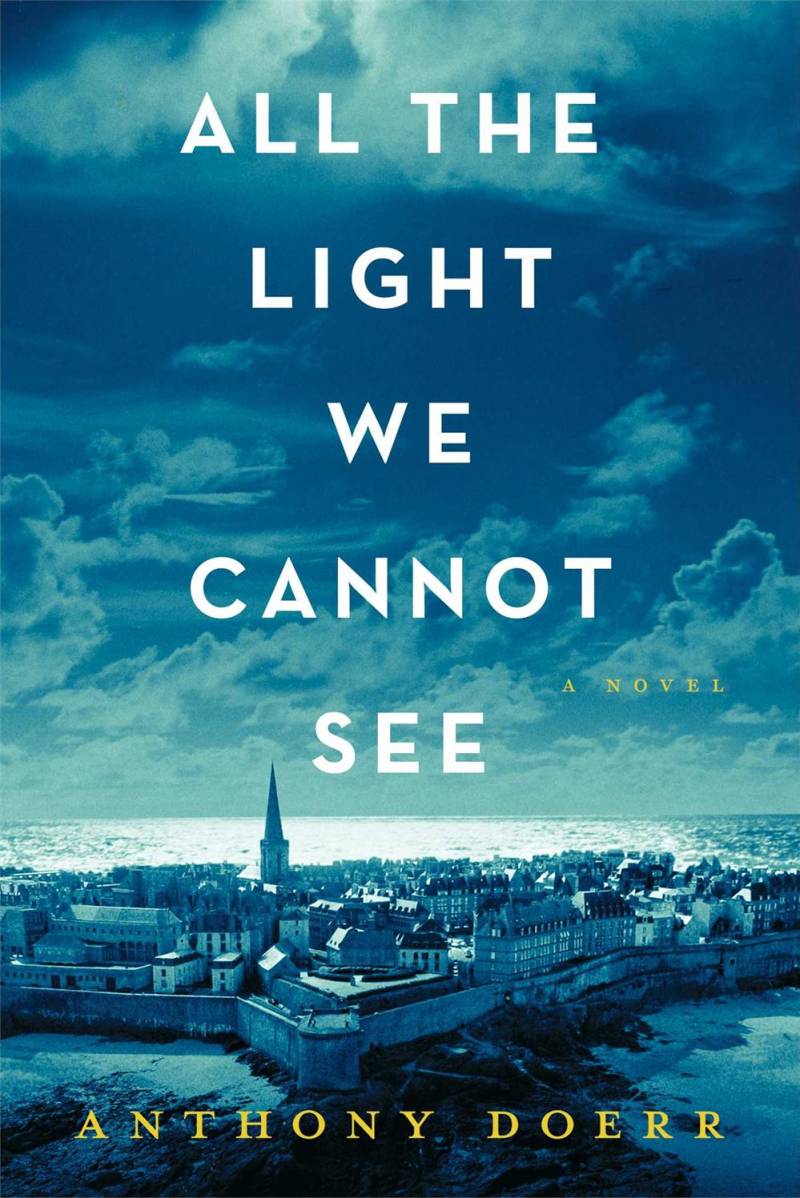
When I think of All the Light We Cannot See, the latest, most popular portrayal of blindness, there are many scenes that run through my head. Here are two, summarized, for your consideration:
In 1940, under the imminent threat of German invasion, a middle-aged locksmith and his twelve-year-old blind daughter are fleeing Paris. Everything happens quickly and their escape is urgent. The locksmith is working furiously, but, short of running her hands over a toy model of the city, the blind daughter does nothing. Her father asks nothing of her except that she use the bathroom, and so she waits, passive as an upholstered chair, while he assembles their possessions, packs their food, then buttons her into her coat, and leads her out the door.
Why isn’t this adolescent girl participating in her own escape?
Four years later, the locksmith is drawing his now-sixteen-year-old daughter a bath, despite the fact that there is a decidedly maternal female character just downstairs. The locksmith washes his daughter’s hair, and she is docile as he explains that he is leaving. At the end of the bath, he hands her a towel and helps her climb onto the tile.
Why is a middle-aged man bathing his sixteen-year-old daughter, even if he does step outside while she puts on her nightgown? Who is this girl? Is she the heroine or the victim of the story? Does she get to be both?
This helpless, sexless child is the blind girl who is one of the main characters of Anthony Doerr’s All the Light We Cannot See, a book which first enraged me, then began to haunt me and fill me with a kind of appalled despair. The book has raised neither widespread outrage nor offense in most readers. People love it. It won a Pulitzer. Book clubs are gobbling it up. Every morning, on my way to work, I hear ads for it on my local NPR station. And every morning, I feel the same gut-deep sense of despair, a kind of a mental nausea, as Marie-Laure begins to slide into her place in the public consciousness as a reasonable representation of what it’s like to be blind.
Marie really doesn’t do much for herself in the novel, and when she does her methods are decidedly strange, the reception she receives even stranger. She doesn’t put on her own shoes, button her own coat, or help out around the house. Her ability to find her way around her own neighborhood is constructed and controlled by her father, who builds obsessively detailed models, accurate down to the last park bench, for her to use in navigation. Until the model is complete, she does not leave the house alone. He watches over her as if she were made of spun glass and sugar. When, one evening, she dances in the attic with her agoraphobic uncle, we are told that “her two eyes, which hang unmoving like the egg cases of spiders, seem almost to see into a separate deeper place, a world that consists only of music…though how she knows what dancing is he can never guess.”
In case you don’t know, not a single blind person I have ever met would count thirty-eight storm drains on a walk downtown. We walk to work, to the bakery, and back home again and manage this without the benefit of a single 3-D model of the park benches we pass. We can also tell night from day. We carry our own luggage. We don’t need to use a rope tied from the kitchen table to the bathroom to navigate the inside of a house. And all of us know what dancing is.
But I am not here to complain about misrepresentations of adaptive techniques or tired blindness stereotypes. I honestly don’t care if Marie-Laure counts her steps, reads braille with her thumbs, hears the ocean from her sixth-floor window, or can detect the scent of cedars from a quarter-mile away. The assault on the dignity of blind people is not that this character has strange adaptive techniques, or even that there are so many things she does not do for herself; it is that she is utterly without agency as a character.
Marie does not even pack her clothes, not because she can’t find her bedroom or doesn’t know her socks from her pantaloons, but because she is simply not expected to do that sort of thing. She’s not especially timid or excessively shy. She is, in fact, intelligent and reasonably charming. But she is not the agent of her own life. Isolated, apparently friendless, she is led through her life by the hand and accepts everything that happens to her with dystopian magnanimity. She is moved about, remarked over, and admired, and she spends the majority of the novel in the apparently courageous and all-involving activity of simply staying alive while blind. She expects nothing—not praise, not condemnation, not challenge—and the people around her are glad enough to oblige. Even when she does manage to do something — to cast away a particular gemstone, or run an unsupervised errand downtown for the French Resistance — it changes nothing in her life, except that she eventually asks permission to go to school. Nothing really changes. She resists nothing. She asks for little.
She is my nightmare.
All the Light We Cannot See is historical fiction, and Mr. Doerr says in his numerous interviews that he did endless research while writing. You can tell he did read about blindness: He read about Jacques Lusseyran, a blind man who took part in the French Resistance in World War II; and apparently also about Geerat Vermeij, a blind evolutionary biologist now at UC Davis. You should take the time to learn about these two men; their stories are about active, joyful, curious, hard-working blind people, quick-witted and ready for a challenge. After reading their memoirs, you might think Mr. Doerr would create an engaged, vibrant main character who is blind.
In what feels very much like a betrayal of the lively spirit that inspired and motivated M. Lusseyran and Dr. Vermeij, all Marie inherited from these successful men was a degree of composure and an innocuous predilection for mollusks. Blindness is Mr. Doerr’s metaphor. Real living human beings—caring, active, blind human beings who are parents and teachers and artists and scientists—are not relevant in his story. And I can’t tell from his prose if he cares about that or not. (ed. note: Doerr first achieved notoriety with his portrayal of a mythical blind character in “The Shell Collector.”)
His defenders might object that Mr. Doerr’s depiction has nothing to do with modern blind people—he was creating a historically real picture of a young blind girl 75 years ago in a European war zone when circumstances were different and women of any sort had less power and less autonomy than we do now. Similarly, you could argue—and friends of mine have—that Mr. Doerr, as an artist, can and should create as his muse prescribes. I’ll happily grant that, too.
But art, whatever its genesis or intent, flourishes or fails in a social context. We decide — by what we read, what we watch, and what we buy – if the muse is worth it. And the fact that this book and its blind heroine won the Pulitzer says something not just about Mr. Doerr’s knack as a storyteller, but also about what sighted people expect from blind people. The fact that most people do not notice any problems at all with the depiction of Marie is sad to me.
Many a friend, perhaps in an effort to redeem something from the uncomfortable hour of discussing this book with me, has implored, “Yes, but other than Marie-Laure, didn’t you like the book?” I think they must want to preserve something of the glow they felt while reading. It was a pretty story, well told, right? Well, no. Not at all. Asking if I liked the book in spite of the portrayal of the blind character is like asking, “Except for the dog turd, didn’t you enjoy that piece of cake?”
So why, you might ask, did I read this book? I have started and discarded dozens of books—some slightly better, some worse—because of their depictions of blind characters. It just isn’t generally worth my time to read insulting or simple depictions of blind people. All things being equal, I’d rather clean the catbox. But I made myself finish this one, hoping for some resolution. I kept reading because this one will not quietly go away.
I am an associate professor of linguistics in the English Department at Bowling Green State University, where Anthony Doerr received his Master’s degree in creative writing in 1999, the year before I arrived on campus. I understand that he was quite well regarded at BGSU, and has since been named among our 100 top alumni. Although we have never met, he is respected by my colleagues and liked by many of my friends. And because of this book, he will most likely return to BGSU some day, probably to give the commencement speech, and then I’ll have to decide what to do. (My choices range from confronting him angrily in the East Hall lounge to hiding under my desk for the duration of his stay. Both options have their appeal!) Would meeting a real, competent, employed blind person change his approach to writing blind characters? Would that make a difference? Or are the cultural stereotypes—and the permission to use them—just too powerful?
The answers to those questions, although fascinating to me on both a personal and a professional level, don’t matter. And my inclination to spit fire or curl up under my desk is not as important as the conversation we, as a society, should be having about what matters to us and how what we see in the media impacts our lives. Art is important. It is an echo of the real world, capturing our perceptions and reflecting them back to us. And what do we discover reflected in the story of Marie-Laure? A well-crafted homage to destructive stereotypes about blindness, softened and made pretty by artful prose.
There’s nothing pretty about the reality of prejudice, and there’s nothing soft about the lives of disabled people who have been taught that they have neither the right nor the power to run their own lives. Art does matter because it not only reflects what we believe, it also helps establish those beliefs. And if an artist is unsure how to authentically portray blind people, then it falls to the community to begin the conversation, because we do not have “eyes like the egg cases of spiders,” we can put on our own shoes, and we do, in fact, have reason to know what dancing is.

Thank you for writing this response. As a sighted reader of the novel I kept hoping for Marie Laure to have some sort of epiphany, or some sort of impetus to start acting on her own–and being able to open a can of peaches wasn’t enough. I was willing for her to be this passive, helpless character, perhaps as a reflection of the inadequate, mother-less parenting her father provided, at the beginning of the story, as long as she get herself some gumption. That didn’t happen. I didn’t expect her to start clicking (although, why not?) nor was Iooking for magical “other senses,” but I wanted her to move past passivity and into agency; it’s the novel’s great flaw. So, you’re not alone. It’s a well written novel, but it’s unsatisfying.
I tried multiple times to get through “All the Light We Cannot See” on audiobook. I couldn’t figure out why it was such a chore to get through. The narrative dragged on and on and the parts with Marie-Laure were especially slack. I found the father-daughter dynamic definitely a little weird.
Your essay is very enlightening. Thanks so much for writing about the depiction of blind people in this novel.
I hated this book and thought it was a total chore, but I somehow finished it. I agree that the parts with Marie-Laure were the worst, because I got the feeling that she was supposed to be this perfect protagonist – I mean, how can you *not* root for the blind young French resistance girl? – but she didn’t really do anything. She was basically just a conduit for the narrator’s eloquent musings, not an actual character with her own opinions, needs, ideas, etc. This essay is great–I didn’t even think, while I was reading it, about how Doerr relies on and encourages a destructive stereotype of blindness as well.
I’m one of those who was really taken by this book. Thank you for giving me something to think about that really, I should have probably been thinking about already.
I’m the same way. I loved the book, but now I realize I missed everything I should’ve been thinking about. I’m happy to get a new perspective. Hopefully next time I read, I’ll be more attentive.
I’m the same – I enjoyed the book, and while I thought somewhat critically about Marie-Laure, and the ways in which Doerr was so into playing with senses (whats-his-name basically living his war through his hands and ears, too), I didn’t take the time to think about how he failed to portray Marie-Laure as an actual person living in her world.
I also loved the book but now am moving it to my re-read pile based on this essay. I’m embarrassed that I didn’t make some of these connections and realizations myself.
I’m glad I never got around to reading this book. I learned a lot from this piece; thank you for sharing it.
Feel the same way. Don’t know that I’ll never read it, but, if I do, this piece will be a big part of my experience.
Welp, I will not be picking up this book.
Also, why wouldn’t blind people know what dancing is??? Dancing is more than just seeing other people dance!
Apparently, blind people have no kinesthetic sense, so they don’t understand how bodies can move OH WAIT THAT’S COMPLETELY ABSURD.
I appreciate your comments and opinions and can see your point and understand it. What is striking to me about your article is that in reading the book, which I enjoyed very much, it never occurred to me. Not that it didn’t occur to me that she was blind, or that her character could be determined to be repeating a tired stereotype of the helpless blind victim. Rather I read it and felt of her character: this is an unhealthy relationship between the father and daughter – he raised her this way, treats her as fragile and broken, and in his mind is probably always going to be seen and treated as a much younger child than she actually is. Oh, and she’s blind, so he has probably convinced himself it is for her own good. There is no mother, and the compulsive nature of his care of her, right down to the painstaking miniature city, is done for himself, not really for her. Everyone in the book is damaged in different degrees, the father certainly is, certainly Marie-laure, her uncle. And they have built a self-contained little home for themselves. Contrasting with Werner and Jutta who have no parents and have had to take care of themselves since early childhood in the orphanage, but you can’t escape damage, no matter what. Frederick has parents and prestige and money, which did nothing to help him and he ends up the most damaged of all. Maybe I am disingenuous but I did not read the book as being about a little blind girl. It was about a girl who was almost trapped in her home and life, desperate for more though she adored her doting father. He knew her intelligence and capabilities, why he “kept her” like that I felt spoke more to the father’s character than the fact she happened to be blind.
This is a very interesting comment. The blind girl is really used to comment on the father’s character, not as a character in herself. I haven’t read the book, but it certainly wouldn’t be the first time women serve simply to reflect men.
Yes, this was my take too. She’s helpless because she’s been coddled her whole life by an overprotective, rather odd father, not because she’s blind. But I understand the author’s perspective and am glad for the opportunity to think more deeply about the portrayal.
This is so well-done. Thank you very much.
I thought Marie-Laure was weirdly passive too, but I put it down to the fact that she was female, and the author was male. Women in books by men are often prizes, or muses, manic pixie dream girls… She seems like that.
She’s a symbol of innocence, of purity, of helplessness, of victimhood, of our better natures and what the men are fighting to protect (or conquer)…
Her father is more the protagonist than she is, though we see things from her point of view (like Watson is the narrator but not the hero of the Sherlock Holmes books.)
My take was that Doerr wanted to write a female character who was beautiful and clever but also utterly helpless and in need of fussing over, so he had to give her a disability, and blindness fit with the narrative. Maybe he had already come up with the title!
(I was not a big fan of this book.)
He should have given her Victorian Novel Disease instead.
I’d like to leave a thoughtful, articulate comment on your wonderful essay, but an stuck on “eyes like the egg cases of spiders”. That see music. Ug!
That was one of the grossest comparisons I’ve ever seen. Yuck!
I have a half-baked idea about Marie-Laure as Beatrice, her father as Virgil, and Werner as Dante. It’s not perfect because Marie-Laure’s father doesn’t lead Werner anywhere, but he’s sort of a moral guide for the reader, anyway. Marie-Laure is definitely “Beatific”. And Werner makes a decent Dante too, since he pretty much gets a tour of hell, and watch people be punished for all kinds of sins, and since it’s his redemption which is really at stake, in this book.
Similarly, you could argue—and friends of mine have—that Mr. Doerr, as an artist, can and should create as his muse prescribes.
Create? Sure. Publish? Uhhhhhh….
I mean, art is communication. The idea of artists as special people who aren’t “really” responsible for the ideas we choose to put forth, like we’re just ~conduits for the muse~, is sort of gross.
There’s inspiration, but there’s also looking at what you’ve made and deciding if it’s really saying what you want it to.
I found this entire book to be weirdly passive and motionless. Marie-Laure was the worst part of it, but really the entire thing seemed (to me) to consist of description. Not characters acting as people, having conversations, etc., but more an assembly of figures in a series of static poses – all lovingly described in the writer’s best MFA prose, but with no variation of tone or pacing, so that everything blends into everything else and nothing really comes alive.
Yes, agree so much.
I haven’t read the book, but I’m terribly afraid I wouldn’t have picked up on what you’ve so clearly laid out. Thank you for taking the time to write this piece; I think I’ll be a better reader because of it.
Thank you, thank you, thank you, thank you, Dr. Wells-Jensen! More of us who have (or have had) disabilities need to speak our truth. I’m an author myself, and I would have taken your words to heart.
I railed against the depictions of blindness, especially that damn model of the city. (So much effort on something of such limited utility.) I was looking with the perspective of a mother, and just kept shaking my head at the bad parenting. I had to fight tooth and nail to keep my son who is blind from soaking up the negative stereotypes people kept trying to foist upon him. Unfortunately I have seen passive children with over-protective parents.
The part of the book I appreciated was the horror of war and how people get swept up in a hellish cause. I do not enjoy watching it play out around me in this current political season.
I would love to see more articles like this.
there was a conference in the Uk last summer called Blind Creations. Fabulous event. Half the participants at least were blind. There will be online links to it – and audio recordings available. Books art music created by and also for and also about blind people. Loved it!
I completely agree with everyone you’ve written here about Marie-Laure’s agency in this novel, and while reading, her character did trouble me. I didn’t attribute her lack of agency so much to her blindness as to her femaleness (and thanks for this essay, which illuminated this problem from a different and ultimately more complete angle), and I was very annoyed by how necessary it seemed to be to the narrator to stress that she was pretty and desirable (despite being blind??), and I HATED her complete and total lack of sexuality or agency in her budding relationship with Werner.
Overall, I still enjoyed reading this book, but I struggled and still struggle with Doerr’s depiction of his one primary female character. Over time, as I reflect on this novel, I feel less and less permissive of this glaring issue. What is it that makes a writer feel compelled to depict a young woman this way? I’m tired of it. I was as smart and complicated and sexual and excited to be alive at 14 as I am now at 28 (though, obviously, way less mature and way more likely to make a huge mistake), and I’d like to see that reflected more often in our fictional treatment of young women.
Thank you for this.
Thank you. I loved this book at first reading, but now I feel like I need to go back and reread with a more critical eye.
Thank you for this post. We read this book in my book group and I was the lone “hater” among a group of perfectly intelligent and educated friends, some of whom thought it was one of the best books they had ever read. I liken reading this book to hearing someone scratch a chalk board. While the author’s prose is arguably well written, the lack of empathy I had for any of the characters and how ineffective I thought it was in portraying life during WWII puts this book on one of my least favorite reads. I am so glad I am not alone. Your thoughtful piece clarified for me much of why Marie Laure’s character felt so wooden.
I felt this book had no moral weight — was detached from its events by an obsession with its own lyricism. (All that white space! Kindly giving us time to rest, I guess, from the prose. I’d rather have had some real freight to the book to recover from.) I really appreciate this article for adding another angle to my distaste for it.
I felt this book had no moral weight — was detached from its events by an obsession with its own lyricism. (All that white space! Kindly giving us time to rest, I guess, from the prose. I'd rather have had some real freight to the book to recover from.) I really appreciate this article for adding another angle to my distaste for it.
Thank you very much for this post; you’ve given me much to think about, and it’s really helping me to articulate my lukewarm reaction to the book – a reaction I wasn’t expecting to have.
I first encountered Lusseyran’s autobiography, “And There Was Light”, way back in 2003, as a consequence of my interest in the French Resistance, and it’s stuck with me since then; I’ve read it many times, probably more times than any other book I own. I knew very early on in my reading of “All The Light We Cannot See” that Doerr must have read Lusseyran’s book as well. I expected to love Doerr’s novel, but I put it aside after finishing it, only looking at it again because I reviewed it for a homework assignment. (It got 3/5 stars and a lukewarm “It was OK” assessment; I think a lot of my criticism at the time was about the writing style. I also skimmed Marie-Laure’s sections to focus on Werner’s sections, because he was just so much more interesting as a character.)
Now I’m wondering just how much of “And There Was Light” stuck with Doerr. Or if he even read all of it. Because I don’t think my mind’s tricking me when I clearly remember passages about Lusseyran learning to dance in the early days of the Occupation, and I’m certainly not dreaming up the part where he describes meeting a blind boy his own age who, unlike him, had been sheltered by his family, and finding it a distressing, unhappy experience. That’s just two examples I’ve plucked from the earlier comments here – never mind everything else Doerr didn’t apparently pick up from Lusseyran’s book!
It just seems to me like a gross failure of thinking things through and a failure to break from age-old stereotypes – a sighted man writes a novel about a blind girl and decides that because she is female and because she is blind she must be doubly passive.
I am a teacher (middle & high school) and I’m currently working on a class that introduces the idea of “politicizing your reading,” which is basically critically reading (but they’ll hear critical as bad, etc). I started turning this idea around after listening to an episode of Witch, Please (podcast about critically reading/discussing Harry Potter) and the idea of putting away your lenses in order to enjoy something, and how the ability to put away a lens (feminist, Native, ability) is solely an ability of privilege. The point is, this article is going into my notes document as another example of how we must train ourselves to read past the story and into the messages the story is sending to us about society, people, and our lives. Thank you so much for adding to my curriculum and — I’m certain — adding so much to the lives of your own students.
Thanks for this. I have been reluctant to read this book because I thought it might make me angry in its portrayal of blind people. I guess my hunch was right. Sighted people who have never actually interacted with visually impaired people get it pretty much 100% wrong all the time. Watching Pentatonix try to restrain themselves from “helping” Stevie Wonder open the envelope at the Grammys was infuriating and funny at the same time. Guys, it’s fucking Stevie Wonder. He can open a damn envelope on his own.