
What happens when you revisit the woefully misremembered science fiction of your youth? Joe Howley (Latin teacher) and Johannah King-Slutzky (internet wraith/underachiever) asked adults to re-read their genre favorites from childhood. For the first in our Time Quartet series, we talked to bona fide adult Kate Franklin, an archaeologist who for the past seven years has worked for the Medieval Archaeology of the South Caucasus at the Oriental Institute (whew!) studying Medieval Armenia. We spoke with Kate via Gchat about how A Wrinkle In Time sparked her interest in archaeology, what the book says about faith and the unknowable, and why Charles Wallace may or may not be The Worst. The following conversation has been gently massaged for clarity.
 KATE FRANKLIN: Hello!
JOHANNAH KING-SLUTZKY: Hello!
JOE HOWLEY: Hello! (That was me completing the third part of the harmony.)
KATE: I definitely heard those on ascending tones.
JOHANNAH: Okay, let’s jump into it. I think first of all we were hoping you could summarize your background a bit for The Toast readers.
KATE: I am an anthropological archaeologist (so, an anthropologist who works through excavations to understand human societies in the past as well as the present). I received my degree from the University of Chicago, and I have been working for the last 6 years in the Republic of Armenia. I study the late medieval period (AD 12th-15th centuries), when Armenia was a place in between crusader states, caliphates, Mongol empire, etc. And pertinent to science fiction, I study how people contextualize their action in society through the creation of worlds, whether in materiality, history, architectural space, or landscape. Put another way, I am interested in how all politics are contingent on getting people to imagine the world (and themselves in it) in particular ways.
JOE: I have about a thousand questions about that, but to start, when did you first read this book, and have you re-read it many times since then?
KATE: I was actually trying to remember when I first read it– I think it was in elementary school, perhaps third or fourth grade. And I have definitely not reread it since perhaps early middle school– so I was amazed at how much I remembered.
JOE: What was the experience of reading it again like? What struck you most? Did it feel very different?
KATE: Well, I have been significantly trained in the ‘art of reading’ since I was eight, so there were things I was able to recognize and analyze on a level I was just not operating at at that point. But this also helped me realize how profoundly the book affected me as a child– looking back, it’s like a primer in scientific realism and the limits of reason. About three quarters of the way through the book, I thought, that if it were to have one of those hacky 1980’s titles it would totally be “Margaret Murry and the Dark Cartesian Space Nightmare.” It speaks to one of the really interesting aspects of the book, that while it centers on a standard sci-fi premise (tessering/the tessaract) what the story really revolves around is the human capacity to deal with things they are incapable of understanding, and to meet them with wonder instead of fear.
JOE: I tend to think modern sci-fi has always struggled against the pull of making the story be about the science fictionality, as opposed to some aspect of the human experience.
KATE: Oh completely– and the best novels lose that struggle in my opinion. Does anyone really care how a warp drive works?
JOE: Completely
JOHANNAH: I don’t know, I actually do care about how warp drive works.
JOE: Nerd!
JOHANNAH: Something that was interesting to me about this book is that it’s really, really hard to visualize a lot of what she’s talking about, but then there are those illustrations about time wrinkling, with the ant and the skirt.
KATE: Exactly– the whole episode where Mrs. Whatsit, Mrs. Who and Mrs. Which explain the tesseract is premised on exactly this, that you can operate in a universe that you know runs on principles beyond your comprehension. (And I also kind of want to know about warp drives. I mean, what is their FUEL? Which is why solutions like Spice in Dune are so interesting.)
JOE: She’s clearly dealing with a modern physics, but it also is an “in” for her religious interests.
KATE: And this conversation is totally paralleled in the Murry kitchen when Mrs./Dr. Murry explains to Meg that she can deal with the unknowable universe because she can deal with Charles Wallace, and so all of the universe which exceeds our understanding is calqued in the novel as love. Which is interesting for exactly the reason you bring up, Joe– for Descartes and other members of the Scottish enlightenment, this excess is bracketed and defined as “God.”
JOE: For a slim book, it’s just packed with terrifyingly big ideas.
JOHANNAH: Yes, I was really curious how much philosophy ML’E had read…
KATE: Charles Wallace is obviously a messianic character, and in the end it is love for the unworldly Charles Wallace that defeats IT.
KATE: The book as well reminded me of this quotation from Marie Curie, where she said that the scientist should regard science not as mechanical but as wondrous, that science should inspire delight as well as awe.
JOHANNAH: Do you have any thoughts on the relationship between the unnamable (like IT, and maybe Aunt Beast) and the unknowable in this book?
KATE: Oh I have thoughts for sure, which I want to preface by saying that as a kid I profoundly identified with Meg’s orientation to the world, and I still think that her orientation as protagonist is close to my own responses to her situations. She is so consistently UPSET by everything that is happening. (Another delightfully upset character that I loved as a kid: Arthur Dent in The Hitchhiker’s Guide.) It’s so easy to identify with her totally rational terror. She’s being taken on interstellar/ quantum voyages, and she needs someone to hold her hand and then she gets cranky and she’s the WORST at tessering.
Anyway, this relates to the unknowable– the conversation/argument she has with Aunt Beast is so wonderful. She can’t imagine how the Beasts can understand anything without vision, and is incapable of describing the world in other than visible terms. Aunt Beast calmly starts to dismantle Meg’s dyed-in-the-wool presumed association between Vision and Truth. As she says, they don’t know what things LOOK like, they know what things ARE like, which is a confrontation with an alternate world as violent for Meg as actually tessering between planets, I think.
JOE: I really like that one of Meg’s main problems at school is that she is TOO good at math, because she understands underlying phenomena and can’t handle the structures her pedagogical environment wants to overlay on them. In a way, she is just really not good at entertaining other people’s experiences of reality, even when they seem mundane or inferior.
KATE: Right? she is convinced that all fractions ‘really are’ decimal numbers, and can’t speak in alternative paradigms.
JOHANNAH: It also reminds me of Mrs. Who and co’s use of quotation– those are also shortcuts to describe things as they really are, like Meg’s math tricks, although Mrs. Who can and does entertain others’ realities.
KATE: In a way, when they are explaining the tesseract, they are also explaining their own plight– that they can only manifest according to the parameters of dimension and human perception– and in this case, we are the ant on the skirt.
JOE: I loved that interjection of the drawing into the text. It’s an alternative way of engaging with the idea that some discursive frames are inherently limited from talking about some ideas.
 KATE: I know! I think L’Engle did this beautiful job of experiencing other dimensions viscerally real for readers. I love, love, love that tessering amounts to reducing one to a disembodied subjectivity (such foreshadowing for IT!) and this terrifies Meg– to be a mind without a body!
JOE: Yes, but Meg also finds tessering soothing, in a way, something comfortable.
KATE: I think so too! there is a peace to be without a body, without the ‘thousand natural shocks that flesh is heir to’ (to be Mrs. Who for a moment).
JOE: So we see the planet of Camazotz, but we really only just go to this one city, and I think at one point someone even says “in” rather than “on Camazotz.” It’s not really about a planet, of course, it’s about a society. This idea of distilling societies into their fundamental characteristics seems to be important to the project.
JOHANNAH: It’s a planet of hats.
KATE: Reading about Camazotz, it is hard not to put AWIT into context as a science fiction book written in the early 1960s.
JOE: Totally! the CENTRAL central intelligence is maybe laying it on a touch thick. It also reads to me as, like, what the sixties had to say about the fifties — the suburbs and conformity.
KATE: IT has a sort of laws of robotics-type-directive that manifests as the ‘for your own protection you will be harmed’ logic provided by the man with red eyes. ANYway– yes, the central argument of Meg’s inability to conform being her great strength in the battle against darkness.
JOHANNAH: Although the man with red eyes and IT scenes also reminded me quite a bit of Wizard of Oz (not a sixties production, obviously), which I hear is a common comparison. All things considered this book doesn’t seem very sixties-y at all, to me.
KATE: Hmm yes– I was always so creeped out by the part of the film Wizard of Oz where the gang is ‘shined up’ and Dorothy asks if they can dye her eyes to match her frock. What the hell? Such shades of 1930s social commentary. It’s terrifying because it’s so jolly– everyone singing in unison! Horses of different colours!
JOHANNAH: I love that scene. To me, IT seems very “Wizard”-y (but eviler), and their journey to the CCIA is very Emerald City.
KATE: Well the foyer IS green, as is the lighting, right?
JOHANNAH: Yep! And there are these big, shiny facades on the buildings.
KATE: Sort of like of L. Frank Baum designed East Berlin.
JOE: Something about it that does seem sixties to me is the careful decision to make Mrs. Murry the real equal of her husband — multiple doctorates, very intelligent — but also forced into the traditional woman’s domesticity by necessity. I’m really interested in that stretch of the 20th century where we were letting women get Ph.D.’s but were not really giving them jobs. Kate, I don’t quite know what the gender politics are like in your field of academia, but did you get anything out of that character on this reading?
KATE: Heavens yes. Like, when she’s out in her lab cooking stew on her bunsen burner?
JOE: Yeah! Even her dumb male child, one of the twins, doesn’t like her mixing cooking and science.
KATE: Also, not to knock a beloved book, but I was (for obvious personal reasons) paying way more attention to Mrs. Murry on this second reading, and I was surprised that we learn way more about what she looks like than about, say what her research is about. We learn that she is a knockout beauty, which is terrifying to poor, ugly duckling Meg (but don’t worry! she was ugly when she was young too!)
JOHANNAH: (Ungggg, Joe, it hurts me to hear you call Sandy/Dennys “dumb male child,” I can’t wait for you to read the rest of the quartet.) Kate: Yes, that drove me so nuts when I was a kid!
KATE: (I knowww, Sandy and Dennys get so much better.)
JOHANNAH: Something I am curious about for your and other readers’ experience of this book is: did any of the children make you particularly angry/anxious/competitive? Or Mrs. Murry, too, I guess. And the dad. Any of the humans.
KATE: Oh hell yes. Full disclosure: I am a middle child with two brothers, so Meg’s experience as being the ‘late bloomer’, who is sub-par at both sports and critical reasoning (or whatever it is Charles Wallace does) totally resonates. But she’s good at math! that’s something! Like, <sad trombone> Meg’s a math genius. And yes, not to spoil the later books, but the Psionic love-fest that Calvin (sigh) and Charles Wallace have just leaves her in the dark.
JOE: Calvin! SIGH!
JOHANNAH: Fucking Calvin. Calvin is the guy who would be the milquetoast main character in any other book. He is the Buffy of the group.
KATE: Him and his freckles and his smooth talk.
JOHANNAH: Yeah he’s pretty on top of it in the smooth talk department considering I have always imagined him as extremely physically awkward.
KATE: Right? But just get a girl in the moonlight and tell her that some day she’ll be as hot as her mom and as good at geography as her baby brother, and the panties really drop.
JOE: And then you can just lay a big smooch on her in some alien cave.
KATE: Make sure to tell her she’s really gorgeous when she takes off her glasses.
JOE: Oh yeah, good grief. By the way, Johannah had to point out to me that he kisses her. I somehow missed that, maybe because it was like, one sentence, with all the emotional implications elided by the narrator.
KATE: Yeah she’s surrounded by beasts and about to DIE and he just plants one on her. I could feel Aunt Beast doing the tentacular equivalent of an eye-roll.
JOHANNAH: Nah, Aunt Beast is into it.
JOE: Aunt Beast loves to… well, not watch, I guess.
KATE: Just be around?
JOE: Yeah, just hang out.
KATE: To really KNOW.
That whole paragraph was just a whiplash of mortal and carnal anxiety in my adolescent body. Like, can you imagine? Late-bloomer Meg gets ‘roughly’ pulled into a firm deep smooch by a boy with unexplained powers and then moments later her newly-discovered tingly girlbody is winked from existence.
JOHANNAH: I think you can learn a lot about a person by who she resents in A Wrinkle in Time.
KATE: No wonder her disembodied brain finds tessering relaxing.
I still kind of think Charles Wallace is an asshole.
JOE: Yeah, again, he’d be the hero of a different kind of story.
JOHANNAH: I‘m still not on board with the idea that Meg finds tessering relaxing, but it is definitely an idea I will consider…
KATE: But I think that since I was eight I have just met so, so many Charles Wallaces.
(Johannah I’m not sure about that either)
JOHANNAH: So you resented Charles Wallace mainly?
JOE: (I just checked that passage: she finds it a “relief” because she has just been in the two-dimensional world, so I guess I can’t put too much pressure on the text there.)
Kate, I love that you feel like you have met so many Charles Wallaces. You mean in terms of their arrogance in their own intelligence? Is this a consequence of being in academia?
KATE: Oh yeah. Charles Wallace’s kind patience with all the muggles he has to deal with every day, including his bimbo Ph.D. mom and his precious precious sister. Academia is certainly full of people who for one reason or another consider themselves to be living in a state of remove from human society.
JOHANNAH: See, for me that’s Calvin. Charles Wallace doesn’t seem that patient with muggles, he just avoids them and hides as a simpleton, whereas Calvin is very loving and supportive in a way that pisses me the fuck off.
KATE: True, they have similar solutions for the same problem– but if I were Meg I would still want to punch him all the time. I want to punch both of them
JOHANNAH: I was super competitive with Charles Wallace but always wanted to be him and cherished him. I also felt insecure because he was so good at cooking! And Meg, too. Like, she puts chopped pickles in her tuna salad at 3am? She is killing it.
 KATE: Not all Charles Wallaces are quite so easy to love, though.
JOE: Charles Wallace has only the flaw of pride. He is very caring and nice. He looks after Meg.
KATE: Sure, if they all pattered down to the kitchen to make me hot chocolate it would be easy.
JOE: You said you think this book was your first introduction to scientific thought. I know this question has baggage in archaeology, but do you identify as a scientist?
KATE: Sure. I do identify as a scientist (even if in mixed company I add the gratuitous ‘Social’ to the front of it) but I have very, perhaps, poetic ideas about what science is and what it does for us as humans. I think science is about pulling at threads in the seemingly-intact fabric of what we ‘know’ about the world, and finding wonder behind that. The relation that this process bears to things that are ‘factually, visibly true’ is, as you guys almost certainly know, more convoluted than most people think.
JOE: And you’d say this book played a part in that?
KATE: This book absolutely played a part. I think a major part of science fiction is the stated or implicit questioning of the absolute order of the world. At it’s most basic, this is also the premise of the science of anthropology– the possibility of other, very real ‘worlds’ that are wonderful, though also terrifying. Many of the key texts in anthropology read like Meg’s conversation with Aunt Beast. What leaps immediately to mind is EE Evans-Pritchard’s Magic, Witchcraft and Oracles among the Azande. More specific to archaeology, I am thinking a lot right now about how central vision is to our valuation of truth/fact, and to the knowability of things. *Kate thinks for a moment about the nature of god*
JOE: I fulfilled one of my science reqs as an undergraduate with “applied physics in archaeology.” I got a huge kick out of all these ways of “looking” at artefacts in ways other than the visual.
KATE: The scene on Uriel where Meg and Calvin and Charles Wallace are riding around on Mrs. Whatsit and surrounded by beings who are just thrumming and gargling with the Music of the Spheres or whatever, and the children want to know ‘what they are singing’- such a prosaic, meat-dimensional thing to ask! And Calvin can kiiind of get it, and Charles Wallace because he is a transcendental mutant can almost hear it– but Mrs. Whatsit ‘translates’ anyway– and it’s a hymn of praise, which seems, to me, like a fairly explicit argument that, in the literary tradition that the Mrs.’s draw on to make themselves comprehensible (oh, the ill fittingness of words) this excess of understanding, this wonder that lies beyond the ability of the human mind to grasp the working of the universe, is called God.
JOE: Yeah, one of my favorite SF-y things about the book is the idea that there is this absolute reality that manifests differently in different places, given different ways of understanding the world. The dark thing is different everywhere it appears, and God is just the local human name for that great wonder. It articulates a framework in which Christianity has a place, but is not trying to argue for Christianity as a dominant framework. And I’m okay with it!
KATE: I remember reading this book, and the sequels, and feeling like I had heard a secret about the world it helped me deal with… whatever I was dealing with as a kid… though probably made me slightly insufferable in my own, wonderful way. I actually brought up Aunt Beast once during an.. ahem.. romantic encounter… that was highly awkward.
JOHANNAH: I have always thought Aunt Beast was a little sexual.
KATE: Seeeriously
JOE: Certainly Meg’s encounter with Aunt Beast is very tactile. And there’s also the intimacy of Aunt Beast reading her mind, and the sort of flirty-ish attempt to put a name to their relationship. What I’m saying is, alt.fan.AWIT.slash.meg-aunt_beast.
JOHANNAH: I ship it.
KATE: Totally
JOE: Whoa, late breaking news friends: The director of Frozen is writing the screenplay adaptation of A Wrinkle in Time. (I discovered this while googling for AWIT fanfic.)
JOHANNAH: Did you find any good Aunt Beast fanfic? Actually I would also consider Meg and Calvin fanfic because I support family values.
KATE: Sorry I am ALSO distracted by AWIT fanfic now, there goes my evening.
JOE: This is like a whole OTHER Toast series.
JOHANNAH: Mallory! The Toast needs some Wrinkle in Time Femslash Friday.
KATE: Some Ixchel Aunt Beast slash would be so like, post-gender.
JOE: Ever since I learned there is hardcore Giving Tree slash, I just expect the worst.
Tags: a wrinkle in time, archaeology, books, interviews, joe howley, Johannah King-Slutzky, science fiction
Related Posts
 A Wrinkle In Time: Dirtbag Mrs. Whatsit
 Man V. Nature: An Interview With Diane Cook
 Common-Sense Archaeology: Fact-Checking Breathless Headlines About Archaeological Discoveries
 Come See Alexis Coe and Mallory Tonight in San Francisco
 An Interview With Tanuja Desai Hidier
 Quick Kills: An Interview With Lynn Lurie, Pt. I

I loved reading this. This was one of my favorite books as a kid. And Madeleine L’Engle was one of my favorite authors for much of my adolescence and even early adulthood. I hope we get to see discussions of more of her works!
Oh god I’m in class for another hour and a half but I can’t WAIT to read this
This was so so so so wonderful. Thank you.
This is so great.
I recently re-read “A House Like a Lotus,” which I loved when I was a pre-pubescent youth (which in re-reading I discovered was probably because it had lesbians in it) and was SO UPSET by Meg and Calvin’s grown-up relationship dynamic. Meg has totally abandoned her work and just supports Calvin’s and is bored. She’s looking for excitement by going to regional theater productions. Also, that scene with Max is now…troubling.
I think Meg could have foreseen where her relationship with Calvin would go based on their first kiss. Poor bored grown-up, Meg.
If that upset you, then definitely do not read “An Acceptable Time,” which is about Meg and Calvin’s daughter. So, so disappointed with what Meg became. Not because choosing motherhood/stay at home wifeyness is something to be ashamed of, but because Meg was supposed to be different.
I just ignore “An Acceptable Time” because it is TERRIBLE in so many ways. (I moved to England and it’s the only one of my L’Engle collection I “forgot” to bring). I found it really interesting in A House Like a Lotus, the way Meg’s reaction to her own adolescence is to make sure she ;doesn’t intimidate her own gawky teenage daughter, as maddening as it is, it feels very very real to me. I kind of like the undercurrent of “No matter what you do, you can’t help screwing up your kids a little bit,” especially when you see how supportive and loving the senior Dr. Murrays both are to their kids, trying to be everything they need, and still Meg has this baggage that she just never gets over.
I always wanted a follow-up book where Dr. Meg is doing some crazy world-reknowned physics and Calvin is taking a relaxing sabbatical and cooking her nice dinners all the time.
For me, I think A Swiftly Tilting Planet is my favorite in the series. I find it so moving, and the idea of the interconnected nature of past and future is fascinating to consider. I go back to it again and again.
Honestly? I feel like Calvin would be totally cool with a sabbatical. He’s a sport.
This is why AWIT remains the only L’Engle book I have finished. I started whatever one was next, learned Meg was married and noped the eff out.
(I am slightly less anti-marriage than I was as a child, but at the time it felt like an especially deep betrayal.)
Growing up, I really loved characters like Meg and Jo March and Anne of Green Gables, because they were these weird, smart and awkward girls who grew up to be beautiful, happy adults. And that gave (weird and awkward) me hope. But re-reading them as an adult, the adult versions don’t work quite as well for me.
And that scene with Max. I still don’t know what to do with it.
Really. Like, yes, Ursula and Max have this lasting (but don’t forget private!) love, but give Max enough whiskey and she’s preying on a teenager, just like her creepy incestuous dad. It’s funny that it’s the positive association with lesbianism that stuck with me. I completely blocked out that Max scene. And Renny was like, “Oh, teenager, you’re sick and vulnerable? Let’s have sex. I am a man, but I’m pretty immature.” Also gross and terrible. Poor Poly.
Anyway, I would hate to find out how I would read any Anastasia Krupnik books now. No more nostalgia reading for me.
Exactly. You put all of my feelings into words. Plus, of course Max had to be another dying lesbian.
I was so disappointed in L’Engle when I re-read this. The more rational part of me says, well she was ahead of her time but is behind ours. At least baby queer me got to read something semi positive about lesbians as a girl, and in retrospect that’s probably why this book stayed with me more than say the Vicki books. But it cuts surprisingly deep. I expected better of her.
Same here, it’s only as an adult I appreciate how deeply, deeply f*ed up the whole Max thing is, including how Ursula and Poly’s uncle (Sandy? Can’t remember which one is friends with Max) react to it. Poly comes out of it looking like the only actual adult who thinks about how people will be affected by what’s happened to her, and none of the adults looking after her seem all that worried about poor young Poly.
The “middle years” of Anne of GG are the best – I absolutely love Anne of the Island, Anne of Windy Poplars, and Anne’s House of Dreams. Things go downhill fast after the move to Ingleside.
I too still feel bitterly disappointed over the course of Meg’s life. She decides she doesn’t need to go to university to do math and then (surprise surprise) never becomes a mathematician. She’s a stay-at-home mom with a ridiculous number of kids and is referred to only as “Mrs. O’Keefe”. In “Arm of the Starfish” (the only later book I read) I had to actually look to the family tree to make sure this was the same character!
My way less insightful and deep reaction to rereading this book as an adult was “So basically the O’Keefes are a Weasley family AU where the parents are jerks and there’s no magic?”
Also I feel like Calvin would be a big One Direction fan.
Except with the Weasleys there’s no attempt by JKR to have both parents working outside the home//progressive family values etc. The Weasleys have a super traditional gendered family structure and also apparently no contraceptives. I want Molly to be on the literary characters abortion list because she is clearly a really powerful witch who got pregnant right out of high school… just think of the contributions she could have made to healing/household spells/inventions (ugh still so gendered) if she was a member of the wizarding workforce!
YES! Instead of writing whatever not-very-good coverage of the Quidditch World Cup JK Rowling is working on right now (no offense, Ginny!), she should write about Molly returning to the workforce, or turning her powers to some kind of wizarding world nonprofit!
man, no, they are the anti-Weasleys! All L’Engle families have to have one inadequate member (or in the case of the twins, two) to be the receptacle of condescension and contempt from the rest, who are chosen and special and talented. The worthless family member can be smart, even very smart, can be good at things the others don’t value, but they cannot be god’s chosen like the rest of them. it is absolutely essential to her mythos. I know the later books relent a bit on Sandy and Dennys but the pattern is unrelenting over her entire corpus.
whereas the Weasleys, all of them, are nothing but inadequate but they all love each other anyway. so, it is loud mediocrity with love or familial exceptionalism with brutal and smug scapegoating of outcasts.
I will read L’Engle till my eyeballs fall out but my childhood dreams will always be of orphanages and never never never of being adopted into a Murry or an Austin household. that way is death.
TBH my analysis only went as deep as “Family of redheads with a fuckload of children and no money.”
No, but, I think Ron is the only inadequate family member? Not that the rest of the family makes him their smugness receptacle (though he clearly has a huge inferiority complex surrounding it), but his siblings are all head boys and Quidditch stars with awesome jobs. Bill is literally the only thing described as “cool” in all the books, Charlie WORKS WITH DRAGONS, Percy is the worst but also very smart and successful even if he is the WORST, the twins aren’t very academic but they’re creative and talented and gregarious and beloved, and Ginny is an attractive, popular professional athlete. Ron’s whole story is about feeling like the inadequate, looked over family member.
(Not saying his perceptions are right. Obviously he’s pretty involved in saving the wizarding world, even if he doesn’t have many specific identifiable skills.)
“head boys and Quidditch star” “Ginny is an attractive, popular professional athlete”
there are many kinds of inadequacy and those are certainly some of the first that come to my mind.
I MEAN I mean, no offense to Weasley enjoyers or anything, but that is what I meant. they’re all nice normal kids and that’s the end of it. Rowling just doesn’t have that kind of L’Engle special favored-of-grace chosen-people familial thing even on her radar and certainly not as an ideal, there is nothing particularly inner-circly or artistically perceptive about even her literally chosen special children. As an ideology that is fine and has plenty of merit, it’s just the opposite of L’Engle is all.
& besides, Ron may feel specially inadequate but the rest of his family including his parents and siblings don’t collude in that belief and discuss it calmly and openly as a neutral fact of nature. you can bet they would if he were a Murry.
Your last point is so true! I don’t know why it didn’t register as much when I was reading the books originally (I guess because I loved them all blindly), but the rational discussion of the children’s strengths and weaknesses is SUPER harsh upon re-examination. Poor kids (except the always-rational Charles Wallace).
Yes, that is true, they are not super super chosen one special in the L’Engle way, but I guess my point is that Ron’s role is still to be the underachiever in a group of people who do stand out in some way.
And, haha, you’re definitely right that they don’t sit around the dinner table discussing the shortcomings of his genius as if that were a normal family activity.
“But just get a girl in the moonlight and tell her that some day she’ll be as hot as her mom and as good at geography as her baby brother, and the panties really drop.” Died laughing, fell in love with the Toast all over again.
I really enjoyed reading this!
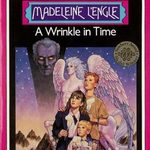
I can see the frustration with Charles Wallace, though I adored him as a kid (I was about his age when I read the book for the first time, but my understanding of the book was like a quadrillionth of his understanding of everything). Calvin is so beloved to me that I can’t really approach him with any adult scrutiny. I’ve reread the book a few times since childhood and I’m still like, “Nope I haven’t moved on from the crush 6-year-old me had on him.” (Primarily in this book cover.)
Well yes, because that handsome redhead has his hand on my shoulder. Er, a very idealized version of ten-year-old me but with the exact same glasses, dress, and haircut. Ahem.
That was the cover I had too! And I had such a crush on Calvin. Possibly because I had a crush on a redheaded kid at the time but also I appreciated that he liked Meg even though she was a weirdo. I don’t think I can view him objectively either.
Yeah, I think he caught me at the only time in my life where I was like “I identify so strongly with this female character that I am in love with the guy who sees her potential” as opposed to “I identify so strongly with this female character that NO MAN IS WORTHY OF HER.”
I always read Calvin as liking Meg because she was a weirdo, which was basically the sum total of my dizziest romantic fantasies for longer than I care to admit, so yeah. Team Calvin.
YES that cover. Also Madeleine L’Engle wrote in one of her memoirs that she got to marry her Calvin, and while I know her marriage wasn’t as ideal as she makes it to be, that still makes me swoon a little.
I KNEW I’D FIND YOU HERE
I think we can trace our mutual love of redheads more than partially back to that cover
I mean, yes. Of course. Fictional redheads are the best. And I still am pretending that Nat from The Witch of Blackbird Pond is one because that is how I always thought of him and he just fits the mold so well.
So you’re going to write about all of them? Thank goodness. I can’t wait to see what you guys have to say about Many Waters.
I remember being distinctly disappointed that there wasn’t more sex in that book. Like, CLEARLY it’s supposed to be sexUAL so where’s the SEX? Look at these babes with their ~apricot~ skin. Come on!
oh yes. i re-read it as an adult and it’s actually really sex-phobic? like, all the bad people are fornicating and the virgin gets to walk with El…
Yeah, I definitely did not pick up on that at the age of 9 or whatever, but when I re-read the books in college, what I really wanted was fanfiction about all the “bad” girls.
Right?! I just read many waters a couple years ago and was horrified! It made me feel like maybe I was mistaken about how incredible a wrinkle in time was? But reading this post has reinspired me to believe that MLE really is a genius and many waters was like… the result of a book contract or something?
Blame Sandy and Dennys. Basically the only thing that is interesting about them is their vegetable garden.
“I remember reading this book, and the sequels, and feeling like I had heard a secret about the world it helped me deal with… whatever I was dealing with as a kid… though probably made me slightly insufferable in my own, wonderful way.”
This nails my relationship with everything L’Engle. I thought “A Swiftly Tilting Planet” and “A Wind in the Door,” in particular, were written for me and me alone. Suffice to say, I was way into kything.
Are you me??? A Swiftly Tilting Planet… man, I think I still know the whole chant verse thingy. (Stupid grownup meetings are getting in the way of thinking about this for the moment, not cool, Grownup Chouffe, not cool)
The rune! I went through a SERIOUS phase where that was my mantra, before cross country meets, before tests, before talking to my parents after dinner…
“All these I place between myself and the powers of darkness.”
I knew the chant by heart too, and thought it was my little secret . My people!
I literally reread ASTP approximately twice a year…even though Meg is super boring and kinda dumb in it.
My cat’s name is Zillah. Yes, specifically in reference to this book.
Let me come sit by you. I had a pet cockatiel named Progo.
That is such a clever bird name! Although I hope he only had two eyes.
Fortunately, yes! He was kind of a jerk, though, so I’m not sure he lived up to his namesake.
Progo is literally the best thing ever.
Oh my goodness, “A Swiftly Tilting Planet” … yup, I can still remember that chants (and Charles Wallace is so much more bearable as a teenager than a 6-year-old).
I think the “Swiftly Tilting Planet” spoke most to me of all the L’Engle books because of the historical/time-shifting focus…
Weirdly, I kept remembering the Mrs. Beast scene as something that happened to Arthur Dent, so I found bringing him and Hitchhiker’s Guide up very appropriate.
Also, I may have just added the AWIT book set to my Amazon cart.
All my gchats eventually devolve into group fanfic searches, too.
It’s the Toast way.
THIS IS FANTASTIC. I just finished it and I might re-read it all, and then go back and binge read M L’Engle books. Can there be one of these about A Swiftly Tilting Planet? That book blew my 13 year old mind and I’m afraid to re-read it and be disappointed.
JOE! Hi there! I don’t know if you realize this but it’s Hieu!
Okay, I’m going back to reading this fascinating conversation on a book that I last read at age 8.
Hieu! Small internet! Hope you enjoyed it. We had a lot of fun.
Emerson College adapted A Wrinkle in Time into a play. My mom took our girl scout troop to see it. It was great!
Aunt Beast was a green puppet thing, that was probably 3 people under a giant green blanket. The Aunt Beast scene was…sensual (if not sexual). My friends giggled like crazy,& I was embarrassed to be seated next to such immature idiots (I was/am a self righteous snob). Also, I couldn’t let my mom think that I knew why they were laughing.
Yeah, we definitely saw this as a play for a field trip in elementary school.
I just want to talk about how the description of space travel from Interstellar is WORD FOR WORD IDENTICAL to the one from Event Horizon which is PRETTY MUCH the one from A Wrinkle In Time, except with a pen and paper instead of ant and skirt.
I was watching a review of Interstellar in which the connection is made Event Horizon. My response was, “WHY AREN’T YOU TALKING ABOUT A WRINKLE IN TIME” and then felt maybe I was making shit up. Thanks for the internet affirmation
No, you’re totally right! Event Horizon is just even closer because they even punch the pen through the paper in that movie.
Yes! Haha I watched it a few hours after reading this thread and was like “WHAT”
I know the Chronos books were not as awesome as the Kairos books (I really was a superfan of L’Engle), but did anyone relate to Vicky Austin? I can’t think of a fictional character I identified with more, though I feel like I’ve grown away from a lot of the things I related to about her.
As a wannabe writer child, oh yes. Pol(l)y was TOO cool. She’d traveled all over the world and had genius parents and was involved in international intrigue. Vicky just wanted to write her poetry and take cool English classes.
(I mean she got her own international intrigue later in Troubling a Star, the greatest book to ever involve princes macking on main characters, penguins, and ice caps, but still)
Yeah, I think once she went to Antarctica, she outgrew me (in the cool department). I will confess to looking for fanfiction that would tell me whether she and Adam married each other or really anything about what happened to her when she grew up. We find out about nearly everyone else!
Polly is annoying.
Or rather, I thought so as a kid. It was always a bit hit or miss whether I’d like her in any given book. (An Acceptable Time? Fine. The Arm of the Starfish? Irritating as all get out.) Vicky was better in that regard.
I have such a weird fondness for An Acceptable Time. It was the second Kairos book I read, accidentally, without knowing it was about the same family as in A Wrinkle in Time.
Polly is kind of annoying. As a kid I thought she was really neat, because she was nerdy and smart and didn’t fit in BUT she got to do all this cool stuff and travel and had real understanding parents and hot guys (although even then I hated Zachary Gray) and she had a cool Greek myth name. I guess she’s kind of a Mary Sue, but I don’t mind Mary Sues as much as I used to. Kinda aspired to Pollydom as a kid, but related more immediately to Vicky.
YES. I wanted to be Meg oh-so-badly, but my strengths lay in the English department, not the math department. “Troubling A Star” is the first book I remember not being able to put down- after my parents went to bed I snuck into my closet and finished reading the entire thing by flashlight.
I wanted to be Vicki, I wanted some day to meet someone like Adam, and I reaaalllly wanted to learn how to play the oboe.
And I STILL want more than anything to go to Antarctica.
Yeah that book definitely put Antarctica on my list.
And the Falklands! That book really made me want to go hang out with penguins and sheep.
“A Ring of Endless Light” was another book I almost stole from my library because I just loved it THAT MUCH. Vickyyyyyy. Dolphins! Adam and Zachary and TERRIBLE CHOICES!
God yes, Vicky was my favorite. I identified with her in a lot of ways, particularly her writing.
I read my middle school library’s copy of Troubling A Star to pieces and then got my own copy that also got read to pieces. I got a new copy a few years ago as comfort reading when I was going through a rough patch.
Hi comfort reading twin. Troubling A Star remains my go-to when I need a familiar, intimate, and still-meaningful reading experience.
Look, as a whole I agree that the Kairos books are better, but as a person who has read most of Madeleine L’Engle’s books, A Ring of Endless Light is better than all the rest.
AHHH this is amazing. I wrote my undergrad thesis on AWIT (and the rest of the L’Engle canon), and there is nothing that thrills me more than a bunch of adults discussing it seriously and at length. Love it.
I feel that maybe this comment section full of L’Engle fans is a safe place to ask if anyone else has read her first book, The Small Rain, and its much later sequel, A Severed Wasp? I didn’t read them until I was an adult, and they blew my mind anyway. Definitely not as sci-fi/world-bending, but really fascinating especially as quasi-autobiography!
Gaaaah I will forever love all four books of the AWIT quartet; I don’t even care. I must have read them all a hundred times.
YES let’s talk about the books that are neither Chronos nor Kairos! I love the Katherine Forrester books. But I’d say my favorite L’Engle book out of all of ’em is The Other Side of the Sun.
I missed out on the Katherine Forrester books, are they worth perusing as an adult?
Camilla and And Both Were Young will always have a special place in my heart, and really taught young me what *growing up* and getting out into the world could be like outside of my tiny suburban experience. I didnt get my hands on any of the other extraneous novels, but these ones were lovely and just moderately romantic enough for a pre-teenager…I think I need a reread soon.
There is a small bit of And Both Were Young in A Severed Wasp (reference to Philippa Hunter)! I would say…yes. They have that L’Engle brand of wispy religiosity (there is a significant church plotline in ASW) and fucked-up-ed-ness (there is also a WWII plotline), not so much of the science-fantasy elements. The Small Rain is very sixties. I believe it is the more autobiographical of the two.
At some point Prelude was published, which I in my teenage lust for every book by a particular author thought was a hitherto-unknown L’Engle novel. It was actually part of A Small Rain, somewhat sanitized for youth readers.
Something I like about the books that are outside the Chronos and Kairos lines is that they aren’t, exactly, always. Frank Rowan, Virginia Bowen Porcher, and the Reniers pop up in Chronos/Kairos books, in small or large roles. In-universe references and threads are one of my favorite tropes.
Anyone have A Live Coal in the Sea thoughts? I have no idea what to make of that one.
I remember liking A Live Coal in the Sea. A lot of people dying in car accidents, though. Anyone read Certain Women?
Yes, I’ve read Certain Women! I don’t think I’ve read it since I was in high school and devouring all L’Engle I could find, maybe time for a reread? I remember it being complicated but interesting, and I’m curious to see what I think of the parent-child relationships in it now that I’m older.
I love Camilla but have never gotten through And Both Were Young because I find the beginning in the boarding school to be incredibly claustrophobic – that school felt like my worst nightmare as a teen when I was trying to read it.
If A Severed Wasp is quasi-autobiographical…. what on earth was going on in Madeleine L’Engle’s marriage?
She has a book about her marriage (A Two-Part Invention) but then I think after her death there were articles about how she idealized her home life and the truth was rougher.
The Small Rain was the one where she specifically said the main character was based on herself – and the sequel was written like 40 years later, so it’s possibly all fictional despite having the same protagonist. Or not! Who knows.
Oof, I have such a specific relationship to this book. My name is Meg, I grew up with my dad explaining a lot of science and literature to me and giving me goofy nicknames, and I was a little awkward and kind of nerdy but could in no way match the academic aptitude of my tiny blond supergenius little brother. I could go on, but you get the idea.
On re-reading as an adult, what I absolutely love about Meg, as a protagonist, is her frustration–with her own identity, with the adults/authority figures around her, with not having answers. She’s so stubborn and prickly and anxious and her insecurities are so real, and I love that even though yes, she’s smart and brave, she’s also in a lot of ways very ordinary. She’s not the Chosen One that so many protagonists of sci-fi/fantasy end up being. Her great weapon, in the end, is love; it’s not some unique key that only she possesses, but something we all have the potential for.
Hi Kate! I went to grad school with your brother! The Toast is truly a tiny & marvelous world.
Holy crap, this was great.
AWIT was the first book I read without pictures. Needless to say some of it went completely over my head (mainly the adult-ish interpersonal stuff), but nevertheless, it warped me, in a good way. I just got a hold of my original copy of the trilogy from childhood and can’t wait to read them again.
I really hated these books! Specifically, I really hated Calvin, and I REALLY hated Charles Wallace, and I thought the philosophical content was heavy-handed and the Camazotz conformity stuff too preachy and obvious. I was the kind of nine-year-old who just didn’t get into that kind of thing. Now I kind of want to do a reread. Any other AWIT haters? Maybe we could start a book club.
I hated them too!!!* Let’s start a book club! I hated Meg’s family because they seemed to me to be holding a perpetual invisible mirror up to themselves to admire their own brains. I hated Calvin because I couldn’t imagine an actual boy of his age acting like that, and it seemed like an adult’s retroactive fantasy of a potential love interest for their younger self. I really disliked the Camazotz conformity stuff because I found it too preachy and obvious, and I couldn’t tell if it was supposed to be a statement about Communism in the Soviet Union or conformity in North American culture (some of my family is from the FSU and I was very tired of its being portrayed that way in the 80’s and 90’s American media as if nothing else but grim conformity happened over there, ever) but it was irritating either way. But most of all I HAAATED Charles Wallace. He seemed like a pompous little prig, and as a smart girl (who was still never seen to be as smart as the “smart” boys due to being a girl) I was completely fed up with the big-relatively-ordinary-sister-protects-genius-little-brother trope by the time I was nine when I read AWIT. Because are there ever “genius” sisters? Or do we get books from their point of view? I’ve never seen any. Loving and nurturing are great, but I wanted to be valued for what I could do that was important to me, not for my projected ability to love and nurture, and I wanted examples of that in literature (or in protagonists, anyway) that I didn’t get the vast majority of the time.
My mother gave me AWIT and told me I would love it, and I tried dutifully for years (I even reread it when it was mentioned on The Hairpin a couple of years ago), but NOPE. I don’t love it. I love many people who love it, but it’s still not my thing.
*Though I love The Toast and this discussion for helping me see merit and beauty in books I hate, even if I hate them so much I won’t actually read them again no matter what, if that makes sense.
ETA: Though I WOULD reread them for a thoughtful haters book club.
Can I join?
Maybe I just hate smug “woe is me” boy-genius characters in general. Don’t even get me started on Ender f***ing Wiggin..
Yes!!! H8 u Ender. OK, I am actually into this idea. https://groups.google.com/forum/#!forum/awit-h8er… to request to join.
A genius sister: Dairine in Diane Duane’s “So You Want to be a Wizard” series. Granted, she goes around saving her older sister, not a brother, but she totally fits the trope and is an awesome character. The third book in the series is from her point of view and she’s a major fixture in all of the others.
Claudia’s sister Janine in Babysitters Club. And everyone hates her, eeeeveryone.
I guess Hermione is the closest I can think of to a genius girl who’s also awesome. She isn’t technically Harry’s sister but she kinda may as well be? But she’s not some otherwordly, messianic type like CW. The fact that she’s a genius is mostly played for laughs and mockery right up until they actually need her, and ultimately the boys still tend to save her bacon rather than the other way around much of the time.
Head over to https://groups.google.com/forum/#!forum/awit-h8er….
This is FANTASTIC and I can’t wait until you guys get to A Swiftly Tilting Planet because that is my FAVORITE ML’E BOOK EVER AND I CAN’T WAIT TO DISCUSS IT WITH OTHER PEOPLE.
YES TO THIS IN ALL THE WAYS. Poetry and winged unicorns, hello.
what struck me reading this again as an adult is how do you compare the wonder and openness to the strangeness of the world with the openness to (communist) mind control represented by IT and Camazotz… like, totalitarian mind conrol requires someone who is brilliant enough to be aware of all the things so he can hold firm against it, but other lessor beings should have faith in… beauty? love? the universe? Charles Wallace? i found this very compelling as a kid… but as an adult i wonder about what authorities these represent.
my favorite of these books when I was a kid was Dragons in the Waters. Also Many Waters, which was the first time i noticed anything religious at all going on 🙂
You guys, this makes me so happy. MLE was my grandmother and I love seeing her work discussed so seriously and smartly. Thanks!
Waitasecwaitasec, that is amazing.
*sits down* Wait. So. Wait. *stands up and then sits back down again*
Hi, I have so many feelings!
First of all – The Toast is such a tiny world in so many ways. Last night, my new housemate and I were bonding over sci-fi/fantasy books we are/have been into and I talked about how ML’E was my favorite as an 9-10 yr-old (she actually found her way too religious). So coming across this conversation on my favorite website while procrastinating my math hw (because I was always jealous and resented Meg for having math be easy – I thought because I conceptually understood math I would one day find out that my way of getting the answers would work just like Meg’s math tricks did, but they never did for me) for UC (academic home? of at least two of the authors here) by someone I went to high school with (Hi Johannah! It’s Natalia, I don’t know if you remember me, but I’ve been following your writing, because it’s awesome) was just perfect.
Moving on, have y’all seen the AWIT graphic novel? I got it a couple of years ago and that’s as much as I’ve re-read the book (read: looked at the artwork) since I was little. I’d be interested to truly re-read it, because I remember being frustrated with every one except the twins who just seemed like a whatever, but still feeling like they were so real to my understanding of the universe. The part of the book that I feel was so _elemental_ to my cosmovision and formation as a scientist is the part with Aunt Beast where Meg realizes that she can’t describe anything to Aunt Beast because she understands the world from a visual point of view, and Aunt Beast doesn’t have a conception of sight or light. It had a double impact of understanding that there are things that you’ll understand in a way that you’ll never be able to explain to someone who has a different point of view, but more importantly, that there are things that I’ll never understand because of my own human limits (and as such, scientific reasoning). Whether it’s religious or not, I think it’s so humbling and necessary.
I would also want to re-read all of ML’E’s work as an adult, because I definitely second a lot of the comments that talk about her work being their first exposure to LGBTQ identities but not remembering any of the problematic stuff, only the positive aspects. I still remember vividly laying on my red couch reading “A Severed Wasp” at 11 or so and thinking if my parents knew that I was reading about a gay priest, they would probably take the book away. I also have a strong association of my first feelings of sexuality with “And Both Were Young” but have no memory of what that was actually about.
OK LAST THING, I also want to defend “An Acceptable Time.” The image of the chords connecting people across time and space was really relevant to me as a kid who never lived more than 4 years in one place and spent a lot of time with nostalgia both for people in other places, but also people and spaces in other times that I never actually knew through any medium that wasn’t books/tv/movies/music.
And Both Were Young! Hah – that’s the title I was trying to remember. Thanks! That’s the one that takes place at a European boarding school post WWII, right? (Yes, I know I could google it, but that would be like admitting I’m not going to get any actual work done today). That’s another one that really stayed with me, although I’m not sure why.
I had NO IDEA there was a graphic novel. Is it still in print?? I would so love to read this!
http://www.amazon.com/Wrinkle-Time-The-Graphic-No…
Here you go!
I was given the graphic novel a couple of years ago. I didn’t think it was particularly well done.
This whole conversation made me so happy! I have had so many THOUGHTS and FEELINGS about the whole AWIT series since my childhood and never had anyone to discuss them with.
Also I just saw Interstellar and felt very smug and superior that I already knew about (semi spoiler alert but not really) 5 dimensions and tesseracts because of reading AWIT a dozen times.
Aaaactually,
if you want to be all specific about Dune and the way the Spice impacts space travel as they put it with the prequel-books and all (which, a lot of people felt, kind of ruined some things) *breathes* it´s not really the “fuel”. Space travel is achieved by your standard ‘warp-field’, called the ‘Holtzman effect’, after it´s discoverer, and the neccesity for the Spice arises solely from the fact that computers are outlawed in the Dune-universe. Thus, to do the “absurdly complicated mathematics” of foldspace, the drug is required to give humans the capacity for limited prescience and expanded minds to cope with the calculations.
tl;dr: in dune they only need the spice for space-travel because they´re not allowed to build computers do it for them. The actual power source is never really explained afaik, so it´s probably regular-ass nuclear power or something.
I reread “A Wrinkle in Time” a couple years ago because I thought I had fond memories of my dad reading it to me and my sisters. The forword made me frown pretty hard already because I had had no idea MLE was so super-religious.. unnecessary to say, it´s really not my cup of tea.
Also joining in the Planet love. I mean, I liked all of them (though totally was on Team Nephilim in Many Waters*), but Planet, interestingly, shows Charles as out of his depth and human in comparison to Gaudior as people are to him in the first two. (And he’s only briefly around in Door, because Ecthroi.)
*TECHNICOLOR ANGELS that you can BONE. How is that bad? Except for the dude that turns into a mosquito, because those are the worst.
I love how beyond my understanding/knowledge of sexuality Many Waters was when I read it. Like, even the descriptions of nudity gave me feelings I didn’t really understand yet. So looking back, yes, Team Nephilim.
SQUEEEEE, exciting.
I haven’t revisited the L’Engle books in awhile, but I remember I was drawn so powerfully to Meg in particular because I too was a super-gawky, grouchy adolescent, and in a lot of ways, AWIT was wish-fulfilment because it had the sort of family I wish I’d been part of during that rough period (my parents are immigrants and while they hold professional degrees, our ideas about art and and ideas and other things were quite divergent and it took awhile for me to accept and understand them better). I’m still pretty unhappy with Meg’s adult life, though. Since she got one thing she had yearned for (good looks), but she put her brains and all the rough edges that made me love her on the backburner and siiiiiggggghhhhh. . .
I heard somewhere that L’Engle had been tinkering with a book idea about Meg as an older woman looking back on her life and choices, and that sounded super interesting and maybe would have mitigated my Meg sads, but of course, that never came to fruition before her death.
And maybe this is me being a grumpy old and all “get off on my lawn!” but when I think about how gloriously weird and nonstandard and full of ideas and imagination the L’Engle books are and how popular they got and what the blockbuster YA landscape is like now. . .what happened? Huh? I mean, maybe Calvin is a bit milquetoast but at least he’s gawky and a bit weird, and even the nerds in today’s popular books seem to be secretly attractive and attract tons of girls and shit.
This all sounds AWESOME and I clearly need to read these books. I had the second one when I was a kid, and I didn’t know how libraries worked so I never read the first book and thus was super confused when I read A Wind in the Door.
And the Falklands! That book really made me want to go hang out with penguins and sheep.
Oh now I know what I want to re read! This is so lovely
What a great discussion of a wonderful book! I read and loved many of L’Engle’s books as a child, but I didn’t read one of my favorites, The Young Unicorns, until I had graduated from college and was teaching middle school. It felt heartbreakingly earnest and beautiful and made me remember what it feels like to be completely overtaken by a book. I look forward to future L’Engle discussions!
Late to this…I remember being so excited when MLE signed my copies of Wrinkle and Wind in the Door years and years ago…And young proto-lesbian me being really upset by the Max thing and consigning it to a special black box in my brain. I only vaguely remember each of the books and am hesitant to re-read them. I love your discussion of beings assuming physical/visible/phenomenal forms depending on the constraints of human perception. It reminds me of a part in the Space Trilogy by CS Lewis where the Eldila (space angel beings) appear to the protagonist as freaky, disconcerting “wheels within wheels” a la Old Testament angels, and why do seraphim seem to think that this would be a good option, or why is it this the visual that somehow corresponds to/translates to human vision and corporeality?! (I don’t know anything about Judeochristian tradition except for what I’ve encountered in fantasy and sci-fi, really.)
Back to Wrinkle, I do have an odd recollection of reading Charles Wallace as having autism/asperger’s…I guess I had some really smart friends with really smart/different/non-neurotypical younger siblings and he sort of slotted into that for me. I remember being horrified by the seeming coldness of the father when the kids rescue him. I may be misremembering, but it seemed really anticlimactic and like not there at all emotionally. To this day, I hope that a mean boss/coworker/politician will assume there true evil ecthroi form and screech across the sky before my eyes. I was so into the witches, but my one true love from MLE was and remains the mitochondria and farandolae. 🙂
Also, I would love to read three adults talking about the sequels to Ender’s Game. Of course I hate the author’s homophobic bullshit, but even more than Ender’s Game, Speaker for the Dead and Xenocide blew my adolescent mind. I especially love the colonial encounter part about the Portuguese planet, with its Catholic missionaries, scientists, and anthropologists totally misunderstanding the very biology of the “piggies” and their ecosystem. How the mutual human-piggy misunderstanding is really disastrous, even when attempts at understanding are made with goodwill.
Oh and sorry to keep posting, but I HIGHLY recommend the book When You Reach Me, a recent Newbery-winning YA book that, in part, is a love letter to Wrinkle in Time.
This was the book that taught me how chapters work/what chapters are (just because every section of the book has its own name does not mean each one is its own separate story…). Five-year-old me was really keen on skipping straight to “The Man with Red Eyes”.
To all the parents out there, it is never too early to read this book to your child!