

Previous installments in this series can be found here. There will be spoilers. “An historian” is a perfectly acceptable Commonwealth convention, haters to the left [side of the road.]
The things that bother me most about Downton Abbey are not simply about historical accuracy. I think that historical accuracy is a complicated issue and not actually easy to get right. How do you write dialogue for characters that would have used slang that would now be incomprehensible or misunderstood? The average British actor is a great deal more robust-looking than the average Yorkshire servant would have been a century ago; should the show’s make-up and casting reflect that? It’s hard to draw the line between reasonable accuracy and antiquarianism, and in many respects I think the show does well.
Much more disturbing to me are the occasional intrusions of graphic suffering, or perhaps I should say, the uneven pattern of those intrusions. It is saying something, in a show that had scenes actually set in the trenches of the Western Front during World War I, that the most viscerally violent and distressing scenes have been a death in childbirth and a rape. There is a willingness to wallow in images of the female body in agony, and a commensurate squeamishness about male suffering (even Matthew looked barely dented in the aftermath of his crash), that is unsettling, especially since it seems to come out of the blue, narratively speaking. This is not a show that depicts the gritty reality of life, except when suddenly it does, and it usually only sacrifices women to that end.
 With all that said, Sunday night’s episode did capture the intense vulnerability of domestic servants, especially women. At times Lord Grantham acts more like a utopian philanthropist landowner than the hidebound aristocrat he’s meant to be. Mrs. Patmore’s eye treatment paid for by her employers, sneezing maids sent to bed, Molesley kept on for six months without any real employment—it’s easy, most weeks, to forget how desperately insecure most domestic servants were, and how vulnerable to mistreatment of all kinds.
Domestic service remained a major employer, though declining, for women in the first half of the twentieth century. Service jobs of various kinds are still common, of course, even though customs and vocabulary have shifted; the gap between the nannies and cleaners of the 21st century and the servants of Downton’s world is not as big as we’d like to think. According to the 1891 census in England and Wales, 41 percent of the female labour force was in domestic service; the comparable number in 1931 was 24 percent, though there was an even larger dip right around World War I. In her beautiful memoir, Lark Rise to Candleford, Flora Thompson poignantly describes adolescent girls leaving their hamlet homes in rural Oxfordshire and heading out to service in the late nineteenth century, while their brothers stayed home and worked as agricultural laborers. By the time of Downton Abbey, these girls had other options: if not staying in school slightly longer, then taking up jobs as secretaries, typists, shopgirls, or workers in the new light industries of the south.
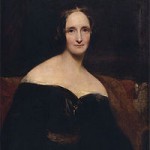
 They were, in many cases, escaping not so much drudgery or hard work—that was unavoidable—as the suffocating power relations and lack of independence that were inherent to domestic service, especially for servants who lived in their workplaces. They faced a range of annoyances, from bad-tempered or overly strict masters and mistresses to humiliating rituals and requirements—Lady Astor (pictured), the first woman to take up a seat in Parliament, reportedly shared chocolates with her maid, but only after biting them first to see if she liked the flavor.
Sexual harassment of various kinds formed one element of these troubles. The historian of domestic service Lucy Delap quotes one woman who remembered of her employers: “the woman was harsh and the man too friendly. I couldn’t lock my bedroom so I put a chair behind [the door, so that] at least there would be a clatter if he did try to visit me—but I measured my waist with a tape measure each morning in case he had given me a baby in the night in my sleep! I was 22 but we didn’t know much in those days.”
In my own research on Irish immigrants to England, I came across another story in the 1933-34 annual report of the Liverpool Society for the Prevention of International White Slave Traffic, a group that allowed ladies in the mold of Isobel Crawley to help young women find suitable jobs and lead worthy lives. Two young women, aged 20 and 21, arrived from in Liverpool on the boat from Cork with an address in Cheshire where they had jobs waiting as a housemaid and a cook. In the words of the Liverpool Society:
Two months later we had a letter saying they were very unhappy. They had to do all the cooking and housework, and in addition look after Alsatian dogs, also clean the daughter’s car. They were only allowed out very occasionally, but never together. They had not received any wages except a shilling each time they went out, and their Insurance cards had not been stamped. The master of the house had tried to seduce one of the girls, and this had made them scared to be left in alone.
Ultimately the Society intervened, with support from the law, and obliged the employers to “stamp the cards up to date and pay full wages due to the girls, who were at once removed and helped to obtain very good reliable positions.”
By the thirteenth century, rape was defined in English common law as forcible sex against the victim’s will; the Statutes of Westminster introduced the idea of an age of consent and set hanging as the penalty for rape. In the seventeenth century, the jurist Sir Matthew Hale wrote, influentially and distressingly, about the need to consider the character of the accuser in rape cases; famously, he said that rape “is an accusation easily to be made and hard to be proved.” In portraying Anna as the upstanding and resisting victim of Lord Gillingham’s valet, Downton Abbey nods to prejudices about the nature of rape that have persisted, then, for centuries. Over the course of the nineteenth century, penalties for rape were lessened (to transportation and then to imprisonment), while the age of consent was raised. Marital rape was defined as an impossibility from the seventeenth century until the very late twentieth century, the argument being that marriage itself implied consent in perpetuity. However, the Divorce Court increasingly recognized limits to the sexual demands that husbands could legitimately make; knowingly and recklessly communicating venereal disease, for example, was defined as cruelty by the case of Boardman v. Boardman (1866).
Domestic servants, then, like other working-class women, faced a pervasive risk of sexual assault. As usual, though, Downton Abbey blurs the real power dynamics that usually underpinned that risk: Anna was at far greater risk from Lord Grantham or other ‘upstairs’ men, and in the case of Mr. Bates, she literally couldn’t have said no, legally, in 1922. And Edna Braithwaite, of course, is fairly implausible as the full-on sexual predator she seems to have become by the end of the episode; the balance of power is nearly all on Branson’s side there. It’s not, ultimately, than any of these story lines are inaccurate, but that they obscure the larger patterns of power and abuse, and they do so in a way that seems to fetishize the suffering female body.
Sources
Lucy Delap, Knowing Their Place: Domestic Service in Twentieth-Century Britain (Oxford University Press, 2011)
Gail Savage, “‘… the instrument of an animal function’: Marital Rape and Sexual Cruelty in the Divorce Court, 1858-1908,” in The Politics of Domestic Authority in Britain since 1800 ed. Lucy Delap and Ben Griffin (Palgrave Macmillan: Houndmills, Basingstoke, 2009)
“Rape,” in The Oxford International Encyclopedia of Legal History, edited by Katz, Stanley N. (Oxford: Oxford University Press, 2009)
Tags: downton abbey, history, mo moulton, nicole remains deeply suspicious of gregson, watching downton abbey with an historian


Liverpool Society for the Prevention of International White Slave Traffic
Liverpool Society for the Prevention of International White Slave Traffic
Liverpool Society for the Prevention of International White Slave Traffic
“White slave” was generally a weird late 19th-century/early 20th-century term for women (WHITE WOMEN OBVS) coerced by various means into prostitution, I think?
I know! I just love that phrase so much
there’s probably like a WHOLE ARTICLE to be written about the history of that phrase!
“White slavery” as a term got a heyuuuuuge bump in popularity when Orientalism was popular as the sort of “dark side” or flip side of the fascination with the East. The good side, of course, being the fascination with luxurious fountains, opulent decor, exotic music, etc., that was popular especially in the late 19th-century right up through the 1920s or so, with periodic recurrences. It’s the idea of a sort of vaguely dangerous aspect that makes it more fascinating–“oooh the harems of Arabia are filled with mournful white women” or the “White Women Enslaved In China!” of tabloid/penny press of the period. There’s also a shocking amount of overlap with Victorian/Edwardian pornography.
Please write an article about this!
in Spanish the term is stil “trata de blancas” and I never thought it was racist until now, I feel so terrible! (I figured it was “white” as in “pure”, I guess?)
(…)
OK I just looked it up and it is NOT the official legal term, but newspapers and other media still use it. I will totally never ever say it again.
It’s not, ultimately, than any of these story lines are inaccurate, but that they obscure the larger patterns of power and abuse, and they do so in a way that seems to fetishize the suffering female body.
Thank you, this nicely articulates the unease and vexation that surfaced in me during the most recent episode. I knew something was wrong with the way the sexual and power dynamics were playing out (and have, over and over, throughout all the episodes I’ve seen). though I couldn’t quite put my finger on the objection.
Exactly. Also, I wish there was a better word than “historically accurate” — maybe historically plausible? — to describe when something could conceivably have happened that way at that time and place, but it would be much much more likely for it to happen another way.
That’s what I love about this series. (btw, thanks to Mo Moulton and of course to Nicole & Mallory for making this a series instead of a one-off! I’m so eager for the ongoing series and for the discussion in the comments!)
As Moulton so beautifully describes, any one of these incidents is possible and plausible; it’s the concatenation of all of them that fails to represent the historical realities of power in a plausible way.
Right – remember the housemaid who caught Lord G’s eye (season 2? maybe) – that power dynamic was so dissatisfying, not from a ‘oh dear! Lord G would never!’ perspective, but from a ‘they’re portraying it as if the maid had ANY recourse in that situation, unless ‘leaving with probably no reference for an unknown future’ is a recourse.
That brought up the same vexation for me. (Not b/c of the maid’s ultimate physical suffering, but because of the larger pattern of power and abuse.)
I somehow missed the debut of this series, and I LOVE IT. Thank you for talking about how it doesn’t really make sense that Anna would be attacked by someone else’s valet. I never thought that made sense when I watched it a few months ago, and sometimes it does kind of annoy me how apparently none of these servants were ever abused by employers (even new hires), cuz that was not the reality for a lot of people.
That there are all these women servants scheming away to seduce their virtuous employers is insane. That’s been multiple points- not just Branson but also Grantham. Are we supposed to believe that in a time where sex is a sin, women have no power, women are extremely vunerable to sexual assault that the ladiez were slinking around trying to smooch their bosses all the time?
I posted this article to Facebook and a friend of mine (who is similarly interested in domestic history, but more deeply schooled in it than I am) pointed out a similar thread immediately: that the show depicts a series of scheming plots hatched by female servants*. I haven’t seen the first season/series of DA (though I picked up from later episodes that A Thing Happened and also maybe that a female servant cause it to happen), so I hadn’t quite seen that aspect of the show.
*[edited to add: to be fair to her, she actually described it as feminized villainy committed by female servants or by Thomas, whom the show treats as a feminized character. Such an insightful observation that I felt moved to correct my misrepresentation.]
I will never back down on this issue, no matter how much you taunt me. The H in “historian” is pronounced so it should be “A Historian” but go ahead and be a diehard, I guess this is a very appropriate post to be old-fashioned. I’m still deeply troubled by this.
take it up with the canadians jordan
“uh historian”
“uh historically accurate TV show”
“uh historical moment”
No.
An. An today, an tomorrow, an for all of recorded history.
I give you a hour and an half to take it back.
“uh horse”
“uh horse stable”
uh hoarse singer
uh handbag
uh hospital
They all sound weird if you think about it for more than a second, and yet, they are all so very correct. And not wrong. Unlike ‘an’
I shall join the good indefinite article fight! Victory to the prounouncers of H, that mighty titan of a letter.
We’re on the same team with a huge H on the front of our jerseys, that herculean hulking letter.
Can I get a “hip hip hooray!”?
I agree completely! Putting “an” before history/historian/historic and not before any other word beginning with H is more pretentious than correct. If you don’t pronounce the H, you know, have at, but the majority of English speakers do.
People who adhere to different grammatical conventions than you do are not necessarily “old-fashioned.” As a Canadian and a grammar aficionado, it is DEEPLY annoying to be told by Americans that my grammar and spelling conventions are wrong. You can pry “colour,” “in hospital,” and “an historian” from my cold dead hands.
And some of us appreciate Nicole’s efforts to include a little bit of CanCon here on The Toast. (Thanks Nicole!)
(… I may have inappropriately strong feelings about this!)
So mostly unrelated, but ancestral ancedote: in her youth (say . . . 1901ish), my great-grandmother was “in service” at a fancy upper-class establishment. One hot summer day, she nearly got sacked for not fastening the top button of her wool uniform dress.
Well, I mean. Your great-grandma was a slut. What did she expect?
^comment of the year
"My spoilers rule is spoilers are for shows you aren't committed to and movies you won't actively rent or go see. "
My boyfriend is APPALLED that I actively look for spoilers in shows I don't really care about. I want to be able to at least nod along when people are talking about Breaking Bad, but I don't want nightmares about meth dealers blowing up my house.
Can I get a "hip hip hooray!"?
Such a good point about the “uneven pattern” of suffering. I’m increasingly frustrated “historical accuracy, yo!” as an explanation for focusing on violence done to female bodies (not just with respect to this show). Somehow, the concern to depict 19th century sexual culture and its embedded oppression wasn’t so important when, say, Thomas was outed…
Can we talk about Tom and Edna? When I watched, I thought that it was pretty clear that she raped him (assuming she wasn’t just tucking him into bed which seems a bit unlikely). However, no one online seems to be discussing it in those terms? I mean looking at the facts, she gave him more and more alcohol until he was pretty incapacitated and then took him to his room. But then I see that she “seduced” him in the articles I’ve read online. If it were a male servant actively and aggressively pouring drinks and then dragging Lady Edith to bed, wouldn’t we call that rape and not seduction? Did I honestly just miss something?
Did you all know that rape (from the Latin “raptus” — “seized”) was originally (and for centuries…at least through the eighteenth, which is my area of knowledge) defined as a property crime? As in, rape is bad because you have stolen my daughter or wife’s virtue from me? EVERY TIME I THINK ABOUT IT IT MAKES MY BLOOD BOIL.
Did you all know that rape (from the Latin "raptus" — "seized") was originally (and for centuries…at least through the eighteenth, which is my area of knowledge) defined as a property crime? As in, rape is bad because you have stolen my daughter or wife's virtue from me? EVERY TIME I THINK ABOUT IT IT MAKES MY BLOOD BOIL.
Please write an article about this!
I once read a memoir by Lady Astor’s maid, once. Lady Astor was indeed eccentric and difficult, but the two of them actually had a far closer relationship than most servants and employers did. The two of them often got into roaring arguments, and not only was the maid never reprimanded for this, but some members of the family also quietly told her they were grateful one person could stand up to her! The maid was fairly richly compensated in the end.
While I’m not disputing the overall historical truth about servants being humiliated – which is inarguable – Lady Astor and her maid were an atypical pair.
Very cool context–thanks. I suspect that some kind of fractious intimacy was not uncommon, actually. Alison Light has a beautiful book about Virginia Woolf and her relationships with her servants that gets at this very well too.
Ugh, this episode annoyed me so much! Aside from the improbability of abuse coming from the same social level, I hate how in retrospect Bates’ overbearing behavior is somehow justified, and Anna’s desire to play some cards has dire consequences. Seriously?!