
YEAH, man:

We’re gonna be talking more about books to read later today, but Emily Gould did this great roundup of fall reads and I am INSPIRED by it and have saved several of them from my give-to-the-women’s-shelter stack of galleys.
Everyone is linking to this with I NEVER FORGOT ANASTASIA KRUPNIK so I’ll skip that part:
Do you get a lot of Anastasia-obsessives contacting you?
The Anastasia days predated email, but one of my favorite letters I’ve ever gotten came from a kid who told me that she loved the Anastasia books; she loved how Anastasia had to take care of her baby brother all the time, because her mother worked. The funny thing was, none of what she described in her letter was in the book. Clearly, this was what was going on in her own life — she had to take care of her brother because her mother worked. Anastasia didn’t do any of those things. But it was a neat example of how a child can so deeply enter a world of a book that it molds into her own life.
Oh, wow, AHP did a GREAT job on why the TV coverage at the NY Times is so bad:
The “Angry Black Woman” piece, as it has now come to be known, was written by the Times’ chief television critic, Alessandra Stanley. It was racist, factually incorrect, and demonstrated an overarching lack of familiarity with Shonda Rhimes’ work in particular and contemporary television in general.
Others have outlined exactly how and why with incision. But for those familiar with Stanley and television criticism at the Times, it was but the most recent and flagrant in a long history of gaffes, misunderstandings, and sublimated dismissals that demonstrate an insulting lack of investment in the medium. As Vox culture editor and television critic Todd VanDerWerff told BuzzFeed News, “The Times thinks of TV as fundamentally vapid, so it produces dismissive criticism about the medium, and so far as I can tell, this is historically true of the publication.”
When Jennings showed up in March 1945, at age 20, there were approximately 70 women at Penn working on desktop adding machines and scribbling numbers on huge sheets of paper. Adele Goldstine, a mathematician who was married to the Army’s liaison with the ENIAC team, was in charge of recruiting and training. “I’ll never forget the first time I saw Adele,” Jennings said. “She ambled into class with a cigarette dangling from the corner of her mouth, walked over to a table, threw one leg over its corner, and began to lecture in her slightly cleaned up Brooklyn accent.” For Jennings, who had grown up as a spirited tomboy bristling at the countless instances of sexism she faced, it was a transforming experience. “I knew I was a long way from Maryville, where women had to sneak down to the greenhouse to grab a smoke.”
I continue to be fascinated and terrified by Su Meck’s story (the shit with her husband that comes up, Jesus):
Su was taught to braid and make a tuna-fish sandwich and Jazzercise, all of which she picked up quickly. She passed a “safety evaluation” that involved crossing a street, walking in a crowd, and riding a bike. On June 7, she was deemed “severely impaired” in attention, language comprehension, abstract reasoning, and judgment and “moderately impaired” in memory and calculation. Three days later and just 19 days after sustaining her injury, with an IQ assessed at somewhere between 70 and 100 and the visual and spatial skills of a 6-year-old, having made “remarkable improvement in all areas,” her deficits “resolved,” and all skills apparently “within normal limits,” at least “80 percent back to normal,” she was discharged, with no additional therapies or rehabilitation recommended, save psychological assessments to address lingering issues deemed “nonorganic.” In a blue Chevy Malibu driven by the man who’d been introduced as her “husband,” she sat silently, looking out the window at each piece of the almost everything she did not know, including, as they pulled into the driveway of the one said to be hers, inside of which waited the two little people said to be her “children,” to whom she was said to be their “mother”—home.
Okay, one more thing about the Mitfords!
This whole thing by Sarah Miller is kind of stupendous and great:
During the school year, we had a housekeeper at home. My mother insists the housekeeper wasn’t full time, but there has to be some reason I don’t really know how to make a bed and am not very neat and yet, somehow, also have extremely high standards of cleanliness. The housekeeper made a lot of meals, but whenever we said that what we were eating was good, my mother would point out that she had picked out the recipe, and then she would try to convince you that this was important, even though no one cared. My mother thought that meant we didn’t care about her, but that wasn’t it. We just didn’t care where the food came from. People cook — particularly women, but not only women — because they think people are going to notice them, and love them, but almost no one thinks about who made what they’re eating or how it got on the table. They’re just hungry, and they eat, and they sometimes say thank you, and then they forget about it.
Look, we’re going to link to ALL the Phil Hartman stories, deal.

“And she was an adult. She could actually choose what she wanted. She could choose fun, and it seemed like maybe she didn’t know that, so I was telling her.”
trigger warnings: flashbacks to entire childhoods
Talib Kweli wrote a great piece about Lauryn Hill: https://medium.com/cuepoint/in-defense-of-ms-hill…
Su Meck’s story is just terrifying to me.
I love being reminded of the existence of “Ms. Hill.”
People cook — particularly women, but not only women — because they think people are going to notice them, and love them, but almost no one thinks about who made what they’re eating or how it got on the table. They’re just hungry, and they eat, and they sometimes say thank you, and then they forget about it.
This is bullshit. People cook because they enjoy it, because they want to share food with those in their household, because they want to nourish their families; they cook because they love food, or because they have little money and it’s cheaper than buying ready-made. They cook because they want to know what’s in the food, or because they care about what their children are eating. They cook using recipes handed to them from friends, from former neighbours, from their parents and siblings and grandparents.
You know, some of us cook because we just need to eat.
And lots of people feel loved because dad/mom/grandma/sister/whoever “makes the x recipe that they know is my favorite”. It really is bullshit (or coming from some unusual life experiences).
I have a severe food allergy to peanuts — knowing my friends and family care about me enough to go out of their way to make food I can safely eat is actually a really huge deal, especially since I have been accidentally poisoned by other people’s carelessness.
I think having food allergies has given me sort of an unusual perspective though — I had multiple relatives and family friends who just refused to take my allergies seriously, so my mom would bring special food just for me or I would go hungry, and that’s really shaped how I think about the importance of being able to share food and sustenance with the people you love and want around you.
or coming from some unusual life experiences
There it is! I read the quote and rolled my eyes, thinking “That’s so Mitford*.”
*That’s So Mitford: The most mordant Disney Channel show ever.
I was also a bit surprised by that part. My mother has actually written a book on how intensely social, communal and even spiritual the act of sharing a meal can be, and Sarah’s description of it doesn’t much match my experiences.
Except it very much matches my experiences as a child. That’s totally my childhood experience of home-cooked food in one sentence.
Which leads me to wonder if it’s also true of the adult experiences of other people?
THANK YOU! This piece really raised my hackles. Not only because the author ignores all the great reasons people cook that you listed but also because (oh no, I’m that person) she never acknowledges that she has a lot of privilege to be able to not cook.
I read so much stuff by the Pollans of the world blaming women for no longer creating family meals that do not acknowledge the cost in money and time of preparing family meals that I think there is usually unexamined privilege on both sides of the cooking coin.
I totally agree- cooking can be crazy time-consuming and surprisingly expensive. It’s another kind of privileged for sure. But there’s a difference between “I’m not going to cook anymore” and “Maybe I should take a step back from canning 10lbs of tomatoes and just feed myself.”
And yet the “not cooking” options that people who don’t cook default to are dependent on *someone’s* labor. When I say “oh, I’m not going to make anything today, I’ll just eat whatever,” I’m kicking the can down the line, and while perhaps if I ate melons and prosciutto every day that would be great, in reality I’m eating commercial food where the preparatory work was done almost 100% by people who make significantly less than I do. I don’t get how “fuck it, I’ll call Papa John’s tonight” is construed as a *less* elitist option than doing the work to constantly keep rice and beans and stew and burrito filling and so forth available to feed myself — it seems to me like *literally saying,* “fuck it, my time is valuable, and poor people can cook for me.”
But it’s not like you’re harvesting the rice and beans yourself either. You’re always dependent on someone else’s labor to eat in US capitalism. The solution isn’t to forgo paying money to people whose labor saves you time, it’s to ensure that the exchange is equitable and that everyone has access to it. Time is valuable to everyone.
The cost in time and money, and also in imagination and responsibility. Sometimes I am not too tired to cook, but I am too tired to think up something to cook, or to take the emotional responsibility of feeding us (with the subtext that I should be feeding us “well,” whatever that means).
Fortunately (THANK YOU, FEMINISM) my husband and I swap off turns cooking for each other with pleasure, and any excuse—including “Dude, I just can’t”—is considered a great reason for the other to step in.
I disagree – MOST people do not feel this way about cooking, but I know from personal experience (best friend’s mom) that some people feel that feeding their family is their “love language.” They get offended when their loved ones don’t eat, or don’t eat enough, or don’t take leftovers, or compliment them, etc etc. It’s odd and – I think – a bit unhealthy, but some people have very weird relationships with food.
Enh, I’d say making food is an expression of affection for me, and I don’t really consider my relationship to food to be particularly unhealthy. I don’t get offended if people don’t eat it or like it, but I definitely make my boyfriend’s favourite food on his birthday, and I appreciate my mom giving me a jar of jam to take home when I go visit her. The author, who says she will never cook again because cooking and food are too fraught with dangerous feelings, seems to have a more unhealthy relationship to food than people who associate it with love.
I think food as affection is just like anything as affection. If I offer a hug and someone doesn’t want one, I do not throw a fit. If I make cookies as love and someone doesn’t want one, I do not throw a fit. The problem is not offering affection, the problem is assuming that people have to accept your offer or else.
Cooking is not always more possible than not-cooking, depending on your work schedule, which is why people in poverty are constantly being shellacked for relying heavily on processed foods.
I agree, and the trouble with many people in poverty is that they are not only poor in terms of money, but also in terms of time. Also, not having people to teach you how to cook (unless you have the opportunity to take that up on your own as an adult) means that cooking from scratch can be bewildering and frustrating, and not the kind of thing you want to be doing after a long day.
The author came across as entitled and privileged, and it bothered me because inasmuch as I agree that we might expect gratitude or a thank you for cooking a meal, it is for many people a lot more basic than that. I have been in the position where I have had to worry about how to make enough food to last the rest of the week until we get paid, how to space out bread and milk and even fruit. Perhaps it just hit a nerve that in the same paragraph where she writes about her housekeeper making meals for her as a child, she also dismisses that there might be other reasons that people cook, not simply to have people love them or care for them.
I do think that there’s a gendered cultural element that’s worth pointing out. Cooking is obviously fraught for a lot of women, because “just needing to eat” doesn’t explain why women have historically done the bulk of the cooking and been judged by their cooking. And making the elaborate gourmet food that the author is talking about definitely has an element of performance and class-positioning.
But yeah, I wish the argument had been made by someone who wasn’t all like “and then we had caviar on my yacht!”
Oh, totally. I definitely think there is a gendered element to this, and I don’t have an issue with her pointing out that it’s mainly the women who cook, because that’s absolutely true. Being ‘a good cook’ is also something that a lot of people (whatever gender, but definitely there is pressure on women) feel is a valued trait, and I don’t doubt that there is pressure to perform even on a very basic level when you’re cooking for others.
Yeah, the “almost no-one” is rubbish. I love cooking and I love cooking for people, and I know that the people I cook for range from:
– people who also love cooking and being cooked for and really want to have a conversation about the food and share cooking experiences
– people who can’t cook but who love food and regard cooking as a majestic accomplishment and are deeply appreciative of other people who cook for them
– people who love food and/or love cooking but whose food desires / culture are totally at odds with mine and we just stare at each other over a vast chasm of “that’s what you think of as food?” and don’t get each other at all
– people who regard food as fuel and who will eat it regardless and not really notice whether it’s good or not.
I mostly enjoy cooking for the first group and the second group, but it’s not a huge hardship to cook for the latter two groups (because hey, *I* still get to eat what I’ve cooked!) But it’s certainly not my experience that “most people” are in the last group.
I actually looooooooooooove cooking for the last group you mentioned because then I can make food to my tastes and not worry about their tastes.
My husband is a bit of a mix of group 1 and 4 which is really nice if I am trying something new out, because he will likely still eat it if doesn’t turn out (within reason). Our division of household labour is that I cook and he cleans. This mostly works well for us based on our mutual preferences, but isn’t something that would necessarily work for everyone or even something that will always work for us.
I think the essay does a good job of pointing out that cooking has acquired a lot of secondary meaning – the scene about the failed carrot sauce with the knowledge that her boyfriend was cheating on her was so painful and good.
And it’s unfair, right? Food is necessary, but cooking is a serious time-consuming skill that is part of compulsory femininity instead of being treated as a serious time-consuming skill, and it’s bullshit.
I had a lot of thoughts about this piece, and everyone below (above?) has raised good points, but for me a key element of the equation is that there’s a difference between cooking or not cooking for you and your boyfriend, and then cooking or not cooking for a family that includes young children. That’s one key difference between her mom’s experience and her own.
Speaking personally, my relationship to cooking has changed a lot since I was a 20-something cooking to impress people and now a 30-something cooking to fulfill my vision of myself as a mother who cooks because it’s the Right Thing to Do. I enjoy some aspects of cooking, but it’s terribly exhausting to put a full meal on the table seven days a week, not to mention breakfast, lunch, and snacks, and keeping track of what’s in the fridge, and doing the grocery shopping, and cleaning, so on. It requires an enormous amount of mental and actual time, even when my husband helps out with a lot of it.
Do I cook because I want to know what goes in my food and because I care what my family eats? Of course I do. But if I’m spending an enormous amount of my non-work time cooking and thinking about cooking, is it possible that eating frozen food a few times a week might be worth it, if I then had some extra hours to spend with my daughter or exercise or even read a book? (My daughter helps in the kitchen when she can but is too young to, say, use a sharp knife to cut carrots or use a cheese grater, and my husband is usually not home during the dinner prep hour.)
I’m aware that a lot of this is a problem I brought on myself, but in my circle–the one I assume most Toasties are in, too–there’s a lot of pressure to cook to a certain standard with foods that, as delicious and organic as they might be, require a lot of prep time. (Kohlrabi slaw is never going to be as easy as buying a bag of pre-shredded cabbage, for example.)
All of this is to say that I definitely hear the critiques of this article on both nutritional and economic privilege grounds, but I think there’s a lot to be said for lowering our standards a little.
What if amnesiacs maybe don’t want to cook and clean for or shack up with spouses they can’t recall meeting? Do their therapists teach them based on their perceived needs or information from the (as in the article, possibly skeevy) spouses?
I had such a hard time reading Su’s book because red warning lights kept flashing in my mind the whole time.
Oh man, I’m glad I wasn’t the only one who found that one wall text in the Woolf exhibition so problematic! But it was still a really marvelous show that left me in tears by the end.
I’m only about halfway through that story about Su and I do not like or trust her husband ONE BIT
Su has no earliest single memory and resents the question (it is the one she’s asked most frequently). She begins remembering around 1992, when she was roughly three months pregnant with Kassidy and a friend who was aware of her condition explained why her period had likely ceased, and went with her to a drugstore to buy a test.
this mean her husband was having sex with her when Su couldn’t form permanent memories and probably didn’t even understand what sex WAS and couldn’t meaningfully consent. And she seems to be OK and comfortable with this, but I’m not.
Surreptitiously, Jim’s life had also split. He acknowledged multiple affairs, including a woman he was still seeing whom he’d met in California on a business trip. He’d patronized strip clubs from Thailand to Crystal City, Virginia, where he sometimes engaged in group sex. Jim also disclosed that the family was hundreds of thousands of dollars in debt. He held, and had maxed out, more than 30 credit cards, some in her name. In response, Su gathered all the jewelry he’d ever given her—including her wedding ring—and sold it at a pawnshop for $350. For a long time she hated him overtly, but the betrayal also, somehow, motivated her. She threw herself into Kassidy’s and her own studies. Eventually, Jim moved back up from the downstairs guestroom.
In his confession, Jim blamed his infidelities on the chasm that had developed between them after her accident. He’d seriously contemplated leaving her but couldn’t bring himself to do it. In her living room in Northampton, Su told me she thought there was more to this than benevolence. “I think part of it is he got the chance to—and this is going to come off as really evil—he had the chance to have his cake and eat it too,” she said.
She was clearly conflicted. She and Jim will sometimes finish each other’s sentences; they share inside jokes. And yet: “If I were to be on my own recognizance,” she said, “I would watch every penny of where my money goes.” He demands to know her passwords; he reads her texts and emails, often before she does. “And again, I think it goes back to a time when he did have to look over and protect me from, I don’t know. But he still does that, and that sort of rubs me the wrong way.”
– See more at: http://nymag.com/news/features/su-meck-amnesia-20…
OH GOD HE IS A CONTROLLING FUCKSTAIN BURN HIM BURN HIM BURN HIM
Right!?!? He sounds completely horrifying, and the fact that he supposedly took the doctors’ word that Su was at 80 per cent capacity but also he describes her as being like a four or six-year-old child is VERY WEIRD AND SUSPECT. I hope Su finds a way to leave his ass and establish some kind of independence (or at least exist apart from him) because he seems like an abusive dickbag.
At least her children sound really decent? I read this on Friday and left feeling like her kids were the one bright spot in a house full of NOPE.
I like the bits about Su and her children learning things together. Because really, I feel like that’s probably the most positive outcome you can get when your mother suffers a traumatic brain injury and forgets literally everything about her life.
He hired a nurse after the accident and the nurse quit after seeing his pornography stash….and he didn’t hire another? He just left her at home alone with babies and toddlers like that?? Who does that?
He says that if she had had cerebral palsy or multiple sclerosis, he would never leave her. “The whole ‘sickness and health’—it’s not a nobility thing. It’s just how I’m wired.”
Ummmmm. “How you’re wired” apparently includes adultery, sex tourism, rape, and child endangerment. “In sickness and health” isn’t just about actual divorce, dude.
And Su, he may have had to “look over and protect” you, but I’m sad there wasn’t anybody to protect you from him.
seriously, this put flames on the side of my face.
you’d never leave her because that’s how you’re “wired,” but apparently doing terrible fucking shit to her, including having sex with her when she couldn’t form permanent memories and didn’t know what sex was, and you would never leave her, jjust, you know, go on a sex tourist jaunt, oh ho ho it’s not a nobility thing, no, please, don’t put me up on a pedestal.
fuuuuuuuck him so much.
Towards the end of the article the reporter sort of delicately implies that that’s super fucked up, and Su goes “YES IT WAS.” And then she obliquely mentions “the violence” and says that going to Smith made her realize “things” about her marriage. She doesn’t specify what those things are, but I can only hope that she is putting together an exit strategy.
I was freaking out SO MUCH about this, too. I’m glad that the author brought it up later, if only briefly, but MAN this husband guy, THIS GUY, I just… can’t form any more coherent words at the moment. Burn it all.
Oh my god, the sheer number of people that allowed this crazy dangerous living situation to happen is staggering. her husband is human trash.
I’m finding that I’m mightily suspicious of the “ceiling fan” story.
Well, everything she knows about their lives previously is from him. And he’s not exactly gonna tell her ‘yeah, I used to beat you up a LOT’, is he?
I know she says she had a complete personality change and even that was convenient for him.
Halfway through the Su story, I think I’m about to learn about her husband and I am very nervous
Okay I was right to be nervous and he’s shit. But the doctors were also super shit. And I don’t know if her being taken away from her kids and the life she had chosen before the accident would have been better either.
i dunno, but there was probably better options than putting her in the care of a man who proceeded to rape, emotionally abuse, and physically abuse her.
Ideally with amnesiacs there would be a lot of time and space given to allow them to make a decision, and support given in the case of abuse which must be rampant.
Despite a childhood steeped in all other modern classics, I never read the Anastasia books. Am I missing out? Should I read them? Also should I read the Betsy-Tacy books, since apparently those are another classic I missed?
Both Anastasia and Betsy-Tacy are delightful and totally hold up for me. If you don’t feel like dealing with the wholesomeness of Betsy’s early 20th-century midwestern childhood (even with my nostalgia goggles on I will freely admit that it can veer into the twee), you can start with Betsy and the Great World, which picks up when she’s in her early twenties and traveling the world like a BAMF, and then move around the series from there.
I finally finished the Betsy-Tacy series a few years ago, at 30, after starting when I was a little girl. It was wonderful.
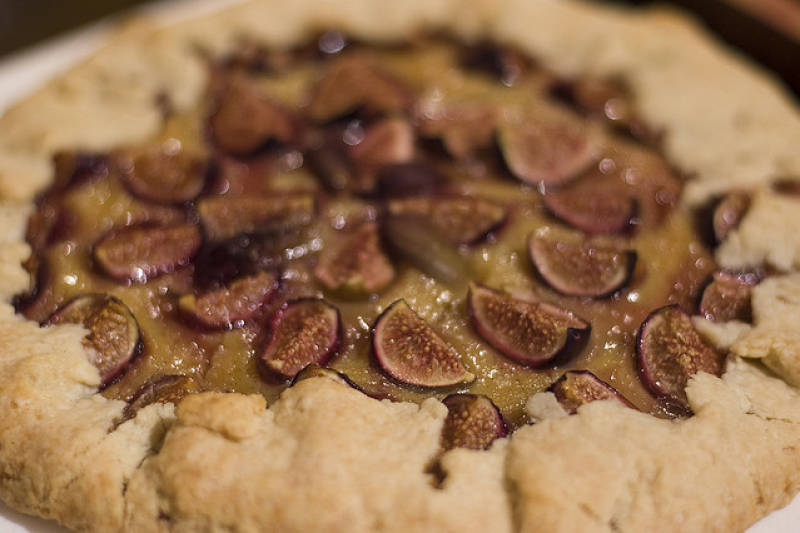
Almost every time I call my mom she asks me what I’ve been cooking lately, and when I inevitably answer “Pork chops” or something equally mundane, she gets disappointed and says she expected I would make something more interesting. It sets my teeth on edge. I have no idea why she seems to think I’m a talented or creative cook. I can make a perfectly edible, even nutritious meal, but “fig galettes” are beyond me and probably always will be.
Pork chops seems very fancy to me!
Oh, that would make me wild, I’m sorry she does that. Why would she care what you’re cooking for yourself, so long as you like it?
She doesn’t do it in a mean-spirited way or anything! It’s just frustrating because I don’t know why she expects that I would be spending my time making elaborate meals – I’ve never been that into cooking, though I’m getting a bit more into it these days. Very rarely I have attempted ambitious recipes and it’s like that grew in my mother’s mind as “My daughter is becoming an adventurous cook! I bet she makes all sorts of interesting foods.” NOPE, I just shake&baked some chicken thighs and stir-fried a bag of frozen vegetables. Then because I was feeling fancy, I grated some store-brand cheddar on top of the vegetables.
Wow, that would drive me nuts too. Why on earth does it matter to her? Ugh.
I must have missed the Anastasia story but man, I can’t think of a book series I loved MORE as a kid.
I read like a fiend as a kid, and as a result I was very close with my school librarians. When I entered intermediate school (for me, grades 4-6) I remember Ms. Mikus, the clerk, suggesting that I read them and shared with me the first one. And jesus, I was hooked. This would have been right around the time that Anastasia Absolutely came out and I just…inhaled them. I don’t really read a lot of YA lit anymore but now I think I need to go and get some used copies before they’re all snapped up so I can remember them.
My school librarian in elementary school was awful. She hated children. I remember one time, a boy was checking out a book and made the grievous mistake of resting his hands on the desk while she processed the loan. She hissed, “Get your hands off my desk” at him and the poor kid had no idea what he had done wrong. She refused to let me take a book because it was classified as “4th grade and up” and I was in the 3rd – my teacher had to intervene on my behalf and persuade her that my reading skills were up to the task.
Thankfully, she retired when I was in 5th grade and her replacement was much nicer. She let me volunteer in the library (I spent many a happy afternoon typing up new call number labels on a massive typewriter) and gave me a trio of Lip Smackers at the end of the year to thank me for my hard work.
The moment I saw Last Week Tonight With John Oliver yesterday, my heart soared and I believe someone on that writing team must be a toastie because: How Is This Still A Thing: Ayn Rand
You know, it’s a small thing, but I was pleased to note that they didn’t say anything about her appearance. It’s almost like that’s not actually relevant, even though she’s a woman! Whooooa.
I would’ve been immensely surprised if they had said something about her appearance. John Oliver is definitely a Man To Be Saved.
He was evenhanded in questioning the existence of the Miss America Pageant! I was worried he was gonna get all vanity-shaming but his opening line, mimicking the pageant announcer, was: “Just a reminder: It is 2014 and I am a fully-clothed man standing in front of a line of women in swimsuits awaiting judgment.” I was so pleased.
In mentioning Reagan, they missed that the Tea Party wasn’t the first time the conservatives had a love affair with Ayn Rand. Those in Reagan’s cabinet who came up with the whole Reaganomics idea (and Reaganomics has led to why the wealth gap in the US is currently so fucked up) were devotees of Ayn Rand and based their economic policies off her philosophies.
I realize that letter is not a criticism of the LRB, but it sometimes seems like the LRB has an attitude — or condones an attitude in its writers — towards child abuse that makes me uncomfortable. I remember in Andrew O’Hagan’s profile of Julian Assange, which I was otherwise very glad to have read, he dismisses Assange, who he seems to be tacitly admitting is a rapist and a serial practitioner of sexual harassment, and who he observes first-hand talking about how he’d fuck 14-year-old girls, as “no more predatory than most men” he knows. I don’t want to know any men Andrew O’Hagan knows, I don’t think.
UGH, gross.
Yeah, I agree about the LRB. It’s pretty icky. I’ve a friend who has totally given up reading it because the ratio of male-female writers was so shit. (Meanwhile, I’ve given up reading it because meh, the articles are too long and not interesting enough.)
There was also an article about Operation Yewtree that seemed to basically conclude “Eh, everyone was doing it! Different times!” Wow, thanks for that radical insight. The one teensy crack of light in the article was a brief reference to John Peel talking about the sexual abuse he experienced as a young teenager at public school, and it was like, woah, hold on a minute, open that up. Actually, it’s quite possible we’re talking about a whole Establishment culture of same-sex, boarding-school-educated men whose first sexual experiences were non-consensual homosexuality, and oh look, maybe huge numbers of them went on to abuse younger or more vulnerable women. But this article didn’t go there: it just catalogued all these different allegations of abuse in a frankly kind of creepy and obsessive way, with no real analysis or even much of a sense that it was particularly shocking.
(So I’ve just looked that article up, and it was also Andrew O’Hagan. Right, I have a new term for Mr O’Hagan.)
I stay because when it’s interesting, it’s really interesting, and because the women it does publish — Jenny Diski, Jenny Turner, Jacqueline Rose, Marina Warner, Mary Beard — are amazing and I can’t bear to let anything by them go. But I remember the article you’re talking about, and I had similar feelings. It’s especially weird that he’s so blase about grown men molesting minors when he’s pretty exercised about 50 Shades of Grey a few issues later. It’s not very feminist, you see.
I’m guessing that if you raised the issue to him directly he would say something about how it would be tedious for him to reiterate that he doesn’t approve of child abuse when surely everybody does, but, like, according to him not everybody does, so I am skeptical of that excuse. (Which is just what I made up for him in my head, of course.)
Of course a newspaper for priveleged white people shits all over TV. ANYBODY, even the poors, can have a TV. It’s truly revolting, worse than a penny arcade.*
*please note this is sarcasm. TV is obviously the best and film can SUCK IT.
Wow – I had totally forgotten about Anastasia and when I saw the name and read the interview I just had this weird emotional-visceral reaction, like my dorky hyper-introverted nine-year-old self had popped up out of nowhere to wave hello. Hi there, you. Yes, we will read these books together soon, I promise.
I am so happy that you linked to the ENIAC piece! True story: in an undergrad CS class, our professor added an extra-credit question to a take-home exam telling us to look up a couple of the women from the ENIAC project and tell him things about two of them. I thought, Oh, that’s nice, there were probably maybe three women and he’s making sure we read about them, and then I looked up the project and realized that they were ALL WOMEN, ALL OF THE PROGRAMMERS WERE WOMEN, the men really only seem to show up in official pictures. (And yes, yes, okay, the men built the hardware, I can allow them some credit. Maybe. Harumph.)
yep, if you can find the original pictures and then the cropped versions they used, they just cropped all the women out.
The excerpt from the Su Meck story made me worry that this was going to be a real-life Overboard.
fuck, i read that piece on su meck last week and i keep thinking about her piece of shit husband and it makes me want to set things (ie him) on fire. god, i really hope she finds a safe way out of that situation.
My child-self was basically a combination of Anastasia and Anne of Green Gables, the latter of which I recently revisited (re-devoured, really) – so this is obviously a sign that I need to go back and read all of Anastasia.
He wanted to clarify: Surrounded for so long by only “kids—and Su was at that age, too, an emotional age”
BUT THAT DIDN’T STOP YOU FROM FUCKING HER, ASSZIT.
Me too. My husband and I both thank each other when we do our respective (routine, agreed-upon, expected) chores. It just seems like a nice way to acknowledge each other's contributions.
it's not queer representation by any stretch, since it was implied that it was normal to have those feelings and that she'd probably grow out of them
Yeah – I did like the way it was presented as a normal thing, not something that was weird, but I always found the "it's normal to have same-sex crushes as a teenager and still be straight!" thing really unhelpful, as it made working out what my sexuality was even harder.
Us too! We've actually talked about it explicitly with each other and it is now an official "thing that we do." I honestly like the act of thanking at least as much as the act of being thanked, as the thanking reminds me to be grateful that I have someone to share chores/ life with. And just because we've agreed to do our respective chores doesn't mean that they're enjoyable to do. Thank yous help!
Well, everything she knows about their lives previously is from him. And he's not exactly gonna tell her 'yeah, I used to beat you up a LOT', is he?
I know she says she had a complete personality change and even that was convenient for him.
Gosh I have so many feelings about this. My mother is also an average cook, although hers has always been an issue of blandness/lack of salt and spices rather than a frozen and packet food kind of thing. She always had menus planned out for the week and we always ate healthily, but my prevailing childhood food memory is 'boring'.
When I finally began answering the question 'Did you like dinner?' truthfully, she was very hurt – one of the few times she would show genuine emotional distress was when I would tell her I 'didn't like the taste' of that night's dinner.
I always said I didn't understand why she was upset, because it wasn't her fault I didn't like capsicum/mushroom/spinach/*insert unending amounts of foods I have since learned to love after learning to cook for myself*, that it was the recipe and not her cooking. This was always only partially true. For her, the fact that she CHOSE this dish meant that I had entered some kind of contract to LIKE it, regardless of any other factor. And, truth be told, it WAS often the choice of dish I took issue with.
I have never successfully navigated one of those discussions. Has anyone? Why is food, and the choice of food, and who did the choosing and creating, such a fraught topic?
I really loved the Sarah Miller piece – and I love cooking and baking and food, but especially when cooking for people who don’t care (sometimes myself at that time!), that is certainly the feeling. And further, the guilt. “Oh no, this wasn’t lovingly handmade, I’m a terrible failure at nourishing anyone, including myself, and further am contributing to the downfall of western society through going out for thai food or buying pre-sliced non-organic onions.” Especially with recent media attention given to a lot of “oh if only women hadn’t joined the workforce and continued to spend all the hours cooking everything from scratch for their families” faux-nostalgic garbage from mainly dudez. Hells yes, I’m for sustainable, nourishing food, but am all for solutions that allow for that AND not making women feel it should be their job or second job.
This past year with going to grad school fulltime and working fulltime? I basically made a similar declaration “sorry folks, I can’t spend the time on that, more important things going on.”