
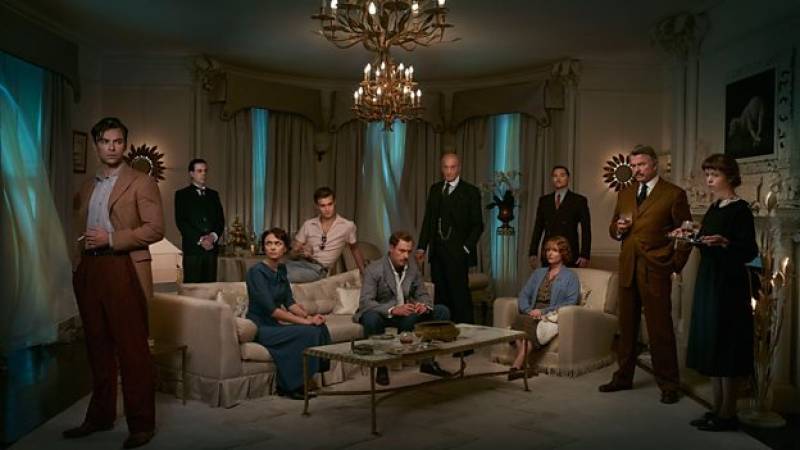
Hello, my darlings. This piece is an absolute labor of love for me, as Christie’s And There Were None (which went originally by Different and Very Racist Titles, which I did not learn until I was an adult!) is a book I read a thousand times as a kid (which is why I am so weird now, no doubt.) I also watched the new BBC adaptation that aired over Christmas as soon as my UK TunnelBear VPN fired up and gave me access to the Beeb’s iPlayer, and I encourage you to do the same (if you need more guidance, I am sure people in the comments can help.)
You will still enjoy this piece if you HAVEN’T seen the adaptation, as very little about the plot sequence has changed (some motivations have been given more backstory, Secret Gayness added, etc.), but I do recommend it wholeheartedly.
NOW, let us establish the central conceit and begin ranking murderers!
Our ten anti-heroes have been summoned to a Murder Island by a Dexter-esque vigilante (the truly fabulous Charles “Tywin Lannister” Dance, playing Justice Wargrave), confronted with their past crimes (they have each gotten away with a murder or MURDERS), and then killed in reverse order of their guilt (such that the least heinous people get to die first without spending too much time freaking their shit out on Murder Island while contemplating their imminent deaths.)
Here’s the order in which I would have murdered them (we’ll assume the judge still dies last, obvi, and I understand that the surgeon had to remain alive in order to help him fake his death earlier on, but I will place the surgeon into the guilt ranking just the same):
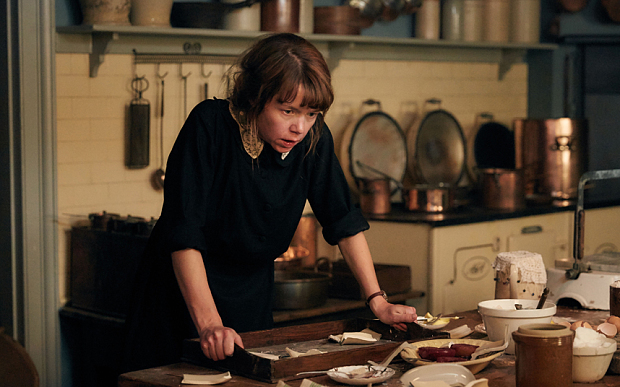
Ethel Rogers
Look. SHE didn’t smother the old woman, her husband did, and she was consumed with guilt and went literally blind from it, and also he knocks her around, so I really don’t think she deserves to be ON Murder Island, frankly.
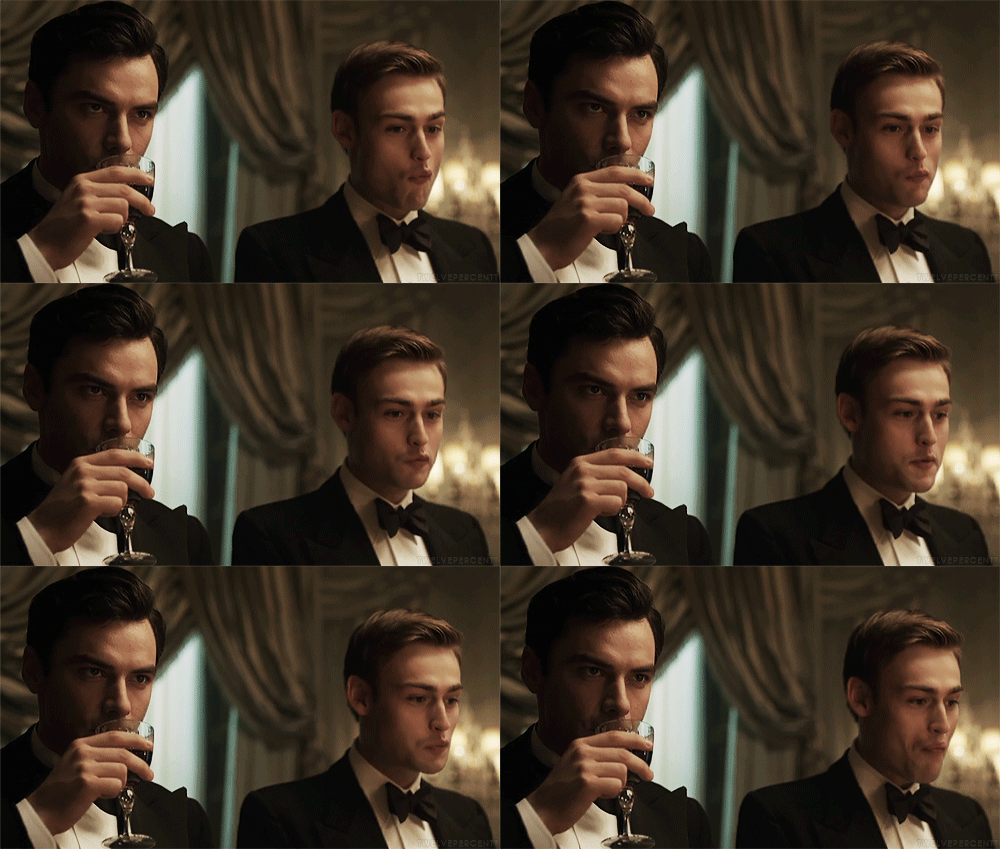
Tony Marston (seen here carelessly chewing)
Tony is almost always cast as (probably) gay, young, gorgeous, careless, and sulky. I have always been perturbed by the decision to take him out immediately following that first dinner, because I think he is a terrible person! He ran down two kids while speeding and literally does not care. Justice Wargrave seems to think that because Tony doesn’t care, he’s less guilty, but I profoundly disagree. He is much worse than Ethel Rogers.
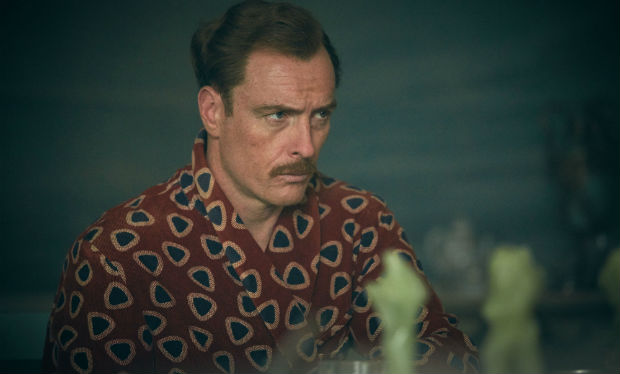
Dr. Armstrong
I feel bad for Dr. Armstrong (not very bad, but a little bad), because he wound up living for way too long in order to help Justice Wargrave fake his own death, and he’s just not a terrible enough murderer to deserve that. He was a surgeon who got drunk and killed someone. He didn’t mean to do it, he had a lot more residual shame than Tony Marston, and he quit drinking after it happened. I still place him after Tony, because carelessly driving too fast is not as bad as deliberately PERFORMING SURGERY while drunk, but he was clearly broken by the experience and should have died sooner.
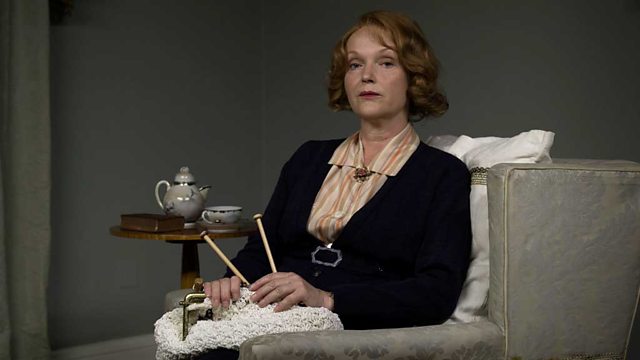
Emily Brent
This is a tough one for me, honestly. I loathe her with every bone in my body. When we got her backstory, my husband said “I have never felt such sympathy for Justice Wargrave’s mission of vengeance before.” The adaptation has saddled her with Secret Gay Lusts that were not really present in the book (or WERE THEY?), but basically she is a super-religious lady with very snotty ideas about Virtue who violently boots her knocked-up maid/protegee out of her house when she discovers her pregnancy. Having basically no options in 1930s England, said maid hurled herself under a train.
So, the thing here is, she didn’t actually MURDER anyone, which is a point in her favour, and also it’s not super productive to talk about anyone driving someone else to suicide, because that’s not really how it works, it’s deeply personal, but she is a hypocritical monster who radiates badness, and this is where I wish to place her. Because she’s cruel.
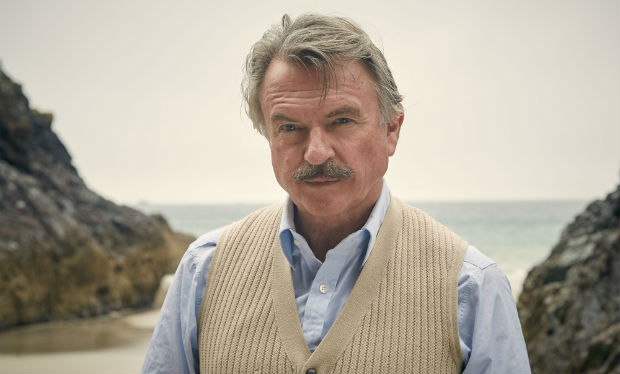
General MacArthur
This dude killed a buddy/subordinate of his for fucking his wife, after finding their very lurid love letters (in the book, he just sent him on a suicide mission, in the adaptation, he seems to have pulled the trigger.) Due to the Fog of War and it being a heat-of-passion murder, and also for love/revenge instead of money, I think he deserved to get packed off before:
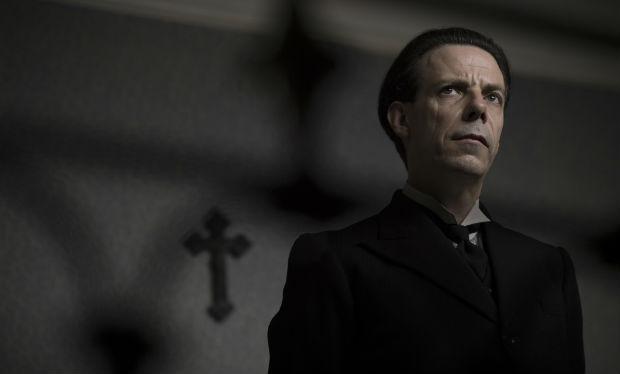
Thomas Rogers
…this fucker right here, you guys! Smothering an old lady with her own pillow for MONEY. Get bent. Smacking around your blind wife! Being generally creepy. I am cutting him all the slack for being a servant to these toads, but he was No Good and got off too lightly.
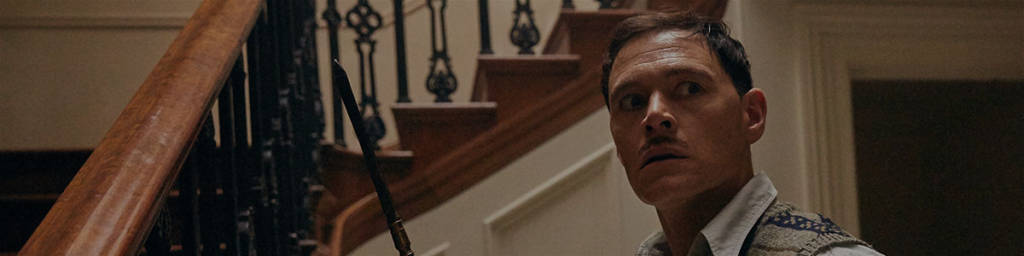
Davis/Blore
A cop who decided to kick a young gay man to death in his cell for no reason. He feels bad about it now. I do not feel bad that he has to sit around being terrified for a few days. Also, Burn Gorman is freaky-looking and I am always suspicious of him. The adaptation sort-of implies he might be closeted and self-loathing, but that only gets you so many sympathy points. He deserves to ride this shit out almost to the bitter end.
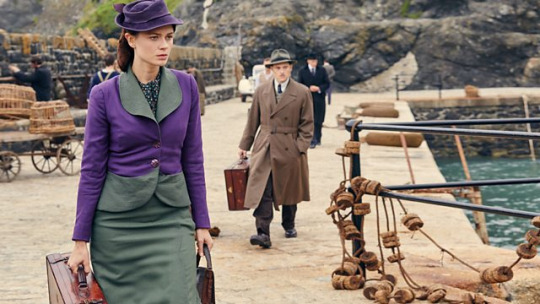
Vera Claythorne
This bitch is COLD-BLOODED. My husband hadn’t read the books in ages, and clearly thought Vera was pretty cute, and kept saying things like “I’m sure Hugo put her up to it, what a cad!” and “wait, it wasn’t her idea, was it?” and “I mean, Cyril was swimming and she just deliberately didn’t save him, she didn’t TELL him to swim to the rock, right?” and it was fun watching him slowly cotton on to the DEPTHS of her DEPRAVITY.
To recap: Vera thought about it, and then deliberately murdered a child for money so she could marry her boyfriend. She is terrible. She deserves to watch everyone else die, and then die herself, and have to give me her adorable red bathing suit (link me if you can find a place to buy it?) EXCEPT FOR:
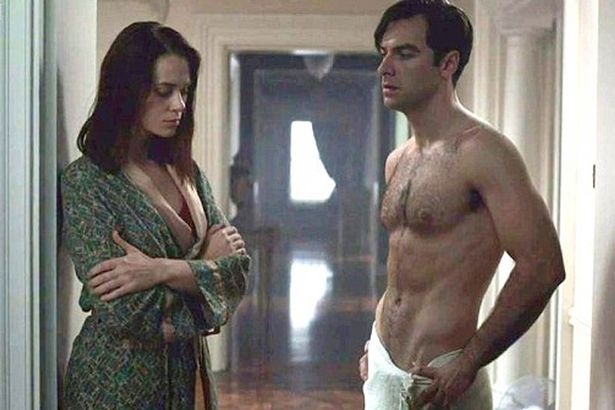
Philip Lombard (ribbed for your pleasure)
The fact that Philip Lombard isn’t the last of Wargrave’s victims has always bugged me, but people have a very visceral reaction to murdering kids, I get it, and Vera is a WOMAN, and thus especially vile to audience. Who did Philip kill?
21 “East Africans” bc something something “diamonds”
Well, good gravy, that is a LOT OF PEOPLE, is it not? In the book, he just took all their provisions and supplies and left them to die on their own (which is bad), in the recent adaptation, we are led to believe he straight-up killed them so he could take their diamonds for his Fenian fundraising needs. There is also no indication that said “tribe” did not include children! Certainly, in the book, one would think so. This is serial killer behavior! This is the worst. He is the worst. We’re supposed to cut him a lot of slack because he knows he’s a murderer and owns it, but I think it is better to be mildly delusional about your goodness and do something less bad than to be a murderer of 21 people and be all “IT ME!” sexily while smoking cigarettes.
Badly done, Philip! Badly done. I am actually mildly impressed (!?) that Christie ranked him as high on the guilt list as she did, honestly, even though she devotes zero time to giving personalities or identities to the 21 non-white people he murdered. I felt like the adaptation let down the side here a bit: we get one quick scene of Philip looking sexy and conflicted in an African Landscape, and no further information, while everyone else gets at least three flashbacks and named victims and the aftermath. The main flaw in this lovely adaptation, for me.
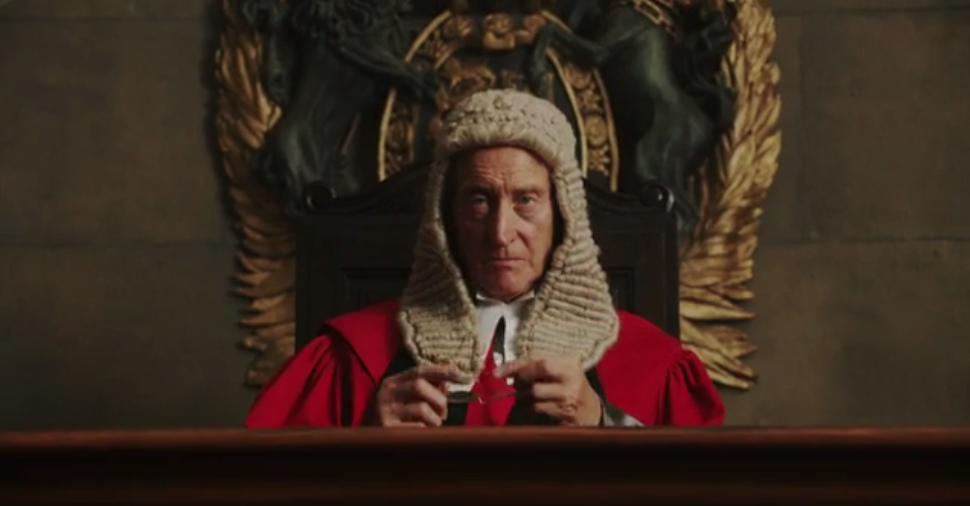
…and Peggy (Justice Wargrave)
Thank you for playing! You may now disagree about culpability in the comments.

The book’s original title was Ten Little N*****s, they just gave zero fucks about black people back then. Philip could have killed a hundred Senegalese little girls, each with their own backstory, and the audience would still be more enraged over one bratty white boy.
Bless you, for making me aware that such an adaptation exists, I will watch it IMMEDIATELY. It is also my favourite of Christie’s works, and I was very aware and disturbed by its original Very Racist And Not At All Justified As A Periodic Concept Which We Should Therefore Keep Title as they kept using it in the translated version in my language until last year.
I don’t know why the “Murder Island” plot is so delightful, but I love nearly every variation of it: Clue, 8 Women, that one Mathnet episode, the movie where Christian Slater gets frozen by liquid nitrogen, etc.
What this says about my personality, I don’t know.
What this says about ME WATCHING THIS NEW ADAPTATION RIGHT AWAY: going to happen.
“Closed space” murder mysteries are my favourites, mainly because I love being tricked into believing the person responsible must be among them at all times and I am delighted when this assumption is turned on its head, just like in this story.
Yeah, I love Murder Island. There’s a great Japanese one — The Decagon House Murders. It’s very Christie-inspired, and as I love Christie-style murder mysteries, I’m ecstatic they are popular in Japan.
That YA rewrite _Ten_ is DREADFUL though and you should not even read the cover. It’s annoying that her acknowledgements didn’t even MENTION Christie, but just as well because her good story should not be sullied.
Agreed on Ten. My book club was so excited about reading it and it was just 🙁
Let me then recommend Gumnaam, a Bollywood remake from 1965, (https://youtu.be/-2lIJUEDJwA) which features several fabulous item numbers, including “Jaan Pehechan Ho” (https://youtu.be/XnBbjc5hmho), though there’s also the great one where the good girl and the bad girl get drunk together (https://youtu.be/2B3QuLLc7x0).
Let’s not forget Murder By Death.
YES. And The Last of Sheila!
Greatest Movie Ever Made!
“that one Mathnet episode”
Marry me.
Also me.
that one Mathnet episode
OMG YES! Which happened to throw in a bit of Holmes.
I’m generally a completionist, which is why I have all the books from the cozy-with-recipes hip NYC caterer turned small town Massachusetts minister’s wife Faith Fairchild series, and because the author is clearly starting to run out of places to put bodies in Faith’s hometown, more and more she’s just “aw, screw it,” and doing stuff like an ALL OUT MURDER ISLAND book where Faith is hired to cater a ‘reunion’ for a group of women from a (fake) women’s college.
PS the recipes are actually pretty good.
Are they well written? I kind of love cozy mysteries, but all the ones I’ve tried to read recently have been really poorly written and edited and it makes me sad.
If you like cozies, you may like Louise Penny (if you haven’t already given her work a try) – start with “Still Life” It is set in a village outside Montreal, decently developed characters and the writing won’t make you want to tear your own eyelashes out from the roots.
I think they’re pretty decent–she’s won a couple of Agathas, I think. I don’t think I’ve ever noticed a really distracting error, and I’m pretty picky. It’s not Great Literature, but for the most part (especially after the exposition she sticks in to catch up first time readers every time!) I find them to be pretty solid craft.
Forgot I was also going to say that even though the books follow Faith’s life in close to real time (ie, the baby in the first book is in high school now), there is enough of a quick recap in each one that you don’t have to start with the first one, and especially the island one–I think it’s The Body in the Ivy–could be read on its own. So if there’s a side plot or title that has more appeal (movie crew shooting A Scarlett Letter, and no Demi Moore! Quilts! Prep school!), or your library has a few random ones, you’re fine to start wherever.
Book rec for “locked room” mystery fans that I just rediscovered on my Kindle: The Affair of the Blood-Stained Egg Cosy by James Anderson. It’s a damn delight.
Yessss a thousand times. I think it says that we are all awesome.
I forgot about 8 Women! I remember it being fabulous and absurd when I saw it as a teenager, and I probably missed stuff. I will have to re-watch.
I went in not knowing that it was a musical. It was one of the best surprises ever.
I just rented it because of this thread, and started it knowing it was a musical – but not knowing it was in French.
Between this thread and the women crime writers anthology I just bought (and the new season of Wie Is De Mol starting), I’m a very happy camper. Thanks for all the awesome recs, mystery fans!
Then you must watch my favorite movie of all time, a spoof on the genre, called “Murder By Death”, made in late 70’s, early 80’s.? Starring Alec Guiness, Truman Capote, Eileen Brennan, Peter Sellers, Peter Falk, and more. Simply genius, with a wonderful sense of humor.
A rich eccentric gentleman, Lionel Twain, played by Truman Capote, gathers the worlds greatest detectives to his mansion, (address: two two Twain- that’s the kind of humor) to exact revenge for leaving out crucial plot elements so the reader can’t guess who done it until the last chapter. Characters include Monsieur Perrier (Poirot), Miss Marbles (Marples), Mr. Wang (Charlie Chan), Sam Diamond (Sam Spade), and more. also, a maid and a butler of course! Made long before Clue, and even better, I think.
Anybody who loves Murder Island Funtimes HAS to read Umineko No Naku Koro Ni, basically an incredibly Japanese and meta take on And Then There Were None. And then let me know what you think! 😀
I saw on TV Tropes that the BBC adaptation had implied that Emily Brent was attracted to her maidservant, and was completely taken aback because I hadn’t noticed it AT ALL. Am I just completely blind to sexual undertones?
(I was very grumpy about many of the changes the BBC made, because I am a purist and also because I think that if I were in that situation having sex with one of my fellow captives/possible UN Owens who had already admitted to murdering a load of people would be the furthest thing from my mind. Also, I think “deliberately sending my wife’s lover on a suicide mission” is much better in terms of plausible deniability and the potential for moral ambiguity than “shooting my wife’s lover in the head”.)
Has anyone seen the stage adaptation? I read about the changes it made to the ending and was horrified. And Then There Were None does not call for a happy ending.
Her sucking the blood off the maid’s finger when she poked it while embroidering.
Okay, I was clearly looking away from the screen at that point (I was combining internetting with viewing), because I am sure even I could not have failed to construe that as sexual. (OR COULD I.)
My So went, “Is she a vampire? Is that how she kills her?”
As I said on Twitter, my epitaph is likely to be “That Woman Who Complained All the Time in the Toast Comments Section about the Evil/Dead Lesbian Trope,” but here goes:
It really bothers me that they put that in. It wasn’t in the book at all. And maybe they were going for “see, she’s even creepier because she’s gay!” (which is awful) but it made her almost a Jerkass Woobie to me. Being Secretly and Repressedly Gay plus Restrictive British Middle-Class Society plus Being Raised in One of the More Forbidding and Miserable Varieties of Christianity equals “oh, I sort of understand why you’re so horrible to everyone, you poor thing.” Also they gave her Lombard’s anti-Semitism. I dunno. In the book she was more like Miss Marple without any warmth or conscience or social responsibility. All those characters are evil funhouse mirrors of usual Christie characters and it’s GENIUS.
(My roommate and I agree on loving Judith Anderson’s “No Fucks Given” interpretation in the old movie. Also the bit where Rogers says “Fuck you people for suspecting me! I will drink all your cocktails and refuse to make you dinner till you treat me with respect!” Please tell me someone’s pitching a Class in Christie piece!)
Do you think they were going for Secret Gayness with Davis, too? I think they were!
Yes, very much!
He was awful but he was also the only one who experienced remorse (well, besides Mrs Rogers and MacArthur)- not just, “Oh, no, I’m going to die” but “How could I have done this to this innocent person?”
But it was a horrible thing to do. I’m torn.
Same. And he REALLY vocalized it. He admitted it, and he knew he was wrong, and he had regrets. STILL SO BAD.
I spent so much time trying to determine if they were implying that Blore was closeted. Verdict: they must have been, but they were really non-explicit about it. There was no obvious moment of attraction or repression like there was with Emily and the embroidery scene.
At the end, when he confesses and talks about his stupid allotment, I had this moment of feeling so genuinely sorry for him, and then instantly so bad about feeling sorry for him, because he fucking kicked a man to death for no reason.
That would be an amazing epitaph.
I was actually *in* the stage adaptation in high school, playing Dr. Armstrong because there were generally not enough boys trying out for things and too many girls, so we changed a couple of the men to women. And I approve of Dr. A’s ranking here, although I also think his ability to be duped makes him not at all a nice person. (The logic I made up in my head when playing the part was all about judgmentalism and snobbery.)
The ending of the stage version is lame, I agree. It seemed especially lame to me in high school because the best actors deemed the two lead roles too boring to bother trying out for, so everyone interesting and fun to watch was dead.
Yeah, apparently both Vera and Lombard survive in the play.
And in the 1945 film adaptation! I was quite surprised when I got to the end of that.
I haven’t seen the stage adaptation but I’ve read it, and yes, terrible. OTOH the stage adaptation changes for _Appointment with Death_ and _Witness for the Prosecution_ are excellent.
I completely agree about not liking the plot changes specifically around methods of murder — as a gruesome little kid I loved the angle that all these murders had some plausible deniability, making Murder Island necessary.
Here it seems like there’s smothering with pillow instead of withholding medication, shooting instead of sending on a suicide mission, kicking to death instead of committing perjury leading to an unfair conviction/death, and directly killing a whole tribe instead of leaving them to their deaths. Gruesome-kid-me thought all those questions of culpability and the way people justified their obviously horrific actions because they HADN’T pulled the trigger was very interesting.
I also think it affects the rankings, a little bit! Blore is incredibly despicable in either case, but “lied under oath in order to not get in trouble”, even though it led to someone’s death in prison (didn’t the guy get TB or something?) seems less heinous than “hate crime brutalizing murder”.
Yes, I think it’s much more interesting when it’s less obviously a straight-up murder, and people can convince themselves/society that they’re not really to blame (even though they totally are). It makes it so much creepier!
Agreed 100%. Taking away the element of plausible deniability seems to undercut much of the point of the book, and it makes the murders less interesting. I’m still super interested in seeing this adaptation, but I’m skeptical of that particular plot adjustment.
My high school did the play and I recall there being three possible endings: the original, the “happy” ending, and one where Emily Brent was the killer (I think? My school didn’t do the third ending so I could be misremembering). I guess the idea is that there’s a chance of being surprised even if you already know the story. My school did the first two endings, so it really depended which performance you went to.
I don’t understand why the made Armstrong shoot the guy. Firstly because you lose all chance of not being caught and plausible deniability, and secondly because using your military authority to send someone to their death somehow seems way worse that just straight up shooting them? Like an abuse of a position of trust and authority. Plus it’s way more cold blooded and premeditated!
I don’t know what it says about me that I am so comparatively blasé and straight up shooting a dude, but probably something distressing.
Having him shoot the guy also gets rid of the parallel to the biblical story of King David sending Bathsheba’s lover to the front lines to die, which I like because biblical symbolism is the bestttttt.
OH MAN we watched this over the weekend and had both kind of forgotten the ending? Holy shit, was that ever a good miniseries, A+.
Queen Elizabeth I, I mean Emily Brent, should I think be higher in the rankings of Guilt As Fuck because.. damn, man, letting your fucked up morals get in the way of actually doing something to help a person, after years of Performative Charity Toward That Person (because let’s be real, she took in an orphan girl because it demonstrated her complete loving nature rather than through any actual desire to help the kid), that is the very depths of fucked up to me.
QUEEN ELIZABETH I (Nope, I’ve completely gone off explorers.)
I COMPLETELY FORGOT THIS ADAPTATION HAPPENED I KNOW WHAT I’M DOING TONIGHT
It has been waaaaay too long since I read this book.
RIGHT? I forgot as well. I have so much to do but yeah, this is happening.
I watched this in one glorious go on New Years Eve and all I want in the entire world is that red swimsuit
I thought the lack of flashbacks for Philip was deliberate, because unlike all the others he isn’t tormented with guilt. (I also read this book a million times as a kid, and how, HOW does Wargrave know that Vera will kill Philip? Because if he’d shot her, there would be no way he would hand himself afterwards and THEN WHAT, Judge?)
For that matter, how does he know about any of their murders? Because he’s Charles freakin’ Dance and can penetrate your mind with a single icy-blue stare.
With that one, he heard her ex-fiance talking about it to someone else.
He knew she could do it, and surely he had a plan to hang Philip if Vera failed.
For that matter how does Wargrave know 100% that Lombard will bring a gun? I mean Lombard being resourceful could be a switchblade perhaps.. (unlikely, but still 100% certainty?) Where does Wargraves plan go without the gun on the island ?
One other major point happens near the end as well. Dr. Armstrong has been pushed over the cliff into the stormy ocean and his body conveniently is washed ashore the next day… Is this very likely to happen : What are the odds ? I’ve always found this a stretch to my imagination…. without the doctors body being found there is no stand-off on the beach… the remaining two would still (somewhat) trust each other with the belief that the missing doctor was the killer !
Well I suppose if you do it at the right time of day and know which direction the tide flows, it’s plausible that his body could conveniently wash ashore the next day. But yes, it is a pretty risky Murder Island Mastermind maneuver.
Oooh, I have been waiting.
Okay, first, Lombard is supposed to be way older, he’s too young in this adaptation. Moving on.
I’m with you on Ethel Rogers, Then we have Dr Armstrong, Emily Brent, Marston and General Macarthur (in the book his wife sent him the wrong letter, then he sent the guy on a suicide mission; in the tv show, he read the guy’s letter, then shot him). I’m moving the general second because he spent his whole life feeling guilty and then was happy to die, then the doctor who after all quit drinking. Then we have Emily Brent, who doesn’t feel she did anything wrong, and Marston, who doesn’t care. Brent comes first, because she (as you point out) didn’t kill anyone; Marston would just keep merrily running people over until he eventually died himself in a car crash.
I’ll give the rest to you (in the book, Davis-the-cop fakes evidence in a court case, and probably many more, and likely deserves to go to the top two — but really the top three are all equal).
You left off the obviously evil because he is a Jew lawyer guy, who is the 10th guilty person. (The judge, since he has not actually murdered anyone innocent, doesn’t count.)
The judge is interesting — in this adaptation, of course, he’s just a monster who finally found a way to let it out.
Wait wait (mumbles: okay I haven’t read the the book not very toastlike I know) but I feel like the judge IS one of the guilty people and he knows it and kills himself last for exactly this reason? I thought the judge did count but maybe I am forgetting something – I feel like he might have said something about it
OR maybe its just that I tend to really like my murderers really consistent with their rules whatever they are? Like I dunno – um No Country For Old Men heads or tails guy? Where like you know he is there at the end because he said he would come after her it doesn’t matter that there really isn’t a point to that threat anymore
I am possibly confusing the book and the show, so in the show he could be guiltier, but in the book it’s part of the How The Murders Were Committed And All The Clues You Should Have Noticed chapter (I love this chapter). The judge says that of the crimes everyone was accused of on the record, he is the only one not guilty of the accusation (because the criminal was actually guilty), so he must therefore be the one killing all the actual guilty people. (The other clue is that the doctor died from a “red herring”, so something weird happened there.)
He kills himself to avoid a long and painful death by cancer.
But in the book, doesn’t he also say that he knows he’s a sadist who enjoys causing death? And he kills himself in part as his punishment for committing lots of murders (although getting out of a painful death from cancer/prison and hanging seems like not much of a punishment, really).
He is a sadist who ALSO cares about justice! He likes watching guilty people suffer and only guilty people. He always wanted to commit a murder, but not of someone innocent, and he started asking around about murders that the law couldn’t prosecute, and got his 10 people (includes the lawyerish guy). He doesn’t kill himself as punishment, he kills himself as part of his artistic vision also he has cancer. I mean we can talk about how reliable he is as a narrator, but his narration sees himself as on the side of justice. It does help bring up the question of how much guilt and intentions matter, something which could be an interesting part of the story but is entirely left out because this is mostly a puzzle, not a meditation on morality.
(I really like this book, maybe as much as Murder On The Orient Express.)
Oooh, I have been waiting.
Okay, first, Lombard is supposed to be way older, he's too young in this adaptation. Moving on.
I'm with you on Ethel Rogers, Then we have Dr Armstrong, Emily Brent, Marston and General Macarthur (in the book his wife sent him the wrong letter, then he sent the guy on a suicide mission; in the tv show, he read the guy's letter, then shot him). I'm moving the general second because he spent his whole life feeling guilty and then was happy to die, then the doctor who after all quit drinking. Then we have Emily Brent, who doesn't feel she did anything wrong, and Marston, who doesn't care. Brent comes first, because she (as you point out) didn't kill anyone; Marston would just keep merrily running people over until he eventually died himself in a car crash.
I'll give the rest to you (in the book, Davis-the-cop fakes evidence in a court case, and probably many more, and likely deserves to go to the top two — but really the top three are all equal).
You left off the obviously evil because he is a Jew lawyer guy, who is the 10th guilty person. (The judge, since he has not actually murdered anyone innocent, doesn't count.)
The judge is interesting — in this adaptation, of course, he's just a monster who finally found a way to let it out.
That was the second title. By the way, I deliberately didn't use either of the titles, just said they were Super Racist, so that people could google if they wanted, but not have to see them unexpectedly, even with ***, since that's not exactly fooling anyone.
haha no they changed it to that for a bit in order to be less offensive before abandoning the phrase completely
I__ in the US, N____ in the UK.
I liked that this version didn't try to gloss over Christie's racism/classism/antisemitism.
This is also why we don't post the actually racist deleted comments, it just bums POC out to see them, ditto stories about stuff your racist grandma said. Just something to think about going forward.
Aidan Turner hunting for mass murderers while wearing a [towelling] dick-ribbon of manhood. Yes, okay.
I am pretty sure it’s in his contract that he needs extensive shirtless scenes in every show/movie he is in.
Yes and also they just keep him in a sandy cave in North Devon until they need him for another coastal costume drama. He’s always on the lookout for boats.
If anyone has the coordinates for said cave I will pay hard cash
I was about to say am I the only one who’s entire thoughts about this adaptation were AIDAN TURNER AIDAN TURNER AIDAN TURNER AIDAN TURNER AIDAN TURNER AIDAN TURNER AIDAN TURNER AIDAN TURNER
IT’S WHAT MY VAGINA THOUGHT *HIGH FIVES SELF*
[insert a gif of the Key and Peele bit with the syncing, communicating, high fiving vaginas here please]
http://i.imgur.com/ph3zcXU.webm
Still no high fiving though. Is it too much to ask for, world?
And sadly, no sound either.
Every so often I remember him and my world improves 1000%. I think I forget him out of necessity. I can’t function normally while thinking about him. I’m now rewatching Being Human because he is so talented and beautiful and that scene with the massacre is one of the most beautiful scenes I’ve ever seen on TV.
Agreed! I was dangerously distracted during Poldark season. I truly believe him to be the sexiest man.
I just want to lick him all over. Particularly on his iliac crest, but really, all over his body.
Yes. The reason why he has to live is not because he’s the most awful (although the character totally is): it’s because AIDAN TURNER SHIRTLESS AIDAN TURNER PLEASE LET ME LOOK AT HIM A LITTLE LONGER THANK YOU.
While I appreciate than England in the 1920s and 1930s was very different to today, I still cannot quite believe that all a person would get for running over and killing two children would be to lose his licence for a few months.
TED KENNEDY.
Ted Kennedy was a prominent politician (and, you know, a Kennedy)! Tony Marston was an idle young man-about-town who apparently did nothing but drive his car very fast and take drugs at parties. I would have thought that the judges would have been thrilled to Make An Example of him.
I bet being rich as balls and it being pre-blood alcohol level checking made it a snap.
Ethan Couch! Ok I know he didn’t just lose his license for a few months, but his sentence still seems outrageously close to just that.
“Couch drove himself to school at the age of thirteen. When the head of the school questioned that practice, his father threatened to buy the school.”
… well, that’s horrifying.
Or Texas in the 21st century. Affluenza Boy killed 4 people, put a friend into a wheelchair for life, and got probation.
Our ‘dangerous driving’ laws are still shockingly lax in the UK tho. There have been several fairly high-profile recent cases of motorists getting off scot-free, after killing pedestrians or cyclists.
Rene Levesque, premier of Quebec, ran over and killed a homeless guy, while on his way home from a dinner party.
Alcohol was involved.
His mistress, who was with him, told the cops she was driving. And Rene went unpunished.
For the record, the homeless guy was breathalyzed, but neither Levesque or his girlfriend was. http://beverlyakerman.blogspot.ca/2012/11/quebec-…
It was a very good series, which I wished had just played over one night because I was enjoying it so much! I had read the book a bunch when I wasyounger, and they did it well enough that I wasn’t sure I remembered the murderer right. I wish there had been more background time given to Philip’s murderstory but it makes sense as he wasn’t haunted like the others. I agree wholeheartedly with your rankings!
I did finish it feeling terribly sorry for whoever had to come in and find all the creepy bodies in the creepy house on the creepy af murder island. 🙁
I watched this with my boyfriend who immediately, not even having read the book before, called out the judge as the murderer. I refused to acknowledge his guess and he was happy that he was right. I personally do not like to guess at the murderer in the first act, I like to enjoy watching the show. He loves spoilers. The jerk.
CLANG Hamilton reference in a Nicole post. Honestly I am surprised it took so long to pop up (I have much affection for both Hamilton and Nicole and it makes me very happy)
I need to watch this!! Hopefully next week once my coursework is done…
On a related note, when I first read ATTWN I missed the epilogue where the judge explains everything and consequently had NO IDEA what happened until I reread it two years later. Go me.
That is hilarious!!! And totally something I would do (but didn’t do when I read it for the first time as a teenager).
The copy I had of Lord of the Flies for my grade 10 English class had the last couple of pages (chapter?) ripped out. I wrote my entire essay based on my strong conviction that the entire story ended during their murder hunt and that they were never rescued. I had to bring in my copy of the book to prove to my teacher that the pages really were missing, and I still think that it would have been a better ending.
*(raises hand) is in the sinking boat with your husband
it was a nice blue dress OK?
Also she looked kind of like Emily Blunt and kind of like my youngest cousin and she was smart and had to deal with sexist men and that last bit with the chair was HORRIFYING.
I googled “are you sure Vera is not Emily Blunt” REPEATEDLY
She was so very good, going from troubled to grotesque like that. Her pretty face got very Gollumy towards the end.
I was thinking Emily Blunt all the way through until she completely unravelled and then all I could see was Eva Green.
I thought she looked just like Haley Atwell and was very confused (because surely she would have got more prominence in the publicity if she was).
My boyfriend and I both thought when he was initially telling the young man he was going to let him off that said young man would read his signals as gay and make a pass at him (or possibly kiss him out of gratitude) and Blore would then beat him to death in a fit of rage. (We were shouting at the screen, “No, don’t kiss him!”.)
This was so good. I remembered that the judge was behind everything, but forgot that he faked his death, so I got very confused when he “died” and thought they were changing the ending. Also, I heartily appreciate your picture choice for Lombard. And I have to say: if I were on an island where everyone was being murdered and I could be next at any moment, I would absolutely hook up with the hot Irish guy, particularly if I were a stone cold heartless bitch like Vera. So good choice, adaptation.
This is bathetic, but I cannot stop trying to figure out what the Judge did about eating and going to the bathroom while he was pretending to be dead.
Servants’ toilet, maybe? None of the guests would have used that, I assume.
Good point. And the house is supposed to be modern and de luxe so probably the plumbing doesn’t make giveaway noises.
OK, seriously, how can I watch this?
I use the hola extension on Chrome and go to the bbc iplayer
Isn’t there something about Hola and using your bandwidth for botnets?
Possibly? I don’t know what bandwidth and botnets are… But I’ve been using it for years and my computer still works?
Apparently so: http://www.pcworld.com/article/2928340/ultra-popu…
You can subscribe to a vpn service like overplay.com
Wow, I was halfway through this and super-confused as to why it all sounded so familiar–just read it last month on the Kindle under the US-affiliated offensive title. How did I not know And Then There Were None was the same book? It’s right there in the rhyme!
Vera was the first example I can think of the Final Girl trope, and also, weirdly, one of the biggest subversions of it. Which is probably why I always accepted her being last to die. Didn’t love the whole bit with her balancing on that chair for 15 mins while they explained the plot, but I appreciate its a bit more dramatic than the message in a bottle conceit.
I haven’t seen the adaptation but recently re-read the book. I hated that Mrs Rogers was judged as guilty as her husband and disagreed on Tony Marston getting off so lightly too.
Before more thoughts: so far I’m liking the cast and OMG I covet Vera’s suit in the picture there.
I don’t like that the adaption changed too many of the murders to directly killing someone. I much prefer the original conceit of “many of these people committed crimes that would be impossible to punish.” An officer sending someone off on a suicide mission, stealing supplies, etc. It’s the plausible deniability of the crimes that make the judge’s revenge mission work, not just “oh, this is a normal kind of crime that the police just didn’t solve.”
Very valid criticism!
This was my first experience with Agatha Christie and mysteries in general. I hate suspense because it stresses me out. After the first episode I looked up the plot on Wikipedia but I was still on edge for the rest of the series. So basically I am not cut out for murder mysteries, but at least the only one I will ever watch was so beautiful and well done.
This is where Columbo shines. There’s no mystery. You know who did it; Columbo knows who did it; the killer knows Columbo knows.
To be fair, this is probably one of Christie’s more suspenseful books. Miss Marple is much less alarming (as long as you can get over the odd regularity with which horrific murders happen in sleepy English towns.)
I was a huge Christie fan growing up, and watched the series after seeing Nicole’s tweets about it. This is perfect, including everyone’s comments,but I have to talk about how much I loved Toby Stephens/Dr Armstrong in it. Not only because he was the most genuinely remorseful, I think, but because there were moments that I think he went straight-up Clue with his performance. That moment where he gets “hysterical” after finding Rogers’ body and Vera slaps him across the face – I’m not proud, but I laughed out loud. It was Mrs Peacock getting slapped meets Wadsworth’s “I’m not shouting” meets Colonel Mustard and Mr Green in general.
I may have seen Clue too many times and now can’t watch the original article without seeing the parody.
You can never see “Clue” too many times 🙂
(Nobody else thought Sam Neill as the General was rather attractive and James Mason-like, right? I mean, for an old dude and a mustached dude and a murderer.)
ETA: Adaptation!Armstrong was clearly screwed up and driven to drink by the War. Even more sympathy for him, then!
I totally grooved on his mustache and magnificent lionine head of hair.
I love when Toby Stephens plays these kinds of parts. He was in the David Suchet/Poirot adaptation of Christie’s “5 Little Pigs” as Amyas and Caroline Crale’s angry, bitter best friend. So great at horrible, yet weirdly compelling men. Like a posh British James Spader.
I have zero familiarity with Christie, and I spent the whole 3 episodes thinking ‘this is like a serious version of Clue*’
*I only watched Clue last year for the first time. I’m sorry, I was badly educated.
My husband, who has never read Christie, asked me, “So this is like Clue?”
I haven’t seen this adaptation yet, and now I really need to. I’m just stopping by to note that my high school did the play adaptation when I was in 10th grade, and as it was an all-girls high school, converted all possible roles to female roles. Only Mr. Rogers, Marston, the General, and Lombard were left male. And that I played Wargrave, and I was *glorious*
Also, that I think the play must have ended quite differently than the novel, because Vera and Lombard killed me, and I distinctly remember the play suggesting that they were not in fact guilty of their MURDERS at all…
I read that in the play they “discover their innocence”, and would like to know how much the play changes things to have that happen. “Oh, I forgot, I didn’t deliberately lure a child to his death!” “And all of those people I left to die miraculously survived! I suppose that makes me a good person!”
I think that is the same way the old movie ended. I haven’t seen it in decades but I remember they survived. I also remembered something about him not really being Philip Lombard and you could figure that out because his initials didn’t match the monogram on his suitcase.
In the discussion of Which Is The Worst Monster (Vero or Lombard), I think one of the points that is meant to be in Vera’s favor(??) is not just that it was a child, but that it was a child *specifically entrusted into her care*. Like, obviously I’m not saying murder is okay as long as you don’t know the person, but I think it’s one of the reasons the audience is supposed to see her as The Worst. That she claims to have loved him (do we buy it? IDK, she does seem affectionate with him in flashbacks, but that includes the scene where she sends him off to his death) and then she killed him anyway, because he was in the way.
I haven’t read the book in awhile, so I might be off base with this, but I believe that in the book, it’s Vera that goes a bit “hysterical” when the gang discovers Rogers’s hacked up body. Is that correct? Because I really liked in this version that it was the doctor, who’d been sniffy about “female emotions” or whatever earlier on, who was the one who couldn’t handle it. And then my girl Vera got to slap him!
Look, Vera is Grade A Terrible, I don’t quibble with Nicole’s ranking, but she’s still my hands-down favorite. (Maybe in a tie with Aidan Turner just in general, god, his eyebrows)
Anyway, I think one of the things this adaptation did exceptionally well was atmosphere. This thing was practically Gothic and I ate it right up.
Yes, it is – they gave her lines to Armstrong.
OOh, BBC Adaptation! I know what I’m doing this weekend. On our honeymoon in Scotland (ages ago) we ended up in a hotel that was very Murder Island. Victorian pile filled with relics of the Raj (tiger heads and elephant umbrella stands and whatnot), on an actual island, and the guests all gathered in the drawing room for whisky before dinner and coffee after. I believe there was an MP there and Belgian diplomats, and of course we were playing the role of the young American honeymooners. Happily (or sadly) there were no murders.
I loved the adaptation, though I kept being distracted by how gorgeous the house was. I’d like to go there for a holiday, if I could guarantee no murders or psychological torture.
Being from Dublin, I also liked hearing Aidan Turner use his real accent again. Though I took Blore calling him a Fenian as a general anti-Irish insult rather than meaning that Lombard was actually a ‘Ra fundraiser. Is it explicit in the book? It’s so long since I read it, I don’t even remember whether he was Irish in it or not.
I tried to get into Poldark (because I have a serious, like its actually a problem, crush on Aidan Turner) and I just can’t get with the forces accent he has in it; its just so slightly off his actual accent that I find it distracting. The whole reason I liked him in Being Human was that he was a very familiar kind of guy that I know and it actually made me miss Dublin guys a little bit. (Only a little, I still stick with my belief that any good look Irish guy is probably an asshole because no one grows up in Ireland that good looking and doesn’t have their pick of women and an excuse to behave badly)
Being also from Dublin, I wanted more about why he was there and his backstory; if he was actually a Fenian (and it wasn’t just being used as a general insult) then why was he in Africa in the first place? And why the feck would he be invited to a somewhat ‘high society’ house party?
It also took me awhile to figure out if the character was intentionally Irish, I would have similar accent to him and it can come off as American/’neutral’ at the beginning, and he doesn’t talk much for awhile, so its hard to gauge
I thought he was meant to be a sort of mercenary soldier-for-hire person and that’s why he was in Africa committing atrocities with impunity – it could have been unrelated to his hypothetical Fenian activity! But yeah, I’m not sure how likely it is that dodgy mercenaries would be invited to a house party like that.
Hey now, my gentleman-companion is both handsome and Irish and not an asshole (he rescued a stray cat!)… but he’s from Cork and there are no girls in Cork apparently.
Given what Wargrave/Morris wrote to Blore to get him to come to the island, it would make sense for him to think that an obvious Irish man might be the reason for the summons.
The house interior was fabulous, but I did think the exteriors looked a bit CGI’d into the landscape. And why was there no garden, or landing stage/jetty? It had previously been owned by a yacht-loving millionaire, so surely there would have been a jetty there at the very least. I can’t imagine that everyone was always dropped off on the beach – what about high tide? And the geology of the island didn’t look very Devonian. I wonder where they did film it?
Anna! Hi!
It’s a good adaptation. I especially like the way it presents Vera and Lombard as a potential romance and therefore sets them up as the heroes — we are meant to expect that somehow they will turn out to be innocent; instead they are The Worst. Nicely done.
But Beeb, could we puhleeze stop with the sekrit gay = evil monster thing? Not one, but two characters had this crowbarred into their backstory. For no reason. A cop who beats a prisoner to death is a sociopath; no motive needed. And Dante puts the falsely pious in the lowest circle of Hell, without having to add, “Oh, and they were also gaaaay.”
Also, what was up with those abstract green marble figurines? In what nightmare universe of the Twiight Zone do soldiers look like that?
Reading the book, I kept thinking, Just throw the figurines in the ocean. Problem solved.
That is annoying. Plenty of people, unfortunately, hate gays without being secretly gay. They’re just hateful assholes.
The cook does murder a lot of innocent lobsters, so there’s that.
I actually don’t think Blore was secretly gay, or at least it wasn’t suggested. A guy like that from those times would simply have seen a gay man as a deviant and a threat to his way of life.
Britain was a place utterly terrified of change of any kind and since the days of Oscar Wilde, utterly horrified by the idea of men being with men. Society was at a place where Blore beating that kid to death could have easily happened.
I totally agree with the ‘gay, so evil as well’ trope we see with Miranda Richardson’s character though. That happens way too regularly.
Yes! I didn’t get that at all; I just saw him as someone who found a man disgusting and decided to beat him to death (and fuck with him a bit first, cause why not?)
I mean the guy was arrested for being gay in the first place, police brutality and homophobia wouldn’t be too far behind.
Same. I saw, and disliked, the implication with Emily Brent, and there was a point where I thought Blore MIGHT be going to make a creepy “maybe you can make it ~worth my while~ to let you go” pass at the gay kid, but then that was his sincere regret-fuelled fantasy about what he should have done, so I don’t think there was anything there.
And frankly anyone who’s even vaguely interested in men isn’t going to remain unmoved while Aidan Turner lounges about in nothing but a towel.
(Incidentally I loved how everyone else had dressing gowns and Lombard is like “Dressing gowns what. Do you really think this should be covered up? I didn’t think so.”)
I have never read an Agatha Christie book, and I’m usually not a murder mystery/period piece enthusiast; but I saw Aidan Turner in the poster image on the Beeb and I was in.
I wish they had explored his backstory more; not just because I was more screen time of him looking smoldery, but also because I love when characters are just super horrible and evil and don’t give a fuck. Honestly I just want more of Aidian Turner as ‘Yep, killed a bunch of people, and what?’ guy.
Also Charles Dance. Is it weird that I’m intimidated by him but also attracted to him? I also just like saying his name in a really cut glass RP accent.
I’ve thought about this for literally decades. Purely based on the book [I don’t hold with the changes made for the adaptation — the original conceit of ‘crimes that can’t be brought home’ is far more interesting, and for fuck’s sake, secret gayness =/= motive to be horrible]:
1. Ethel Rogers (who probably doesn’t deserve to be there);
2. Emily Brent (she’s shit and she feels no guilt; but she’s an avatar of society/religion rather than having a personal motive);
3/4. Armstrong/MacArthur (for the reasons in the article, and I think their kill order is more or less interchangeable);
5. Marsten (specifically *because* he felt no guilt! He didn’t give a shit that he killed two people! He was annoyed that it inconvenienced him! Make him suffer!);
6/7. Fred Rogers/Blore (again, either order: Blore fucked shit up, but was being punished more for being a corrupt public servant than for murder per se; Rogers purposely killed someone he was supposed to take care of. So, take your pick);
8/9. Vera/Lombard (as discussed in the article).
So Nicole, I *mostly* agree and am fucking thrilled that you care about this too! I almost wish there had been social media when the book came out; this would have been a Major Topic (with all the attendant spoiler alerts, of course).
I am going to call shenanigans on placing Ethel Rogers up at the top of the list mainly because she’s played by Anna Maxwell Martin, she of angel faced and brilliant skill and I would require her to be on screen for every second we could have her.
Also something something something Bletchley Circle and her playing a female code cracker in WWII England and my eternal love of season one of that show.
Anyways – Anna Maxwell Martin for president or something!
Isn’t the secret gayness thing a demonstration that abused people DO often do bad things? I find it, with the accompanying self-hate, a clear indictment of the society that drums into one that gay=wicked, deviant, to be hated, beaten, imprisoned and killed. Once you’ve been clearly told that you are beyond the pale, so often that you yourself believe it wholeheartedly, why might doing a genuinely wicked thing not be possible? It still happens now!
It’s not the BBC being homophobic, as some of you seem to be suggesting, it’s a demonstration of WHY homophobia is such a cancer in society.
Well, I think it comes down to representation. I fear I may spoil a bunch of classic whodunits in this comment, so beware!
If you happen to be a lesbian or bi woman and you happen to like old-school murder mysteries, you cannot help but notice that nearly all the people like you are presented as monsters: Mary Whitaker in “Unnatural Death”, Phoebe in “The Long Arm” and Clothilde Bradbury-Scott in “Nemesis” being standout examples. Even a sweet and sympathetic couple like Hinch and Murgatroyd in “A Murder is Announced”, who are liked and accepted by their neighbors, get a cruel ending rather than a happy one. (Like so many things, it’s even worse for trans people.) There’s a book called “Inseparable” by Emma Donoghue which has a whole chapter on lesbians in murder mysteries and it’s…bleak.
So you keep noticing this trope and it’s like when you accidentally bite the side of your mouth and then can’t stop biting the same place. And you cling to characters like Dr Mac on “Miss Fisher” and Betty on “Bomb Girls” (who don’t get particularly happy story lines but are heroic and loved and shown trying to live as much as they can as themselves in a world that does not accept them (and I know “Bomb Girls” isn’t a detective series)) and wish that, as long as the latest raft of Christie adaptations is messing with Dame Agatha *anyway*, they could put in some queer women who aren’t killers or predators. And what a bunch of the adaptations have done is made MORE characters Gay And Also The Killer.
So when they did it in this one, my first thought was “Not AGAIN!” even though if it were an individual case I’d be all, “Poor Miss Brent. Trying to overcompensate for secret feelings she believed were evil by being the Impeccable Christian and the Impeccable Lady and the Impeccable British Patriot, and then feeling full of rage because everyone else can act on their feelings, and she can’t.” As 14KGold points out above, it shouldn’t be the motive and it doesn’t make it OK, and generally in real life people who are Secretly Gay do it without being abysmally cruel to a teenager with nowhere to turn, or being rotten to someone who’s in the middle of helping them with their shoes, or being an anti-Semite. I have more thoughts but must catch a train now.
I take your representation point, though in the current instance of course not one character is innocent, whatever their sexuality, so you cannot actually have a good gay character in this story.
But, actually, in real life people who are secretly gay do things like legislate against discrimination laws, teach ‘conversion’ courses following which their (teenage) students may commit suicide, and some closeted homosexuals definitely beat other homosexuals to death.
So, what is the answer? I suggest the answer does not include criticizing for the inclusion of motive based on secret homosexuality what, instead, is clearly an adaptation that tries to provide a more layered backstory for some characters, and includes representation in the group by homosexuals (where there was precious little before) among, again, a cast entirely made up of criminals.
Yes, absolutely more gay characters that aren’t the killer! But if none of this group were gay that would also be reason to complain, for being totally unrealistic in any group of 10 for one thing, especially when they kept the period setting ie homosexuality was illegal and one’s revealment meant imprisonment at best – so that, I agree, there is a weird feeling of sympathy for the otherwise awful Miss Brent. I would hope it is this that reinforces for all of the audience how a homophobic society helps to damage people.
What, in an adaptation of And Then There Were None, should they have done regarding representation of homosexuality? What would merit a compliment?
And I see *your* point- maybe have the gayness and the crime be two separate things, so the one does not stem from the other? This adaptation was pretty padded out anyway; they could have worked in a scene with Marston or Armstrong saying goodbye to another man before starting the trip to Devon, with a significant glance, a hand left lightly on an arm, and a “Goodbye, old thing, I’ll see you when I get back.” It’s tricky because one of the things making these people vulnerable to U. N. Owen is their unattached-ness. (It also makes it sadder, like the bit with Blore and his allotment- there would be one innocent person suffering because of what happened on Murder Island.)
Thank you for seeing my point. Blore and his allotment was a great moment, it did make me feel it.
I thought it quite possible that Marston especially and/or Armstrong could be gay, though not explicitly stated – that definitely occurred to me while I watched.
I think in the quest for representation it is important to acknowledge, at least, what things have been done, what requests have been honoured. In this case, 1-2 gay people in a group of 10 would be the correct representation. Also, since caricatures/whitewashing of past attitudes are (obvs) unacceptable, it’s important to note that (to paraphrase Sam Vimes) “just because you’re a member of a minority doesn’t mean you can’t be a nasty small-minded little s**t”.
Nice talking with you 🙂
The thing I hate about the trope of, “he’s so homophobic, he must be hiding something” aka WAS HITLER GAY is, like, can’t straight people take responsibility for ANYTHING? Homophobia has to be our fault? Oh no, I don’t think so.
You are quite right.
Argh! (had a paragraph but “argh!” pretty much covers it.)
Where is it explained what Dr Armstrong did? Did we manage to totally miss that somehow?
I don’t think it was explicitly outlined in the Beeb adaptation: we just were meant to guess from his flashback to the botched surgery and all of the clues that he was a recovering/relapsed alcoholic. I think this needed a bit more explaining because imo it’s not that obvious – I only knew because I’d read the book. Similarly the general’s crime was a bit too vague for a couple of people I talked to
Hey we have to pay a licence fee to,watch- why not wait and pay for it via BBC America? The sooner the BBC closes this loophole on the iPlayer the better.
I have to agree (with one comment) that the only reason to not want Mrs. Rogers to die first (or as you suggest not even be on the island) was that she was being played by Anna Maxwell Martin. I would put Armstrong, General and Brent all before Marston. Marston’s lack of empathy made him more callous and evil. Rogers, Blore, Vera and Lombard all deserve to be at the end. I do think Vera is the most callous and I agree with her being the last. She callously killed a child she cared for. Plus the backstory with Phillip was still too vague for me to rank him below Vera. Although you are right in the little that we know in the adaption, he did (single handedly?) slaughter people just for diamonds. I am probably combining the book’s motive which was a little removed with the adaption.
This was great fun. Thanks.
Plus the backstory with Phillip was still too vague for me to rank him below Vera.
Phillip was responsible for the murder of 21 men in order to acquire diamonds. The series made it clear. In the novel, he was responsible for the deaths of those men in order to save his hide during some march or safari. Those men had done nothing to him to warrant their deaths. And he wasn’t particularly remorseful about their deaths, partly due to the fact that they were African . . . none white. Even in this latest series, Lombard made a comment about how his action wasn’t the first time that white men had meted out death in Africa. In his eyes, he does not see why every else should be upset over his actions.
Just dropping by to say that when I was in school we did the stage adaptation of ATTWN, but 1) used the book ending instead, which is way more satisfying, and had Wargrave come back out at the end and explain everything in a creepy monologue so that the show ended with the lights fading while he laughed maniacally 2) didn’t have enough people or something so we cut Marston, Mr Rogers and MacArthur, which necessitated making cuts to the poem and thus switching up the way some of the characters were killed 3) didn’t have enough guys, so our Wargrave was played by a girl in drag (who I’d had a horrendous crush on ever since she played another creepy judge, Brack in Hedda Gabler).
I was the sound operator and it was pretty satisfying getting to play gunshot sound cues and making the audience scream 😛 We also had no period-style furniture and not enough money to pay for any, so we had to use the Ikea couches and tables we already had and paint the rest of the set with Mondrian-like designs to try and make the weird modernness look coherent somehow (while the actors were in period costume). Good times.
I’m watching this whole thing as a reward once I make it out of essay hell in a week’s time, I honestly can’t wait to freak myself out about it
Poor Burn Gorman! He literally says in every single possible interview, “with a face like man, you take what you can get.” Re: his endless array of villainous roles.
I was surprised by the gay undertones given to both Brent and Blore. Wondered a bit if I imagined it with Blore, but I don’t think so. Also that they thusly changed the General and Blore’s crimes to be so direct rather than “ambiguous.” I suppose to warrant Blore being third, it would need to be worse even than probably framing MANY people — because as he says in the book, he couldn’t really know the guy would die in prison, could he?
But, good list! I do also think Marston should be higher. A lack of guilt…well, I guess it comes down to Mens Rea. Very in line with how a judge would think, actually.
I WANT THAT RED BATHING SUIT!!!
I recommend not ever watching the old movie version, which totally screws with the plot and leaves an ingenue and mangenue alive at the end for no good reason and not even for a bad reason! There was literally no reason.
I will say I figured out the ending of this one when I first read it in high school, probably because I had already powered through about twenty or thirty Christie novels, and she kind of enjoys recycling plots. But no one ever wrote better characters than Dame Agatha! Damn, that woman could plumb the depths of human nature.
OK, seriously, how can I watch this?
In the novel, Emily Brent was especially put off by Lombard’s murder of the 21 East Africans. She loathed his racist dismissal of those men, by regarding them as non persons. And when Vera tried to dismiss his actions, Miss Brent went out of her way to point out those black men were human beings and not non persons, regardless of their race.
Really apperciate the information you have shared and it has been really helpful.
Your services are undoubtly unmatched for the price and quality that’s offered. http://ibirdcloud.com
Sharing such information is caring and please do share such thing in future too as we all benfit from it.
Sorrry for anyone waiting for this on BBC America. It just showed on Lifetime. LOVED it. Aidan Turner in a towel just thrown in.
I just watched what I’d recorded on Lifetime earlier in the week, did they change much from the BBC?
I pretty much liked it, I haven’t seen any other movies or stage plays or whatnot, and it’s a quick easy read so I’m pretty familiar with it.
SO. I did not like the ending with the Judge confessing to Vera, I would have preferred a voiceover explanation. Also not on board with Vera hooking up with Lombard, if I was on Murder Island I don’t think I’d be dropping my panties for anyone.
I also did not like, as Nicole pointed out, that so many “crimes” were portrayed as actual MURDER. The whole point in the book was that these people had done things that could not actually be prosecuted. Stomping someone in their jail cell? Definitely murder. Holding a pillow over someone’s head? Definitely murder. Letting a small child swim out farther than he’s capable of swimming back from? Bad judgement or devious intent but definitely not murder.
Has anyone else watched?
I tend to agree with the original ranking. Certainly, Lombard, Claythorne, and the judge himself deserved to be in the Final Three. We can debate the ranking of Lombard and Claythorne, but I DO think Book!Lombard actually isn’t quite as bad as Claythorne, because at least there was a chance these “natives” he abandoned, could live off the land and survive, and he acted out of self-preservation.
But Vera knew there was no way the kid would survive, and she wasn’t saving herself from death or destitution, or even spinsterhood — from what I recall, in the book, Hugo actually was planning on saving up enough money to eventually marry her. However, I do think that TV!Lombard, who cold-bloodedly killed the 21 men for diamonds, might edge Vera out for the win.
Also, regarding how the Judge ranked the guilty. The Judge is a freaking psychopath, and seems to use the “vigilante justice” thing as just an excuse to indulge his sadistic urges. I suspect he killed Marsden first thinking, “Welp, even if I keep this guy alive he’s too stupid to even suffer, might as well knock him off first to terrify the others.
I’d also point out that while Dame Agatha didn’t spell out that Rogers was literally beating his wife, that actually might have been her intent. She certainly made it clear that Mrs. Rogers was at the very least *psychologically* browbeaten and acted under the influence of her husband.
As for Emily Brent, her supposed guilt in the book struck me as odd because the maid’s own parents refused to take her in, too, and you’d think they had even more of a duty to care for her than her employer. Not to mention the father of the baby. And much like Book!Blore, Brent couldn’t have known 100% that her actions would drive her “victim” to death. What she did may have been Standing Operating Procedure for the time. In Downton Abbey, the Crawleys also fire the maid Ethel after she gets pregnant.
At least, weird “repressed lesbian” issues aside, the TV version made it obvious that the girl was an orphan who had literally no where else to go, and that Brent was more her guardian than her employer, and hence, Brent’s culpability for her death is more obvious than in the original story.
Now,I understand why they made some of the quasi-murders in the books, more obviously murders, especially Blore. But I actually think even that could have been more nuanced. For example, if Blore thinks the gay guy’s making a pass at him, and he just unleashes one punch at him in a blind rage, and the guy just happens to fall down, break his neck and die. He’s still engaging in brutality, and he’s still responsible for the death, but it’s not first degree murder, either.
I also think the book versions of what the Rogerses did could have been translated to TV, and might even have been more eerie than the smothering, to have the old woman crying out for medication, or just “help me”, and to have them just stand there doing nothing. Since TV!Rogers is a really nasty guy, I can even see him taunting his victim with a bottle of the medication, and Mrs. Rogers looking very uncomfortable, but still not lifting a finger to help.
To me, the TV version of the General’s crime was the one that was the hardest to buy as something he got away with. However, the TV version actually makes him more sympathetic, since his crime is one of passion, one he commits as soon as he finds out about the affair. In the book, he premeditates on what he does, though it’s more indirect.
Also, the book doesn’t even specify that he sent the guy off on a solo mission, does it? The General might actually have sacrificed loyal, innocent men for the sake of vengeance. That’s a lot worse than just shooting the guy himself. But I also agree that the “sending him on a suicide mission” would be hard to portray in a quick flashback.
I actually think this might just be a case of saving the money it would cost, if they’d portrayed the guy dying in battle. But if they’d made some effort to show the two men on the battleground, and shown the general shooting him with a rifle, instead of close range with a pistol, that would have made his getting away with the crime, more plausible.
Thanks for your comment, totally agree! Vera is worst in qualitative, not quantitive terms. Emotionally, she's the most fucked up.
As a judge he had a lot of contacts in the criminal world and a lot of snitches told him about things! It is indeed covered (briefly) in the book.
I recommend not ever watching the old movie version, which totally screws with the plot and leaves an ingenue and mangenue alive at the end for no good reason and not even for a bad reason! There was literally no reason.
I would recommend watching the 1945 movie. I just watched it recently and really enjoyed. It reminded me of a perverse, black comedy. Perhaps that is why I have always enjoyed it.
Charles Dance as Wargrave? Sign me the fuck up.
Lombard is a monster. And then there are adaptations that LET HIM LIVE and PAIR HIM UP WITH VERA. What the hell.
I tend to agree with the original ranking. Certainly, Lombard, Claythorne, and the judge himself deserved to be in the Final Three. We can debate the ranking of Lombard and Claythorne, but I DO think Book!Lombard actually isn’t quite as bad as Claythorne, because at least there was a chance these “natives” he abandoned, could live off the land and survive, and he acted out of self-preservation.
What made BookLombard’s crime just as bad as Vera’s to me is that one of the reasons he felt no remorse for those 21 East Africans is that they were not Europeans. They were “subhuman” in his eyes. Racial bigotry was one of the main reasons behind his lack of remorse . . . which Emily Brent found abhorrent.
YES I was just about to pop that up in the comments! Helen is bad girl in it guys! HELEN aka that fab lady right here in Sholay being bomb diggity https://www.youtube.com/watch?v=6PCxTGZynpo