
As The Toast searches for its one true Gal Scientist, we will be running a ton of wonderful one-off pieces by female scientists of all shapes and sizes and fields and education levels, which we are sure you will enjoy. They’ll live here, so you can always find them.
My father was a fighter pilot. Because of this, I grew up never being able to enjoy any media that had anything at all ever to do with the military, planes, aviation, or space. There was always something done incorrectly for the sake of horrible, horrible Hollywood Magic. In true dad fashion, he couldn’t let Hollywood’s technical fibs slide.
“Goose never could have smashed into the canopy as he ejected! That’s not how the ejection sequence works!”
Now that I’m a grown-up, shit-kicking, occasionally painfully literal lady scientist, I do this very same thing any time wet laboratories appear onscreen.
“For the love of god, put a tip on that pipet! Don’t dip it into that without a tip! DEAR GOD NO.”
“You were just handling somebody’s organs. Why are you wearing that same lab coat in somebody’s office? You have organ juice on you!”
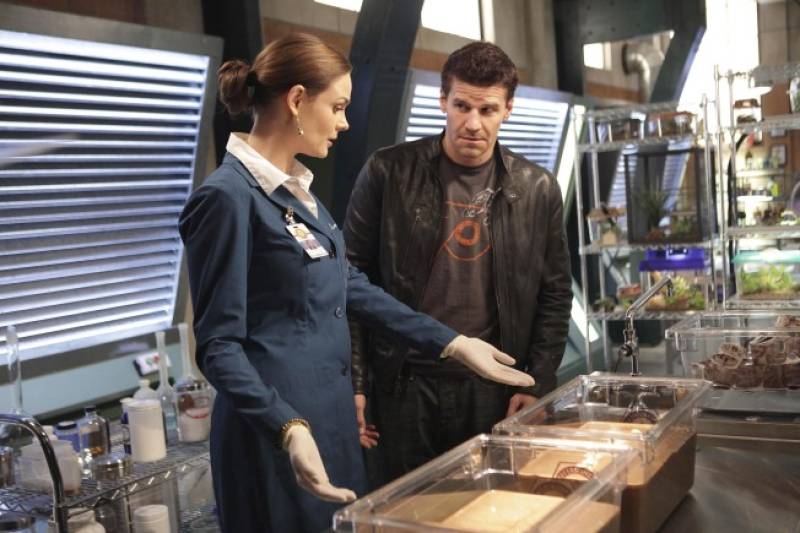
I considered titling this piece “Ruining all representations of lab work in media for everyone.” It’d be like I’m giving you the Ring Virus*, but instead of watching a video, you’re reading an article. And instead of dying in a week, you’re just going to be slightly more critical of the cast of Bones when they use an Erlenmeyer flask instead of a volumetric one. Instead, I’m going to pretend that I have altruistic intentions, and explain that science is awesome, accessible, and a hell of a lot of fun, and there should be more descriptions of what scientists do in their everyday life. So, today, I want to give a basic overview of some of the various tools you may have seen people use when wet labs appear onscreen.
Stuff for measuring volume (or, separating the pipetboys from the pipetmen)
Glassware
There are varying degrees of precision when it comes to volumetric glassware. To illustrate this, I took a picture of stuff I found in my lab.

From left to right, we have an Erlenmeyer flask, a Griffin beaker, a graduated cylinder, and a volumetric flask. They’re roughly arranged from most precise to least precise. In general, both the Erlenmeyer flask and the Griffin beaker are not to be trusted. If you see somebody on television using one of those two to measure volumes, they’re either very lazy scientists, or they know that the use of easily recognizable lab glassware is an effective way to communicate that science is happening.
Pipets
Scientists can be a cavalier bunch. Before we figured out the mysteries of using things that weren’t connected to our lungs to create a partial vacuum to draw up fluid, we used to gather up and dispense small volumes of fluid via a process called mouth pipetting. This is when you take a glass tube, cram it in a beaker of chemical or biological mystery liquid, and then draw that liquid into the tube using mouth suction. Like you would with a drinking straw, except with benzene. Or a slurry of E. coli in a nutrient broth.

We have since come to the conclusion that this is insane. The brave new era of science includes a lot less practical mouth use, and a lot more disposable fluid transfer vessels.
Pasteur Pipets:

The simplest member of the pipet family. These are just tapered glass tubes that you jam a little rubber bulb onto. They can be used to transfer small amounts of liquid to and fro as you please. They do not require any vigorous mouth action to operate.
Pipet controllers (Pipetboys):

Pipet controllers use a little motor to collect and dispense liquids. You cram a pipet into the handheld suction gizmo and use triggers to suck liquid up or shoot it out. The pipet is usually calibrated, so you can count on the gradations on the side to give you a reasonably accurate volume measurement. These are used pretty frequently for transferring fluids, handing blood, or breaking up goopy wads of centrifuged bacteria.
Pipettor (Pipetmen):

These are probably the most frequently mishandled scientific instruments you’ll see on TV. There’s even a Tumblr dedicated to this phenomenon. Pipettors can take up and dispense small volumes of liquid (0.1-1000 microliters) with great precision. They’re absolutely indispensable in modern microbiology and biochemistry labs (making them indispensable dispensers.) They show up pretty frequently in shows that deal with medicine or forensics, since biological analysis relies on instruments that can handle small volumes, and because pipettors look like space syringes, so it makes for good television. They’re not, though. They don’t have enough blinking lights or whirring sounds to be space syringes.
Pipettors are great because, in addition to the accuracy, they have disposable tips. This means you can simply put on a new tip every time you need to switch between samples without worrying about cross-contamination. People on television using pipettors without the tip is likely the number one thing that makes people like me cringe when I watch TV. Doing something like this contaminates the pipettor, throws off the calibration, and makes all of your coworkers hate you. Forever.
Stuff measuring mass (or, an excuse to photograph a chinchilla)
The Scale Scale (on a scale from more to less precise):

Analytical Balance: These guys can usually weigh samples down to the 0.1 milligram range with a reasonable degree of accuracy. Purchasing an analytical balance for home use usually indicates you are involved in drug manufacturing or trafficking in some way or another. Just keep that in mind.
Precision Balance: Basic lab balances generally handle things in the 0.1 gram to several tens of kilograms range. These are the ones you see most frequently in labs that aren’t doing heavy analytical or micro-/nano-scale work (like biochemists, microbiologists, etc.).
Kitchen Scale: These are used almost exclusively for measuring chinchilligrams.
There’s actually technically a difference between a balance and a scale. One day, I will learn what it is, and I will share this knowledge with the world.
Stuff for the picking up of things (or, my labmate just caught me taking pictures of this stuff and wanted to know what the hell I was doing with the hothands)
Forceps

Tweezers, but marked up at least 800%. I once purchased a set of platinum forceps. For science reasons.
Scoopula

Hey you. Yeah you. Do you want to weight out some chemical? Do you want to…weight out a lot of that chemical? Like, several grams? Baby, I got what you need. Here. Have my scoopula.
These silicone things I always call hothands and then do the Zoidberg woop-woop-woop thing with

As far as I know, these have no other purpose than helping me pretend I am a Decapodian. I once saw somebody using them to pick up beaker of boiling liquid, but who knows.
Stuff for mixing, stuff for demixing
Vortexer

Vortexers are used for quickly mixing things. It’s just an oscillating shaft with a rubber cup on the end. You press your vial onto it, and the oscillation transfers from the vortexer to your solution, creating an awesome little tornado of mixing.
Stir plate

If you want to mix a solution, you can drop a little magnetic bar into it and set it on the stir plate. There is usually a rotating magnet inside the stirplate that causes the little magnetic bar to spin, thus mixing your solution without you having to do any actual work yourself.
Centrifuge

Centrifuges rotate samples at extremely high speeds and are used to separate out solutions by density. More dense stuff moves toward the bottom of the sample, and less dense stuff stays at the top. Some real-world applications of this would be separating blood parts for analysis, separating material collected at wastewater treatment facilities to check contaminant levels, or determining the molecular weight of polymers. I also use them when I accidentally drop or mix stuff I didn’t mean to drop/mix.
Stuff for the putting of things
Tubes

For the sake of sterility, a lot of the things we use in labs now are disposable, especially when working with small volumes. In the picture above, the first three items are microcentrifuge tubes ranging from 0.5 mL to 1.5 mL to 2 mL. The second two are conical tubes, 15 mL and 50 mL. The nice thing about plastic tubes is that they can be recycled. They’re shaped in such a way that they can be loaded into a centrifuge and the densest material gets concentrated in the little pointy part at the bottom.
Petri dishes

A good number of the petri dishes used nowadays are also plastic, and they are used quite frequently for cell culture. You pour a solution of something that bacteria want to eat (frequently agar- the same stuff you can use to make vegan jello-esque foods) into the dish, let it solidify, then plop down a solution of bacteria. The bacteria grow into happy colonies, and you can then collect them or count them or do whatever the hell you want with them.
Since they frequently come in sterile packs, I also use petri dishes as a place to store things or work with samples. They come in a multitude of sizes. Occasionally, I use them to turn a square piece of American cheese into a round piece of American cheese so I can put it on an English muffin.
I hope that this article has helped you give a name to some of the miscellaneous lab things you have seen on television. Being able to point out even basic tools used by a given profession can help build a better understanding of what is going on and why. Overall, though, my main goal in this article was teach you the word “scoopula” and give you the tools to create an awesome drinking game/bingo card for any time you watch a television show that has even the vaguest potential to show a lab. To start, every misused pipettor is one shot, every on-screen scoopula is two shots.
You’ll thank me later.
*Did you know that, in the Japanese version of The Ring, instead of there being a happy resolution, they just showed the video to their grandpa because they figured he was going to die soon anyway? Totally brutal.

‘This is ridiculous, their bowstrings would have lost all tension by now’
My dad, engineer, watching LoTR and everything else.
“But where do the arrows keep coming from?”
Even LotR did not pay enough attention to the archery, and archers are awful/great to watch medieval movies with.
I am worse than useless with lab equipment, but similarly I am the worst person to watch sci-fi space movies with. Black holes do not work like that!
I have *very* conflicted feelings about going to see Interstellar. :/
Trying to watch any vaguely sci-fi film, even only very very light sci-fi, with my physicist fiancé is hilarious and also terrible. “MOVIE! MOVIE, COME BACK HERE, WE HAVE NOT FINISHED TALKING ABOUT THAT IDIOTIC THING YOU SAID ABOUT PARSECS, DO NOT DANCE OFF INTO EMOTIONAL DRAMA”
The word parsec has a specific meaning! It is not just science jibberish that you can toss about whenever you want to sound ooooooo scientific! I UNDERSTAND HIS RAGE.
I saw Interstellar with a bunch of actual, live astronomers. At one point some character said something about “solving gravity” and someone nearby went, “heh heh-heh heh heh” then got up and walked out of the film.
I feel bad for Kip Thorne.
I enjoyed this, especially the bit about square cheese and round muffins.
(But in this: “From left to right, we have an Erlenmeyer flask, a Griffin beaker, a graduated cylinder, and a volumetric flask. They’re roughly arranged from most precise to least precise.” — should that be the other way around?)
My dad can’t watch Numb3rs for similar reasons.
Agar. I worked for a bacteriology lab for a number of years in grad school and now I just about seize up every time I’m watching (for example) Chopped and someone refers to “ay-garr ay-garr.” I have been known to chuck the remote and yell, “that’s AUGURR, you dumbass!”
“AY-GARR” sounds like a zombie trying to have proper grammar.
P.s. The best use for hothands is to draw little eyeballs on the top half and draw a tongue on the inside bottom half, then put them on and grab at passing labmates as you yell, “OM NOM NOM!”
Agreed.
I had to do a urine sample the other day and for some reason they made me collect it in one of those 50mL pointy-bottom tubes instead of a flat-bottomed, wide-mouth jar like I’ve used in the past. The pointy bottom made it impossible to put the tube down until I had the cap on it, and I stupidly left the cap on the other side of the bathroom, so I was shuffling (carefully, because I was holding a tube full of urine) across the room with my pants around my knees, cursing the pointy bottom all the while. And now I know WHY it was pointy, and some measure of sanity has been restored to my life. Bless you, Anne Walker.
Flat-bottomed wide-mouth urine sample jars are cheap (for lab equipment), uniform, sterile, and relatively spill-proof so they get used quite a bit for non-urine purposes in labs I’ve worked in. It’s always fun to hand an unsuspecting undergrad a pee cup and ask them to take a sample.
I keep sea salt in a specimen container for no reason other than it amuses me immensely when unsuspecting people are in my kitchen 🙂
they’re totally cheaper than other sample jars that basically do that same thing! Why VWR why?!
Hooray for correct use of labware!
In college, every lab safety video we had to watch 1) was made in the 1980s, and 2) warned us not to use our mouths when pipetting. Which always got lols because WUT. Also, pipette controllers were The Worst because the pipet never stayed in the automatic hand held thingy! Pipets were frequently broken in our lab.
Relatedly, I refer you to Lab Safety Video Gold: https://www.youtube.com/watch?v=vLMSex_pACU
(at 1:30, we always made our professors rewind and show us again)
The lab safety at our school still emphasizes not pipetting by mouth: this means I tried it once to see if it was super incredible and I was missing out.
It is not super incredible. It’s finicky as an over-loved cat.
THAT 1:30 BIT GAVE ME NIGHTMARES IN HIGH SCHOOL
OMG I watched it even though I knew I knew it was that bit!
This is my Ring video! *wears leather gloves for the next month*
Also, everything is about 5 times more expensive than you would expect it to be.
Our lab manager is a devoted dumpster diver, sterilize-and-reuser, and I-can-homebrew-that-kit-from-the-MSDSer. This means that everything is only twice as expensive as I would expect it to be.
Now that I’m a grown-up, shit-kicking, occasionally painfully literal lady scientist, I do this very same thing any time wet laboratories appear onscreen.
As a former soldier in the IT trenches, I still literally cringe when I think about this bit from Jurassic Park. Dinosaurs from DNA found in mosquitoes in amber? Ridiculously over-sized Raptors? Fine! Sure! No problem! Suspension of disbelief maintained. The line “This is UNIX?”
You’ve totally lost any credibility by referring to it as a “vortexer”; it’s a vortex-mixer. I bet you use “pH” as a verb too. Gah! (Clearly you work in a less pedantic lab than I did.)
And yes, pretending to be Dr. Zoidberg is the best use for hothands.
All the labs I’ve been in used “vortexer”
That’s what most of us called it, then my boss would lecture about nooooo, it’s a vortex-mixer. I can’t tell you how many times I had to redo lab reports and methods because I referred to the action of using said equipment as “vortexing.” (I also use pH as a verb, because really now.)
Huh, sounds like its maybe a personal thing on the part of your boss? A quick search of articles in Science mag brings up quite a few papers that used “vortexed” (link here). I also just realized that I have never had to personally decide between vortexed or vortex-mixed in a publication because we always cited a previous paper for those bits. Bullet dodged!
Oh, science. The last refuge of people so pedantic that linguistics is now giving them less latitude to be so awful.
My PI is my Facebook friend, he only comments to correct my grammar or complain that a species name is not in italics.
I’m going to be totally honest here. I call our vortexer/vortex mixer “Mr. Rumbles” and the action of using it “rumblin'” because we drew a little face on it and it felt wrong to call it “the vortexer” all the time like some cheap Batman villain. Maybe I shouldn’t admit this kind of stuff in public.
Does it look like a turn-of-the-century sex toy to you, or is that just me?
Some of my biologist friends and I regularly watch monster B-movies, largely for jeering at the poor science. The two winners so far are Mega-Shark vs. Giant Octopus for the lab scene where they make pheromones by mixing random things together until it glows (which apparently octopus pheromones do), and Blood Glacier for the poor field safety skills and the Minister of the Environment drilling through the head of a mutant ibex when it attacks.
The glowing is how you know the Science is finished!
Scoopulas are legit the handiest things ever. I think I should borrow one for my kitchen every time I order more (where do they all disappear to?) except I forget until the last new one is scooping out ground up guts or contaminated lake mud or chemicals or something.
Question: can any scientist comment on the fact that early on in Bones, they used to use flasks for cocktails? Is this in the American Cheese category, or did it just look cool? (It did look cool)
We have a set of beakers in the office that we use for prosecco when we celebrate. We do it mainly because it’s fun to drink out of a beaker and if anyone happens to stop by, they look at you a little weird. On a practical note, you can also precisely portion out a 750 mL bottle so that everyone gets the same amount. But, we never have food and drink in the lab since it’s not allowed.
I do know someone that has a box of parafilm (a special type of wax coated stretchy wrap akin to plastic wrap) in her kitchen at home. That probably is more like the American Cheese and the petri dish thing in repurposing of items.
I….may have some parafilm at home from having worked in a lab that closed down.
My mom was SO EXCITED when Glad started marketing parafilm for home use! You can just go buy a role at your local fancy grocery. They call it “Press and Seal”.
I’ve tried Press & Seal, and sadly, it is no parafilm.
Haha, Sherlock measured out exact amounts of alcohol for the Bachelor pub crawl in the BBC show!
In a real lab, they’d have masking tape labels: “FOR FOOD, FOOD USE ONLY”
The labels would be so faded as to be illegible.
In my lab there is no food or drink ever ever EVER! But we’re a BSL-2 microbiology lab dealing with a fairly fatal foodborne pathogen. I do have a set of 50ml beakers at home that are used as shotglasses.
“You were just handling somebody’s organs. Why are you wearing that same lab coat in somebody’s office? You have organ juice on you!”
I am nothing even close to a scientist but I can tell you that this is one of my pet peeves, the lack of eye protection and gloves and face masks and changing coats/uniforms. And no hair nets!
In real lab life though, lots of people are TERRIBLE and DISGUSTING about wearing their lab coats all over the place (as well as wearing gloves into the kitchen, touching lab equipment with bare hands, not wearing goggles, etc).
Coats specifically though are a real actual problem. It is like some people think that they are badges of Science Honor (coating ceremonies do not help with this delusion, med schools!) instead of personal protective equipment.
I used to see this all the time in the hospital. WHY ARE YOU WEARING YOUR BOOTIES AND OTHER SUPPOSED-TO-BE-STERILE ITEMS INTO THE CAFETERIA &*%$#@^
Before the lab I worked with moved to an open-concept lab, no one wore their lab coats unless they were handling mice or if the provincial/federal inspectors were sneaking around. And my PI only wore hers because it was so freaking cold in the lab.
Yeah, I think it really depends on the kind of research you do. In my first lab, no one ever wore lab coats – I can’t even remember wearing a coat when working with (animal) fecal samples, which, in retrospect, is really gross. My second lab was in a much more clinical department and I was pretty shocked at a) how everyone wore lab coats b) everywhere. People seemed to approach it as more of a uniform than protective gear. I judged, I freely admit.
The lab I worked in was terrible for all sorts of this type of violations. We mostly just didn’t wear coats, including sometimes when we were doing the acid washing. It’s amazing none of my clothes ended up with holes. We’d also eat in the lab, hiding the food/drink behind the computer monitor. And then in the field it was all electrofishing without proper gloves and throwing rocks at bloated raccoon carcasses. Ecologists, man, we’re the screw up little brothers of the science world.
And yet the only thing we ever got in trouble for was that I had a jar of yeast in the lab for feeding my mosquito larvae. I don’t know what the inspector thought we were going to do with it, eat it with a spoon for a snack?
In UK hospitals, white coats for doctors are no longer a Thing because of Infection Control (no clothing below the elbows) so it always weirds me out to see things from other countries with people wearing them.
Ugh, the gloves! My problem is not so much with lack of gloves as with people wearing gloves and then just touching everything. Memo to actors: once those gloves have touched chemicals/organ juice/pretty much anything in a lab, you’d do all sorts of wacky contortions to scratch your nose or push your glasses back up, but never touch your face.
Also, I have yet to see a tv doctor use a stethoscope correctly. Sigh.
Or actors with long flowing hair working in biosafety cabinets. Tie that shit back before you shed into your cell culture!
I am now a corporate sell-out, but I have a violin performance degree, and I am the world’s worst person to watch any movie or TV show ever in which anyone tries to play an instrument
approximately 100% of the time they didn’t even try to try, and I am inclined, because I have many moral failings, to inform everyone around me EXTREMELY LOUDLY of that fact.
The bow-holds! I feel your pain.
Why do they never teach actors playing conductors to beat a pattern? Do the stage directions just read “flap arms to music?”
YES. THIS. I’m a trombonist and it just hurts too much whenever someone (especially children) try to play wind instruments in films. I mean, it’s actually not that difficult to hold a trombone correctly. And the slide is not a boxing glove.
As a fellow trombonist, I have the same problem when I see drawings of trombones. 9 times out of 10 they’re wrong. It’s not even that complicated-looking an instrument!
I mean, it’s basically a giant paperclip with slidey bit’s. IT’S NOT THAT DIFFICULT, PEOPLE.
In olden times, a balance had two containers at either end of a bar. A swivel point was somewhere in between. Put the thing you want to weigh in one container and your reference weights in the other. The thingy that statues of justice are holding is technically the “balances of justice” not the scales.
Scales measure weight by either hanging the thing you want to weigh from a spring, or putting the thing you want to weigh on top of a spring. You figure out the weight by measuring how much the spring moves.
Technically, a balance measures mass (how much matter there is) while a scale measures weight (how the mass is being pulled by gravity). A balance will give the same readings anywhere, but a sufficiently sensitive scale would read differently between sea level and high altitude. Something to keep in mind when weighing out the spoils from your jewelry heist on the private jet.
With modern tech, there’s less practical difference, but we usually call things that have narrow range and high precision balances.
I think I should probably write a Toast article tangentially related to every difficult question I want answered. It’s more effective and pleasanter to read than Google!
Also, if you spend any time pippetting than this ad/music video is for you. http://www.eppendorf.com/int/hawkpopup.php?conten…
Likewise, are you familiar with the PCR song? https://www.youtube.com/watch?v=x5yPkxCLads
Ha, that is great and new to me!
What, no mention of Thermophilus aquaticus? This is why it’s a pain in the neck to collect pretty flowers in national parks.
This is amazing.
I will note that I often extend a languid hand towards my spouse so he can massage my pipetting muscles. I don’t even need to speak anymore.
I used to do the purchasing for a bunch of labs and I always wondered how exactly stir bars stirred anything. Now I know. Thank you!
Many hot plates are also stir plates, too!
true and in fact it is sometimes difficult to find just a stir plate and is not also a hot plate!
Seriously, if they made food-safe and kitchen-sized stir plates and stir bars, I would buy like a hundred. That, and I would buy Parafilm by the mile if it didn’t cost an arm and a leg. There are days I sincerely regret not actually becoming a biologist. I miss playing with lab equipment.
+1 parafilm fangirling. It is everything cling wrap wants to be and more.
Between my microbiology and my fiance’s physics, we are disastrous at watching anything with a suspension of science disbelief. I kind of like it, though, it’s fun to have to pause Star Trek after side-eyeing to discuss a way they could have kept the plot but made it better and more accurate!
You would think Star Trek would stick to unbelievable science, but my anthropology lessons kick in when I watch it. So much intercultural interaction, and so many screw-ups! Star Trek Enterprise is the worst offender–I can’t understand how someone who has a savior complex and just yells at culture problems until they go away gets to be the hero. I think I might have offended my dad because of how much I nitpick all the diplomacy in his favorite show.
Oh my God I do this when watching diplomatic matters on TV shows/movies. On Gravity: How could Russia just destroy a spy missile that would destroy the ISS? That’s just straight up ridiculously impractical.
However, I will say that I personally know that some of the least diplomatic, least self-aware people go into such programs in the US. Like, really the least diplomatic, I cannot stress that enough. And FSOs get frustrated with the mundane bureaucracy of their jobs….
Drinking from lab glassware, in the lab, is my bad science shudder moment. What are you *doing*? That beaker held potent carcinogens and then was washed by a daydreaming college student! Eurgh.
Wow, I have been working in labs for over a decade & I never knew the term “pipetboy”! I was taught “pipet-aid” but generally call them “the sucky”.
Having a mother who is the manager of a GP practice, and having worked there as a receptionist, I couldn’t watch the “John is a locum GP” scenes in Sherlock without shrieking with rage. It was painful.
The “science” that Sherlock is doing is just as bad, if it makes you feel any better. You can’t tell if there’s poison in a sample by looking at it with a light microscope. Puh-leeze!
Bones is the worst of all worlds because literally everything they say about cultural anthropology is either nonsensical bullshit or bullshit that’s also a hundred years out of date. It’s somehow satisfying to know that they’re no more accurate with their pipetting technique.
Oh, Bones. So very much wrong in the forensic sciences. Blood does not fluoresce under a blue light. Blood does not fluoresce under a UV or near-UV light. Not with green lasers, not with orange goggles; not with Star Trek Phasers; the mind; it boggles.
Much of what they say about osteology is laughable, too, if it makes you feel better!
Since I’ve become a nurse I ridicule a lot of TV medical scenes, especially those concerning CPR. My husband hates it.
Oh god, and sometimes on the television they turn the eppendorf pipets upside-down, AFTER pipetting liquid into the tip, so the liquid slides back into the pump mechanism, which ruins it forever. The pain.
The now-scarcity of glass petri dishes at times now makes my life a little bit difficult, because plastic ones are too staticky for spreading out a dry powder under the microscope. So when I find a nice wide glass petri dish in someone’s lab, sitting in the back of a drawer where no one cares about it, I 100% steal it for my microscope.
AS IS YOUR RIGHT.
I was watching some show recently and was briefly excited because they had the same eppendorf pipettes as my lab does, then horrified since the actor was holding it in the most insane and convoluted way. How do they think they work???
Also, I recently started working in a slice electrophysiology lab and am still relatively horrified that mouth pipetting is now a part of my life. I thought everyone was done with that, but no. The patch clampers carry on.
Noooooo. Why is that necessary? It’s no fun at all!
In fairness, it’s not so much mouth pipetting as mouth suction? Even though that’s basically the same thing. Essentially you’re trying to latch a recording electrode onto a neuron, which at various times requires blowing or sucking on it (to use very technical terms). For some combination of actual ease and just because that’s the way it’s always been done, this is mostly done by alternatively sucking and blowing on a pipette. It’s a great time.
On the one hand, you’re not trying to move things around and there’s roughly a 0% chance of accidentally sucking up cell debris. On the other hand, I do relatively put my mouth on something that sits around lab, which is basically the first thing they tell you never to do in biology 101.
I’d imagine it’s akin to the satisfaction Patrick F. McManus fans might feel upon correctly siphoning gasoline.
tbh, I find it amusing that Neher and Sakmann got the Nobel for essentially mouth pipetting.
I have found that, if you ever have to bring a boyfriend to lab, the best thing to do is to fill a conical tube half full of water and show them how to use the vortexer.
This usually keeps them amused for the amount of time it takes to finish your experiments.
I use the electric “fireplaces” at work for this same purpose with small children. It looks cool, but is harmless, so you can have an actual conversation with their parents while they’re mesmerized.
Portmanteaulogy of Starbucks (it’s related, I swear) “spoodle” for the large spoon/ladle hybrid used for the beans (this is the actual, trademarked name of this product), and “tongulas,” for the tongs on one side/spatula on the other thing that’s so useful for getting a sandwich or cookie out of the oven.
You forgot the Nutator! Its 3D rocking rotating motion is both useful and hypnotic. Doubles as white noise machine.
"AY-GARR" sounds like a zombie trying to have proper grammar.
THAT 1:30 BIT GAVE ME NIGHTMARES IN HIGH SCHOOL
OMG I watched it even though I knew I knew it was that bit!
This is my Ring video! *wears leather gloves for the next month*
Haha, Sherlock measured out exact amounts of alcohol for the Bachelor pub crawl in the BBC show!
Oh my God I do this when watching diplomatic matters on TV shows/movies. On Gravity: How could Russia just destroy a spy missile that would destroy the ISS? That's just straight up ridiculously impractical.
However, I will say that I personally know that some of the least diplomatic, least self-aware people go into such programs in the US. Like, really the least diplomatic, I cannot stress that enough. And FSOs get frustrated with the mundane bureaucracy of their jobs….
I loved this article so much but I only just got to read it, which is why the 5+ new comments are all me 🙂 Thank you for reading this, and thank you to the Toast for publishing it! This will be great for my mad scientist fiction.
I loved this article so much but I only just got to read it, which is why the 5+ new comments are all me 🙂 Thank you for reading this, and thank you to the Toast for publishing it! This will be great for my mad scientist fiction.
Actually it is UNIX! http://en.wikipedia.org/wiki/Fsn