
Previous installments can be found here. There will be spoilers. “An historian” is a perfectly acceptable Commonwealth convention, haters to the left [side of the road].

Freddy Bywaters, Edith Thompson, and Percy Thompson
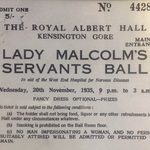
Edith and Percy Thompson were lower-middle-class residents of a London suburb, entirely ordinary until the day in 1922 when Edith’s younger lover, the sailor Freddy Bywaters, arrived unexpectedly at their home and stabbed Percy to death. Despite the total lack of evidence that Mrs. Thompson knew anything about the attack in advance, she was jointly charged and ultimately executed for the murder because of letters she had sent her lover that included some fantasies about poisoning her husband. A snappy dresser and a keen businesswoman in the hat trade, by age 28 Mrs. Thompson had no children, but spent her leisure time at respectable dances held in halls or hotels. Her letters to her lover were expressive and highly sexual, even apparently describing orgasm in terms that echo Marie Stopes: “It seems a great welling up of love—of feeling, of inertia, just as if I am wax in your hands…” These letters, in their sensuality as well as their imagined violence, effectively condemned Mrs. Thompson, who was hanged despite a paucity of evidence. Historian Lucy Bland describes Mrs. Thompson as “a woman who made her own choices and acted on her own desires,” but who was ultimately put on trial, in court as well as in public, for her sexuality rather than her deeds. She was, therefore, an apt representative of the modern woman in the 1920s, liberated but also constrained by profound fears about sex and sexuality.
Like other romances, Downton Abbey is fuelled by the marriage plot. In the first few seasons, we followed, in great detail, the waxing and waning of the marriage prospects of the three sisters, Mary, Edith, and Sybil. The marriage plot, of course, ends with the wedding, or perhaps with a soft-focus epilogue of married bliss. If you had stopped watching around the time of Sybil’s death in childbirth, it would have seemed that Mary got her happily-ever-after ending, Sybil’s rebellion ended in tragedy, and Edith was to be condemned to that twilit zone of non-reality where the marriage plot consigns the women who marry neither well nor poorly but not at all.
But in Downton, there’s always a morning after. And middle-aged and elderly characters continue to have their passions and their entanglements. In fact, much of this season, so far, seems to be concerned with life beyond marriage, whether through non-marital sex, adultery, flirtation, or divorce. Rose, insisting on her right to choose a future mate freely, seems almost more old-fashioned than her soon-to-be-divorced father, the miserably nicknamed Shrimpy. Everyone, it seems, wants to understand exactly how much play they have in this new post-war world, exactly how far they can get away from the strictures that defined their pre-war youths. Who would have thought that Sybil would turn out to be the conventional one, making a love-match and dying young rather than wading through the complexities of modern adult relationships?
Lady Mary, in her widowhood, is becoming, if not quite a flapper, certainly a thoroughly modern woman, casting off chaperones, corsets, and convention. The modern woman cut her hair and wore androgynous clothing: while Mary’s aesthetic choices are more restrained, she’s notably intrigued, during this episode’s fashion show, by the more masculine options on offer. The frocks, jackets, and ties, though, are merely superficial: Mary is interested in carefully plotting out a deeper sort of freedom. So why did she spend the week in Liverpool with Lord Gillingham, only to cast him aside?
It seems unlikely that she was interested in alternatives to marriage, though these had been promoted by free-love types since the late nineteenth century. Women living with men outside of marriage enjoyed a brief moment of legal recognition during World War I and its immediate aftermath. Soldiers’ allowances and pension as well as, temporarily, unemployment allowances were paid to such women, described as “unmarried wives.” Repeated references to Mary’s status as a lady—the “daughter of an earl,” as her grandmother pointedly put its—reflect widespread assumptions that the lower classes were less moral than their social superiors, and that lower class men and women were more likely to live together outside of marriage. But demographic research challenges those assumptions and suggests that such cohabitation was very rare in England at this time. An analysis of a slum area of Salford in the early twentieth century, for example, was unable to trace the marriage records of only 3.5% of couples; the researchers estimate that probably only 0.4% of couples were actually living together outside of marriage.
Mary has been clear, in fact, that she wants her next marriage to endure. Perhaps she knows, too well, that she would never put up with an inadequate union and wants to avoid the necessity of divorce. The Divorce Court, established in 1857, was imagined as a safeguard for marriage: a few, genuinely terrible marriages would be dissolved (freeing the victim from a vicious spouse), and the publicity of the court would, it was imagined, deter others from adultery or abuse. In fact, the Divorce Court became a perennial source of salacious news stories. As historian Deborah Cohen writes: “There were, it turned out, many more unhappy marriages than anyone had imagined—and many more English husbands and wives willing to air their private misery to break the marriage bond.” In 1924, just over 2,000 couples were divorced in England and Wales: not a large number, but one that was steadily increasing from the several hundreds a year who got divorced before the war. Yet as the reaction to Shrimpy’s news suggests, divorce could mean social ostracism and professional setbacks as well as public humiliation. It seems that Susan and Shrimpy are simply incompatible, but they will need to prove infidelity, at the very least, before the Divorce Court in order to have their union sundered.
But for women particularly, sex outside of marriage was playing with fire. Illegitimate births were still concealed, and, in Rebecca Probert’s words, “there remained a strong presumption that pregnancy would be followed by marriage.” Lord Gillingham’s incredulity, when Mary turns him down, was weirdly expressed but entirely understandable: despite Mary’s assurances to her grandmother, there simply was no reliable contraception in 1924. The risk of pregnancy loomed over every sexual encounter. Sex did not become “a quite unlosable game,” in Philip Larkin’s words, until the 1960s and the advent of reliable chemical birth control as well as the widespread availability of condoms. The sad saga of Edith, Marigold, and the Drewes underscores this point: but as usual, while Edith got burned, Mary seems to have dodged this particular danger of sexual liberty.
Ultimately, it seems to me that Mary just wanted to have sex with Lord Gillingham, that she wanted to “act on her own desires,” just like Mrs. Thompson. Whether she will successfully avoid the opprobrium that often attaches to women who claim agency over their sexualities remains to be seen. What’s certain, though, is that her impulse to have sex in order to shape her life more to her own liking is profoundly modern. Although it sparked a surface sense of kinship, her grandmother’s experience in Russia is more important for its differences than its similarities to Lady Mary’s latest adventure.
Violet’s own complicated past has sprung to life again in the person of Prince Kuragin. She confesses to Isobel that she nearly ran away with the Russian aristocrat, but changed her mind when her husband “gave me a frame by Fabergé, with two pictures of the children in it, and I saw sense.” Interestingly, she deflects Isobel’s question about whether she saw sense “in time,” presumably before the affair was consummated: “I forget.” The point of the story isn’t sexual passion, but a return to family. Later, she tells Edith to leave her memories both of Michael and their child behind:
Violet: I would never suggest anything that is not in your interest.
Edith: In my interest? Or the family’s?
Violet: To me, they are the same.
Edith: And that is where we differ.
Their difference is generational as well as personal. At a moment when psychoanalysis is coming into vogue, when literary modernists are exploring the nature of personal, subjective reality, when the very essence of free will and personality are challenged by the legacies of war and shellshock, it is not surprising to find a new interest in selfhood and personal destiny. Sex may not yet be a “quite unlosable game,” but neither Mary, nor Edith, nor perhaps Shrimpy nor Cora can fully resist the chance for greater self-knowledge through sexual exploration—and what could be more modern than that?
*
Sources
Lucy Bland, Modern Women on Trial: Sexual Transgression in the Age of the Flapper (Manchester, 2013)
Deborah Cohen, Family Secrets: Shame and Privacy in Modern Britain (Oxford, 2013)
Rebecca Probert, The Changing Legal Regulation of Cohabitation: From Fornicators to Family, 1600-2010 (Cambridge, 2012)
Tags: divorce, downton abbey, history, marriage, mo moulton, sex, television, watching downton abbey with an historian
Related Posts
 Watching Downton Abbey with an Historian: The Niceness Syndrome
 Watching Downton Abbey with an Historian: Lord Grantham’s Secret Liberal Heart
 Watching Downton Abbey with an Historian: The Rise of the Working Class
 Watching Downton Abbey with an Historian: Cowardice, Shellshock, and a Right Memory
 Watching Downton Abbey with an Historian: Death and Dyeing
 Watching Downton Abbey with an Historian: Queer Downton!

I think maybe Mary just wanted some and Lord Gillingham is pretty hot even if he has no personality? She had sex with a dude who died, carried his body through the house, basically was blackmailed by her ex-fiancé, and became widowed the day her kid was born. At this point she probably figures eh what the fuck.
I am a long time viewer of Downton and this season just sucks so bad. Things that can stop now: Edith perpetually getting crapped on, Miss Bunting as anything other than Daisy’s tutor, Lord Grantham, Lord Gillingham (grilling ham autocorrect), Tom being a sad sack, Thomas being a stunted person, Rose being boring, eternal torment of the Bateses, Carson.
Things I want to continue: all the Charles Blake actually being a foil to Mary, Daisy’s emergence as a badass, Cora getting some, Isobel having two suitors, Violet getting her moral comeuppance, Molesley’s bizarre emergence as someone I care about.
I miss Jack Ross.
Daisy’s becoming worse than a revolutionary this season: she’s becoming an activist.
For anyone interested in the Thompson-Bywaters case, I’d highly recommend the excellent “A Pin to See the Peep Show” by F. Tennyson Jesse (a fascinating woman in her own right– an early female crime writer and great-niece of Alfred, Lord Tennyson). The novel is a lightly fictionalized account of the case, and paints a very sympathetic portrait of Edith Thompson.
As a side note, Thompson’s execution was widely regarded as a miscarriage of justice, and was instrumental in turning political and popular opinion against the death penalty in the UK. (Though it remained in effect until 1965).
I will definitely check that novel out! According to Lucy Bland, it took some time before Thompson was regarded as the victim of a miscarriage of justice–at the time of her conviction, most people (at least as far as you can tell, in the era before surveys) thought she was guilty–or at least, guilty enough! It puts Harriet Vane’s persistent sense of being tainted just for *having been* on trial for her lover’s murder in a new light, I think.
I got the sense that Mary had sex with Lord Gillingham to see if they were sexually compatible: remember that she and Matthew DEFINITELY were, and I think that’s something she knows she needs to have a successful marriage. GOOD FOR HER.
And then it seemed like the sex might have been, at least, acceptable, but she realized that they weren’t really that personally compatible? In any event, Mary, you’re well rid of him. (Team Blake, or some other, more interesting, hot dude.)
I got the sense that Mary had sex with Lord Gillingham to see if they were sexually compatible: remember that she and Matthew DEFINITELY were, and I think that's something she knows she needs to have a successful marriage. GOOD FOR HER.
I really, really want Cora to discover how much she deserves to be treated like a real person.
Jesus, Mo, this is well-written, and gives me a different lens with which to look at the show I’ve enjoyed for a few years now.
Obviously the show has to walk a fine line between historical accuracy and making points of a sociological nature that are relevant to the 21st century. I’m glad to see that the show has done this fairly well for the most part.
I look forward to reading more of your analysis.
And then it seemed like the sex might have been, at least, acceptable, but she realized that they weren't really that personally compatible? In any event, Mary, you're well rid of him. (Team Blake, or some other, more interesting, hot dude.)
I hope that Anna isn’t going to become a mistaken object of suspicion similar to Edith Thompson. The episode’s events with the police and her hiding Mary’s contraception seem to be laying the ground for something like that.