
I’ve listened to a lot of people die, and take it from me, people don’t slip away quietly like they do on screen, with one last longing look and a soft sigh of disappointed resignation. There are, of course, some quiet deaths—dying in one’s sleep is something many of us hope for. But the body is built to fight, and even in the most exhausted of frames, it can kick up a racket on its way out. It’s not polite. It doesn’t ask permission. It rattles and gasps and wheezes like an accordion being run over by a tractor-trailer. It fights with the bouncer and hurls epithets over its shoulder as it’s carried out.
I’ve worked 911 for seventeen years as the first of the first responders. I’m the person who tells you how to do CPR when you see a guy drop in front of Starbucks, when no one else wants to help, when you can’t remember one single thing you learned in that class you took before you had your first kid.
I’ve heard so many people die that sometimes I can tell the person is dying before the caller does. That fish-gasp-snore sound (called agonal breathing) is the reason CPR is sometimes started too late to help.
“Ma’am,” I say. “He’s not getting enough oxygen. I’m going to tell you how to do CPR.”
“Oh, I can’t do that. He’s still breathing, can’t you hear that snoring? Just get here!”
But I can tell by the sound that he’s not snoring, he’s actually dying, and without immediate intervention he won’t make it. It’s up to me and only me to convince the eighty-year-old woman that she’s strong enough to pull her husband off the bed in order to get him on a flat surface (You can’t do compressions on a bed. Pull the sheet he’s lying on. Don’t worry about the fall is what I say. You can’t hurt a dead man is what I don’t say). It’s up to me to convince the seventeen-year-old girl to give mouth-to-mouth to a friend who’s overdosed, even when the caller is high as hell and doesn’t want to get anywhere near the stuff coming out of her friend’s mouth. It’s up to me to tell the mother how to cut down her son who’s hung himself with a rope made from his stepfather’s ties in case there’s still oxygen lingering in his blood. Speed. Now. The faster, the better. The more convincing I can be, the better chance the person has of being revived.
*
You answer the phone. You talk two hikers through giving CPR to a stranger on a hillside. Tell one how to pull the latitude and longitude off their iPhone because the call came in on the wrong line while coaching the other hiker not to stop compressions (tip: know how to find this location info on your phone). Get the helicopter ordered, help it land safely in the right place.
Finish your slice of pizza long gone cold. Fiddle with the crossword puzzle from the day before. Answer the next phone call. Don’t ask about the endings. HIPAA laws make it clear that unless you have a need to know, you have no right to know anyone else’s medical information. It can be frustrating to never know the endings. Unless you make the endings up yourself.
I started writing them down, fictional plots based on nothing but the conglomerate of grief I stored in the back of my mind—the endings I wrote to all my novels were hopeful, because hope was what I heard every day on the phones. The hope that I—that someone—could help before it was too late.
One novel’s inspiration came from talking to too many people with early-onset Alzheimer’s—they always know something’s wrong, but they can’t quite tell me what it might be. Sometimes they can’t remember their names or why they called 911. But they always hope I’ll be able to help. With something.
Another novel, The Ones Who Matter Most, was the result of listening to hundreds of women over the years entering miscarriage. “No, no, no, no. Not this, no.” The liturgy these women chant is millennia old. Don’t sit on the toilet, I tell them. Don’t cross your legs. They cling to my words, hoping that if they do what I say, they can change the ending.
Hope. I hold out hope.
Because without hope, we don’t go on. Hope is the only thing that lets us say goodbye to our loved ones in the mornings—the hope we’ll come back together later, safely.
Hope is the thing our brains hold without us having to try. Our bodies, even at the edge of death, still hope for oxygen, still try to grab at it. Hope is extravagant and senseless and often just plain ridiculous, and yet still it rises.
Once I took a call for a 103-year-old woman who stopped breathing while at a family birthday party. Her great-grandson did perfect CPR—I could hear the sound her chest made as he did compressions in exactly the right rhythm. All the while, he panted and muttered, “Come on, Grandma, you can make it. Come on, Grandma. You can do this.” Behind him, the whole family cheered them both on. I was listening to a house full of hope. A home full of love.
I don’t know if Grandma made it or not. I’m guessing she didn’t, but what a gift, to be 103 years old and your family’s still not ready to let you go.
*
I’ve just left the day job. It’s not like it’s a spur-of-the-moment thing. I’ve been working both 911 and writing, ninety hours a week, for ten years. I’ve published three literary novels, ten feminist romances, and one memoir, and this is what I’ve been working toward. I’m as ready for this leap as I’ll ever be.
It’s been almost two months of complete self-employment and I’m still twitching from adrenaline withdrawal, but not having to wear a pager to go to the bathroom is great. Actually sleeping at night—every night—is even better. So even though my hopeful dispatch manager has put me on the part-time roster just in case I feel like picking up some shifts, I think I’ve made the right choice in taking off my headset for good.
I spent seventeen years listening to what can go wrong, hearing stories of predictable losses and freak accidents. I had the two best jobs in the world: giving immediate, life-saving assistance, and then making up stories about what happened next (in all cases fictionalizing the stories completely to protect those affected, including in this essay). I knew that sometimes, while on 911, I helped someone save a life.
And then a couple of readers wrote to me, saying I’d saved their lives. That’s exactly as untrue as it would be if I took credit for actually restarting someone’s heart over the phone. In not one single case did I put my hands on a chest and push. There was always someone else following my directions—they did the life-saving. In the same way, I don’t believe my writing can actually save someone.
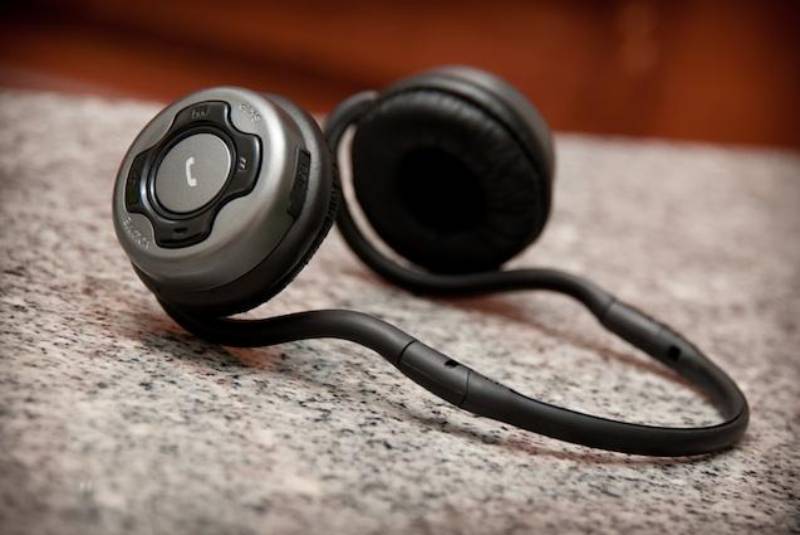
But in both those jobs, I played the same role: to be the holder of hope. On the phone, I was the placeholder, the voice the caller clutched while waiting for an actual hand. In my books, I’m also just a voice, something to cling to while a reader’s world slips sideways. And I’m hoping like hell I get it right. From now on I’m wearing no headset and leaving behind only black marks on a white page, holding the space for hope and the shaky breath that follows it.
*
(image via)
#/media/File:Arctic-p311-bluetooth-headset.png)

Beautiful, heartbreaking, and hopeful — thank you for sharing your experiences with us. Fair winds on your new voyage as a full-time writer!
Oh, how wonderfully written and how important this is. Thank you for your writing and for all the work that you’ve done and continue to do! Bon courage!
Okay, I should not have read this at work, but what a beautiful essay. I hope if I ever, heaven forfend, need to call 911, there will be someone equally competent on the other end, and somehow it’s very comforting to think they will be so philosophical and caring about the ordeal.
On another note, I just took a refresher first aid/CPR class a couple weeks ago, and the instructor drove home the point about the agonal breathing, how that is NOT normal breathing, they are NOT okay, and they DO need CPR, and I thought that is definitely a thing not enough people know. Prior to the class, I myself probably would have thought that someone who took a breath like that wasn’t at CPR stage yet.
Now to figure out how to get the longitute and latitude off my phone…
I just looked this up because terrified now. If you have an Android, there’s a free app called My GPS Coordinates that literally does nothing but tell you your GPS coordinates. (Go figure.) It does not require either wireless or data service – only that you turn on your phone’s location setting.
Agonal breathing used to be called the death rattle. If this is an issue, maybe we should revive that name?
(Having heard it once, I find it pretty hard to mistake – it is a terrible sound).
I simply must read more of your stuff. Thank you for sharing it here!
“…but what a gift, to be 103 years old and your family’s still not ready to let you go. ” ::bursts into tears::
These are the pieces which remind me of what I’ll miss from The Toast the most.
Still – that I was introduced to another writer today – another Mills Girl, at that!!!! – and can now watch for her books is a gift. Thank you. ♥
That is exactly the point where I lost it.
Ditto, to my husband’s concern since he had only just gotten home.
Thanks for this, and especially for the notes on agonal breathing and knowing how to find your coordinates on your phone–I had to poke around a little, and now I can find that info. Why is crossing the legs contraindicated during miscarriage? (Yeah, in the face of medical emergencies and the accompanying emotional freight, I cope by grasping for knowledge. Surely if I Know All the Things, I will be able to handle emergencies, right?)
Thank you for this; I’ll be looking for your books.
I’m not actually sure but I think it might be due to putting pressure on your abdomen?
It’s a bit macabre, but it’s actually because sometimes women aren’t prepared for how fast a baby can come out and demand air, and the fresh new kiddo ends up with a lungful of toilet water.
I’m glad you know how to find the coords on your phone now! (And I feel the same way about Knowing All the Things.)
Beautiful writing. The tiny glimpses that you get of people in extremis and not knowing what happens next sound fascinating and emotional and strange.
Just beautiful, thank you.
This was gorgeous. (*And* you’re a fellow half-Kiwi half-American?? Pardon me while I make excessive cat-with-heart-eyes faces at you.)
Kia ora howdy! 🙂
As an EMT, I can only say thank you! Thank you especially for working to get information out of panicking people, so we’re not walking in (completely) blind.
This was beautiful, thank you.
I have so much respect for people who can do this kind of work. I was an OnStar operator for a while and had a couple of emergency calls come through, and in both cases afterwards I had to leave my desk for half an hour and sit shaking in the lunchroom until I could pull myself together. I simply don’t have the constitution for it. But I am so glad there are people out there who do.
Thank you. Not just for this, but for 17 years of service.
This was beautiful, thank you for sharing this with us.
Knowing that they’re not alone and having someone guide them through something difficult is an important part of people saving themselves or others so I really admire the role you’ve played in people’s lives (in your work as a 911 operator and in your work as a writer).
Oh man, I should not have read this at work. Lots of tears. Good thing my coworker is out today. This is beautiful.
This is so good. I was already full of admiration and curiosity re: the calm voice of help and hope in a crisis, and then it became about writing and my mind was blown.
Brave and beautiful, thank you.
Ok, but: how do I find my latitude and longitude on my phone? I’m very concerned about this now.
On an iPhone, it will show on the Compass app if you let it know your location.
I found it by opening Google Maps, making it center to my location, zooming in for greater accuracy, and then poking it so the red marker came up; then the coordinates were shown in the box. If there’s a faster way I’d like to know. (on Android)
Yeah, Androids are trickier – I downloaded an app to do it – they don’t come with a Compass app like iPhone does. Good job checking on having this!
Keep in mind Google Maps requires a steady data connection, which can be fine for getting around the city but might not be what you wanna count on in a life or death emergency. There’s apps that can run off just GPS and won’t cut into your potentially limited bandwidth (also good for getting around the woods!), Navmii was the one I used on my Android but it wasn’t very good.
This was a wonderfully-written essay, and while I’m fortunate not to have yet been in a situation requiring it, the agonal breathing information was a real eye-opener. Thanks!
Thanks for the work you did. Thanks for the words you wrote. Especially the part about how “they did the life-saving.”
And as someone who has family members with chronic conditions, if any of you find yourselves in the situation where you have to help a stranger who isn’t in a state to effectively communicate with you, check the following:
-Their wrists, neck, ankles and shoes for medical alert tags. Some people, like my brother, have the medical alert tag laced on their shoes. Other people have taken to tattooing medical information about allergies or health conditions on their forearms.
-Their phone. Some phones have emergency contact and medical information accessible without having to enter the pass code. If you have an iPhone, you can put this info on your own phone with the pre-installed “Health” app.
And lastly, women are more likely to misinterpret or downplay signs of a heart attack, because the information about how heart attacks present in women is not as firmly fixed in the public consciousness as the gasp! clutch arm! collapse! symptoms we commonly see presented in media. Also we’re socialized not to make a fuss. If you suspect a heart attack, MAKE A FUSS. You don’t need someone else’s permission to call 911.
Related; my CPR & first aid instructor taught us “if you’re wondering if you should call 911, you’ve already answered your question. Call. They’ll ask questions and figure out how much and what kind of help you need and how urgently. You’re paying for the service anyway; use it if you’re worried.”
Note: this does not apply if you’re upset that your pizza is late, which shouldn’t need to be said, but apparently there are all kinds of people in the world. Legit possible-emergency concerns.
Yes, yes, yes! I once got a call from a woman on the business line because there had just been a strange man in her bedroom and because he was gone, she didn’t think it was worth dialing 911 (it was!). You get the same dispatcher in the same seat, but 911 is prioritized and won’t be put on hold as often as the non-emergency lines. When in doubt it’s ALWAYS better to call 911.
Great tip re Health app! I have added my medications and emergency contact info.
You’re amazing; thanks for writing this as well as all your help to people who need it.
I wonder how long it took you to get used to living with the people you can’t save. So many.
Wow, I wasn’t expecting to cry at my desk before 9 this morning. This was so beautifully written — thank you for sharing your experiences here and for being a beacon of hope for others. *hugs*
Read this on my phone last night so couldn’t comment but…yeah, that was full on tears before bedtime.
I have a friend whose girlfriend was recently doing training to do this job in the UK, and in one of her (real) calls had to talk a 12-year-old boy through reviving his mom who had tried to hang herself. I really think this is one of the most important, worthiest, most intense jobs imaginable and I am completely in awe of those who do it.
This knocked the breath right out of me. Thank you for your amazing phone work, and will absolutely seek out your writing.
I think I got something in my eye. I mean, why else would my eyes not stop watering?
also, now I want to know how you even get trained to do this job. It sounds like you need a ton of medical knowledge!
I couldn’t even handle the stress of customer service for a vinyl siding company; I could never have handled this job. Kudos to you and I hope taking time away helps you de-stress!
Wonderful – thank you for sharing this beautiful, heartbreaking piece.
“Hope is extravagant and senseless and often just plain ridiculous, and yet still it rises.”
So many beautiful passages but this one really got me.
Thank you.
The work you do is greatly appreciated. I can’t imagine the mental turmoil you go through. Great writing, thank you so much for sharing.