
[Please note that this essay consciously ignores certain events that transpired in season 7 because…ugh.]
When I was 15, I thought Lorelai Gilmore was perfect.
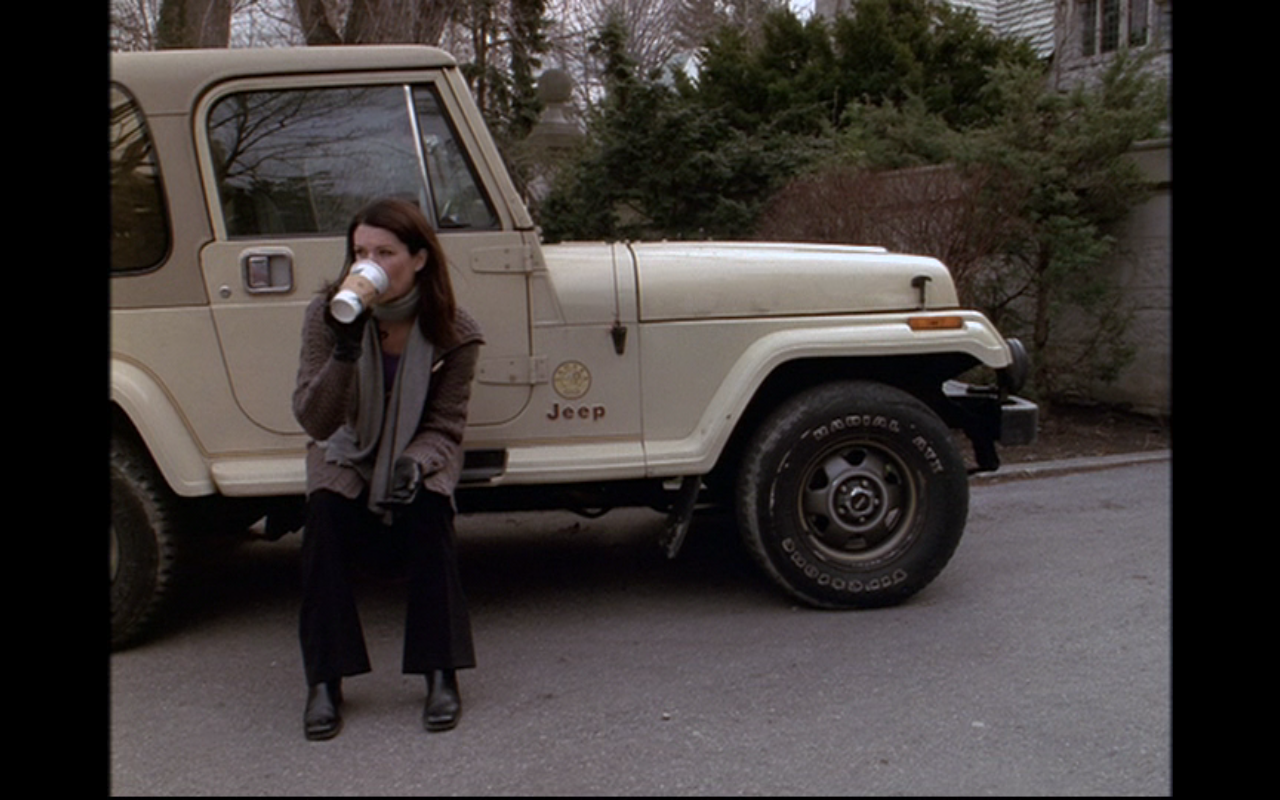
Not actually perfect, I wasn’t so naive that I couldn’t see her flaws, but she was my ideal, the person I most wanted to be if I could crack the code: witty, charming, smart, beautiful, resilient…able to converse with men without turning bright red or stammering. The fact that she was messy, that she couldn’t cook, that she was prone to tardiness and putting her foot in her mouth, that she was a bit of a steamroller, well…those flaws and shortcomings weren’t so different from my own. Lorelai Gilmore was the coolest person I “knew,” but something about her still seemed attainable.
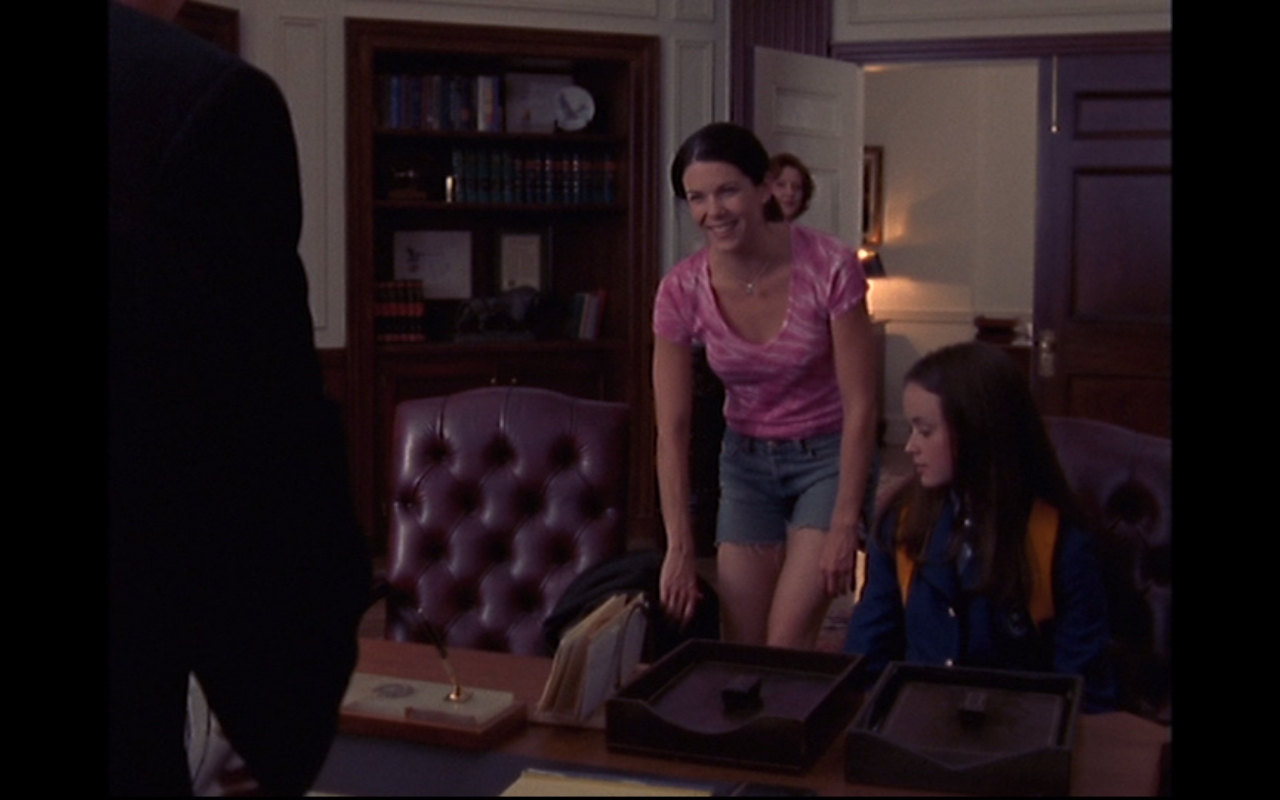
Gilmore Girls swallowed me whole as a teenager. I had loved TV shows before–my fifth grade Sabrina Spellman Halloween costume is worth noting here–but I’d never been devoured like that. Gilmore Girls was the right show and I was the right person and it was the right time and by the end of the first season it felt like we had been knitted together and then knotted with some sort of unbreakable sailor knot. The show became a part of my identity, and also something sacred. A biblical text.
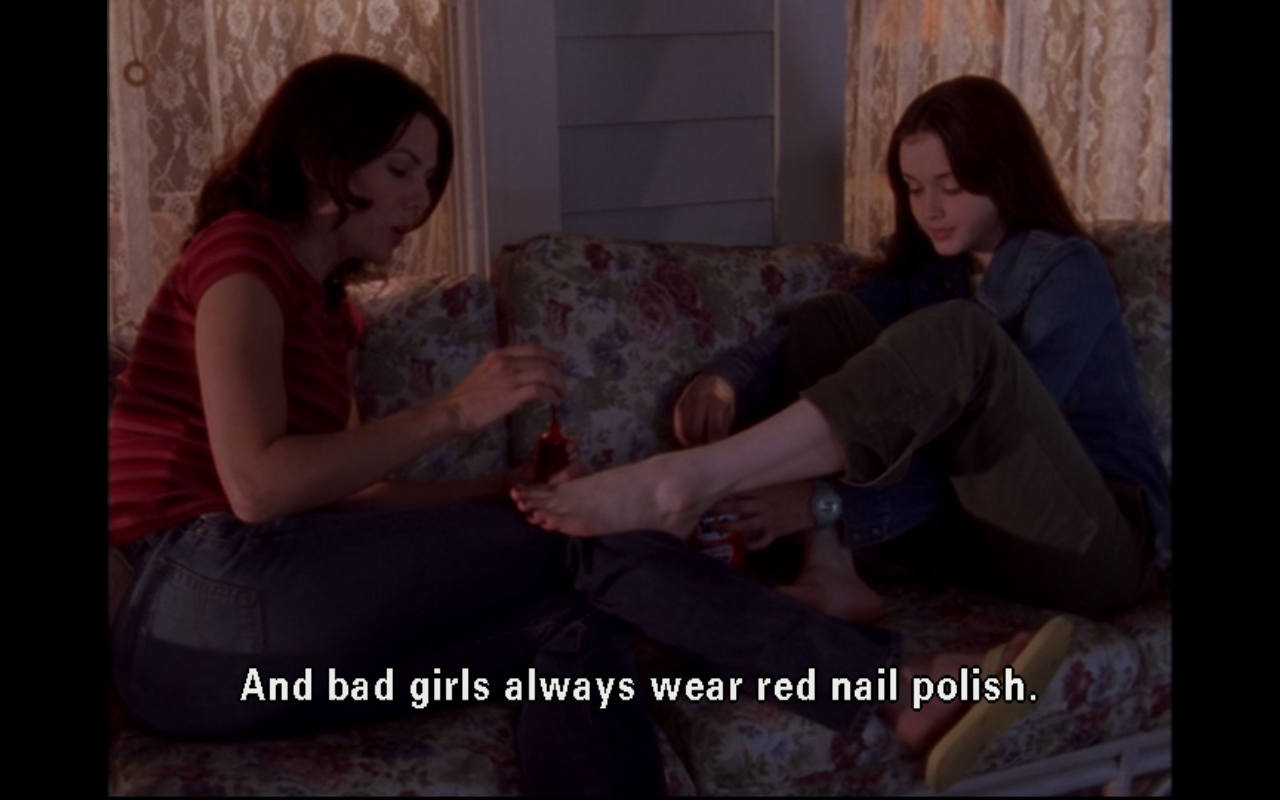
That was how I often treated it, anyway. Gilmore Girls was my guide book, a lesson plan for How To Be. I wanted to grow into Lorelai, with all her charm and dazzle and guts, and the way to do it, I thought, was to fold myself into her world. Immersion, after all, is the quickest way to achieve fluency.
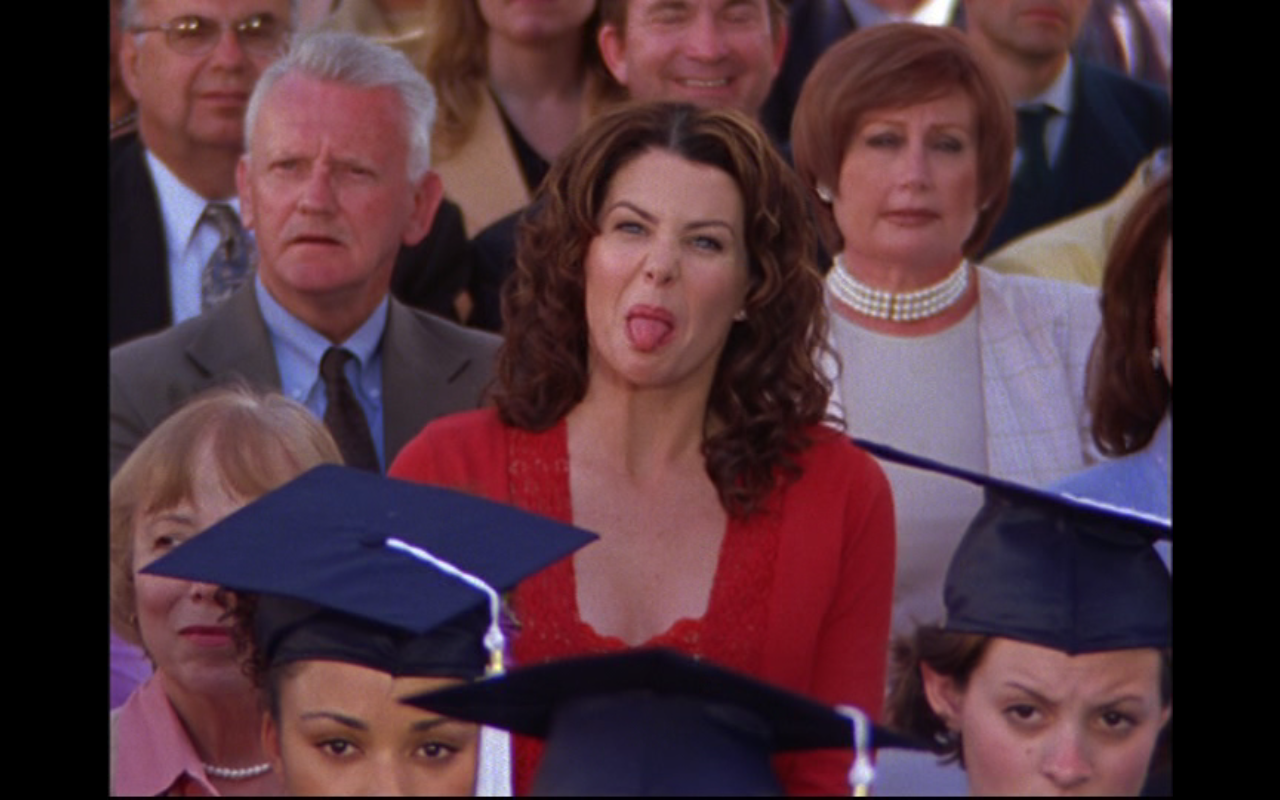
I wore clothes I thought Lorelai and Rory would wear, watched movies they referenced, read my way through as many of Rory’s books as I could, listened almost exclusively to the Gilmore Girls soundtrack, and the music that had played on the show, and the music that had been mentioned on the show. I pored over their pop culture references, hoping to be able to identify them without the help of Google. I tried to talk like a Gilmore, and while I never stretched my wit much beyond a slightly-too-mean sarcasm, I certainly sped up my tongue–I don’t think I had a single conversation with my grandmother past age 14 that she didn’t ask me to speak more slowly.
I embraced a degree of Gilmore-ness in other ways, too. I painted my bedroom yellow one summer, so it would look more like it belonged in Lorelai and Rory’s house. I tried (and failed) to teach myself to like coffee. Much of the initial appeal of the college I ultimately attended was the Stars Hollow-esque charm of its small town.
I did skip a major step in the Be Like Lorelai guidebook: I didn’t get pregnant at 16. I don’t think I could have if I had wanted to–perhaps unsurprisingly, my romantic prospects as an awkward teenager that talked almost exclusively about a WB television show with the word “girl” in the title were somewhat…slim. I knew enough to know that teen pregnancies generally didn’t work out as well as Lorelai’s. Even if I didn’t, my mother liked to remind me on the regular, just in case I was getting any ideas.
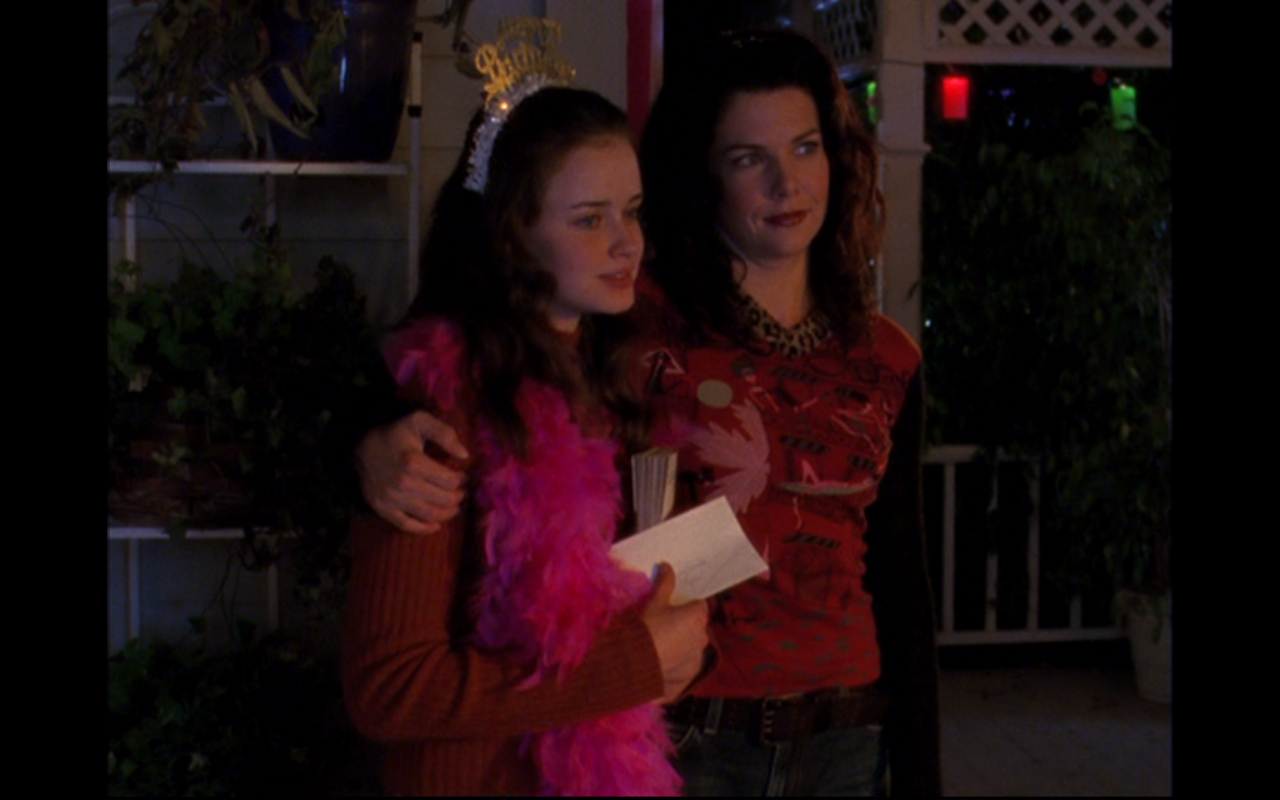
Back then, I don’t know if I could see how significant that aspect of Lorelai’s life was to who she was as a character, how she could be a selfish person but for Rory, for whom she would sacrifice just about anything. When Lorelai was my age, she was solely responsible for a nine-year-old. I’m currently debating the emotional and financial commitments of adopting a cat.
Lorelai, though, was always a mother first. It was easy for me, as a teenager, to be more caught up in the Lorelai/Luke waiting game and writing endless pages of Rory/Jess fan fiction, but from the start, the central relationship on Gilmore Girls was the mother/daughter bond between Lorelai and Rory, and the show was always a story of Lorelai’s sacrifices, of the dreams and experiences that she had given up or put off so that she could have Rory: college, travel, adventure, independence… She put everything she had into being a good mother, giving up her own ideas about her future so that Rory could have everything she needed, and she rarely demonstrated regret. She turned her lemons into the sweetest and most flavorful lemonade imaginable. And when being the best mom possible meant doing something she didn’t want to do, like going to her parents for financial help, she still did it.
I may have been aware of some of Lorelai’s more superficial flaws when I was a teen, but as I’ve gotten older it’s been easier for me to see her more serious shortcomings.
While Lorelai was a great mom, she wasn’t often a great daughter. The door she opened in the pilot, in asking her parents to pay for Rory’s education, is one she had kept tightly closed since she left their home 15 years earlier, and once she cracked it open she struggled to control what came through.
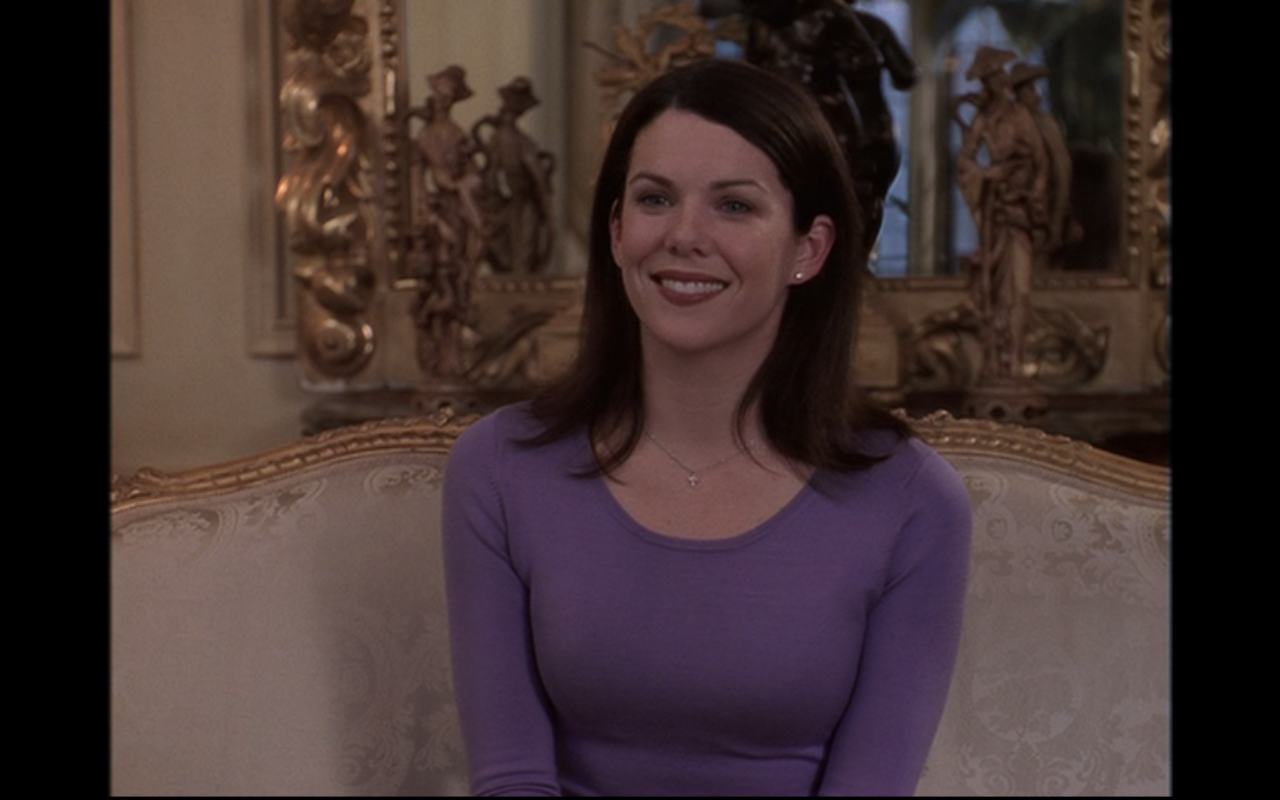
The two-steps-forward-one-step-back nature of Lorelai’s relationship with her mother was often a demonstration of Lorelai at her worst and her most selfish. While Emily was usually well-meaning if misguided in her attempts to reintegrate herself into her daughter’s life, Lorelai’s knee-jerk reaction to her mother was almost always rejection. The moments when they did find some sort of common ground, over Vicious Trollop lipstick or bridal tiaras or, most often, Rory, were all the sweeter for their inevitable derailments. When one of them managed to crack the other’s shell there was genuine love to be found, but those cracks were hard to come by.
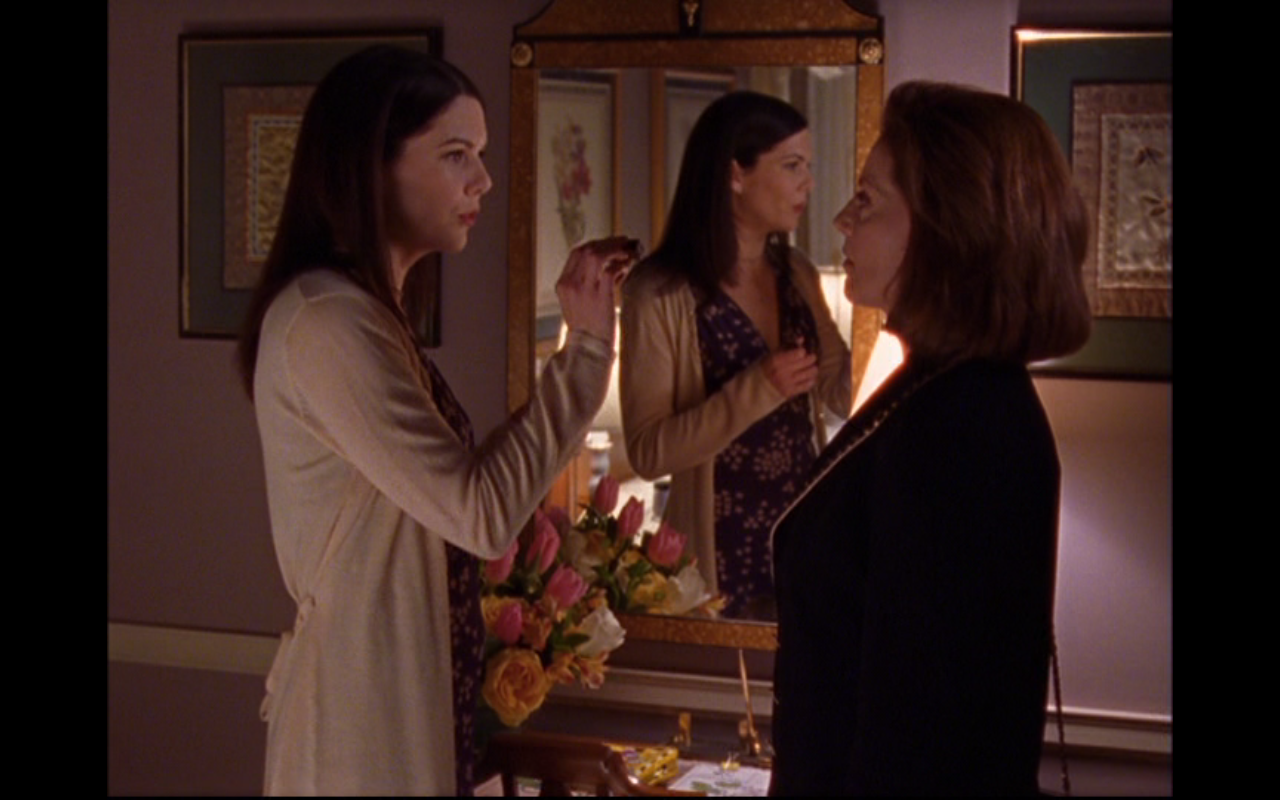
Lorelai’s relationship with her father, meanwhile, was even more strained–Richard’s journey from resigned parental disappointment in the pilot to telling Lorelai how proud of her he is in the finale was long and often wrenching. Theirs was one of the show’s best and least celebrated relationships.
Lorelai could be a steamroller, bullying Luke into things like painting his diner and then failing to show up, and she could put her foot in her mouth at the worst possible time, accidentally ending up in the middle of Sookie and Jackson’s marriage, for example, but her relationships in Stars Hollow were built on a strong foundation of love and community that tended to trump her mistakes. Lorelai struggled when the mistakes she made fell outside of the Stars Hollow bubble.
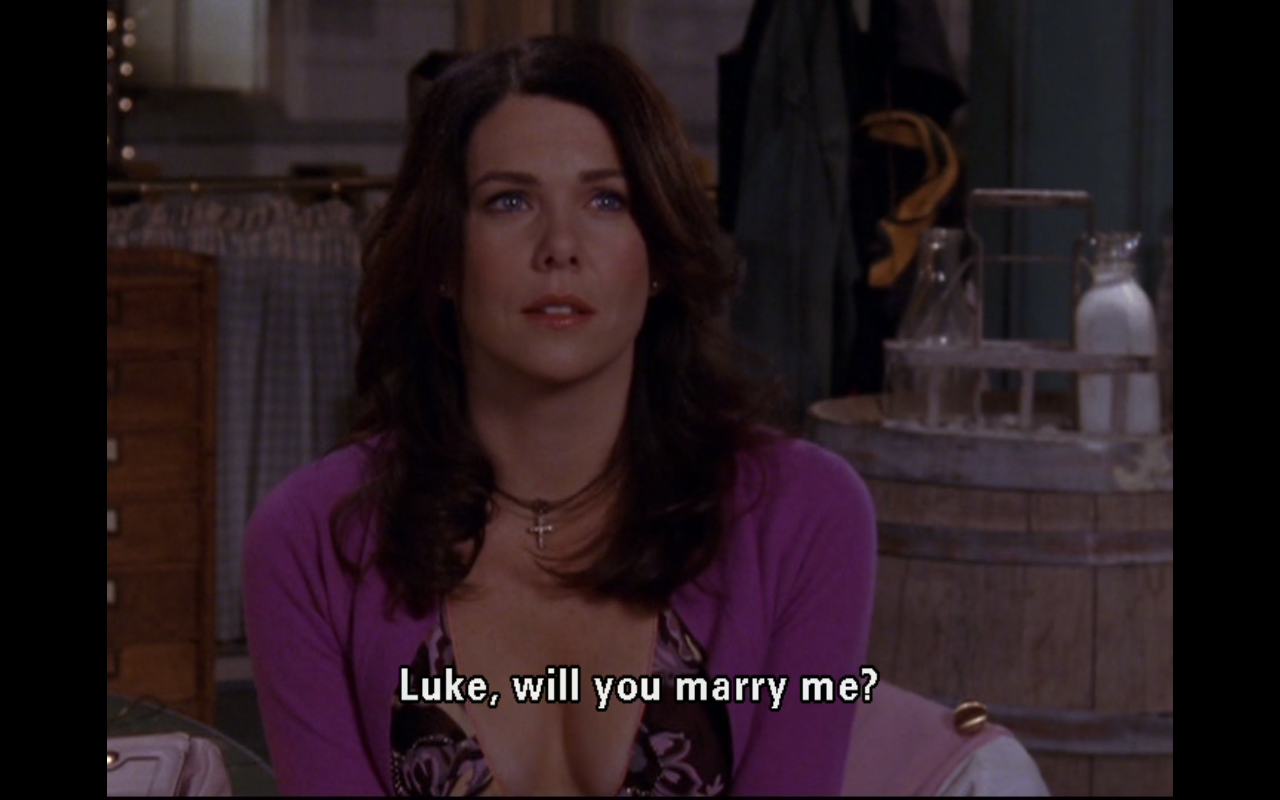
She wasn’t great at romantic relationships either. Lorelai kept men out of her life for so long, only dating casually and far away from Rory, that it was hard for her to let them in when the time did come, and when she did finally end up in a relationship worth fighting for, with Luke, her fears about losing him ate away at her outspoken nature until she barely seemed like herself.
But at her best, Lorelai was always someone worth admiring. She was a protective mother, careful with Rory’s shy nature but always gently nudging her to open up to the world a little. She was a generous friend, agreeing to atrocious double dates for Sookie’s benefit and participating in every town event with enthusiasm. The quiet moments of grace that she did find with her parents were often moving, and the progress she made with them over the course of the series became less of a struggle as time went on.
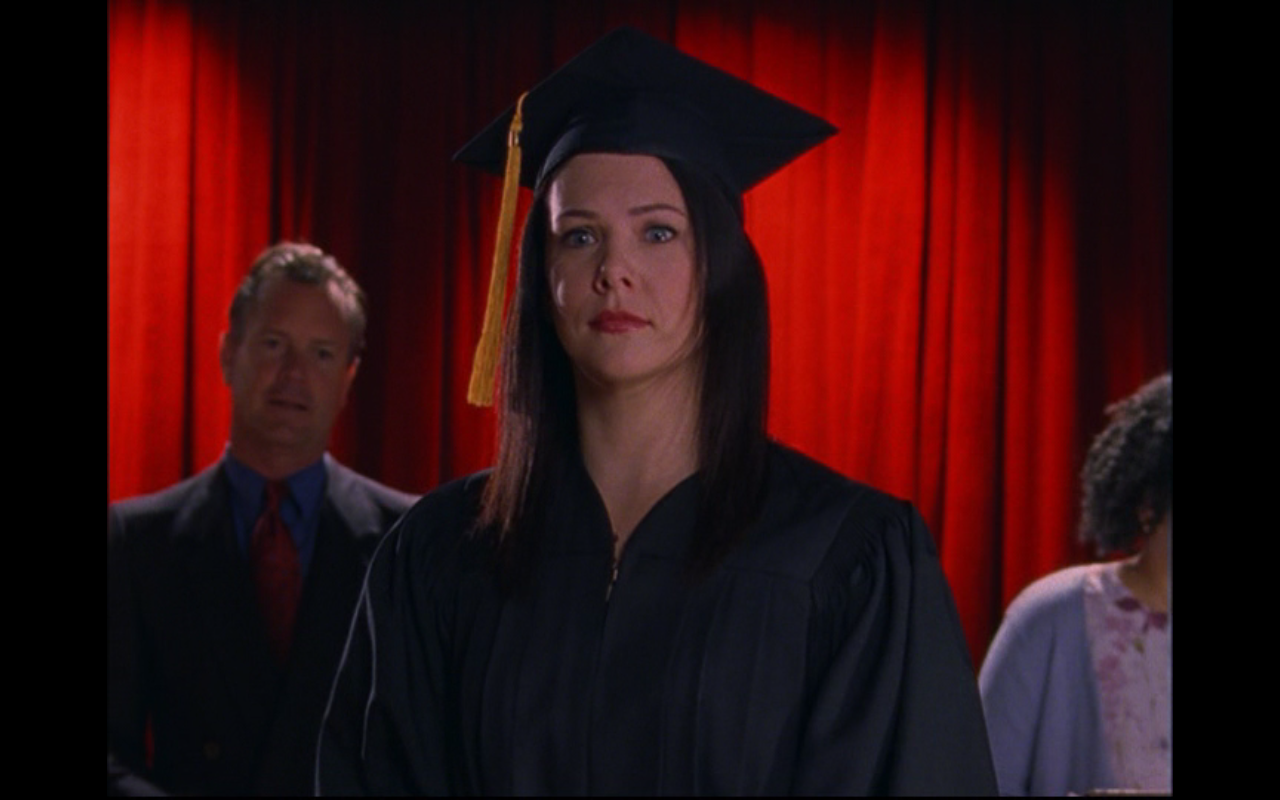
It was Lorelai’s strengths that made me root for her, her dazzle that I idolized. That was what brought me to tears when she finally graduated from business school at the end of season 2, and what I cheered for when she opened her own successful inn. That’s why I still look to her for wisdom 6 years after the show went off the air.
I’m 25 now and unlikely to be mistaken for Lorelai Gilmore, and not just because she’s got about 6 inches on me.
I live in a big city. I work a 9-to-5-or-6:30-or-9:15 office job during the day and at night I try to figure out how I’m ever going to make money writing. The only person I’m responsible for is myself. I have really good relationships with my parents and my sister. I can cook (kind of.) I have a couple of close friends, but I’ve never figured out how to shore up a community. I’m not much better at talking to boys than I was at 16. I’ve never had a rebellious nature and I still don’t.
I’m not Lorelai.
But that doesn’t mean I didn’t learn things from her.
When I lack confidence, or I feel a little scared, it’s Lorelai’s voice that builds me up. It’s her spirit that I try to channel, that cajoling flirtation, when I have to make a difficult phone call at work, or stand up for myself.
It was thoughts of Lorelai that pushed me to buy a cute if ultimately unflattering wrap dress from the Old Navy website a few months ago. It’s Lorelai that places my coffee order every morning. It’s Lorelai that has had me questing for the perfect pink coat since early 2004.
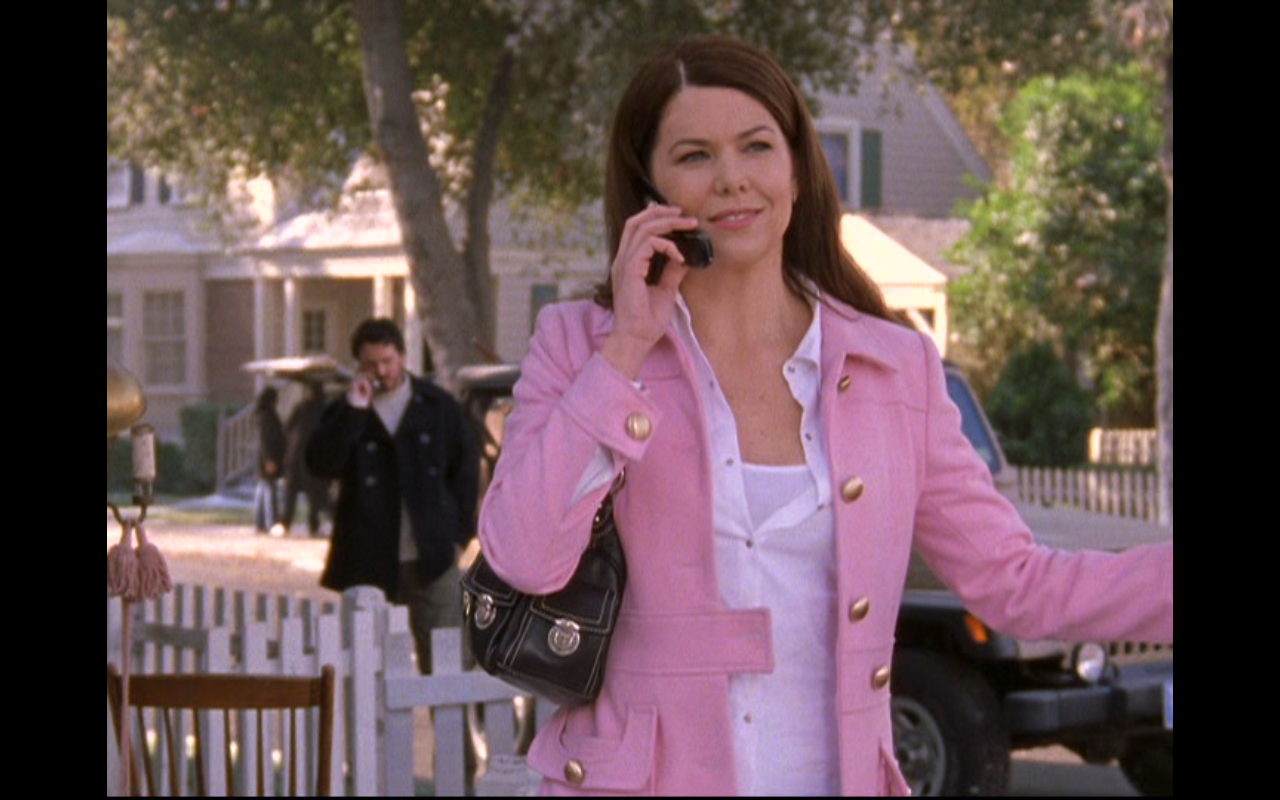
And I can also thank Lorelai for the nine (NINE?!) empty water glasses on my bedside table right now. For the number of times I hit the snooze button before I rolled out of bed this morning and the number of times I’ve ordered Thai for dinner in the last week.
I’ve always been a big reader and watcher and listener, but without Gilmore Girls’ influence I don’t know that I would have taken in as much as I did in high school and college. The Gilmores introduced me to The Bangles, Dorothy Parker, the films of John Hughes and about a million additional artists and writers and movies, either directly or indirectly. These days, as I try to figure out how to turn that cultural consumption into something more, I can thank them for helping to develop my tastes.
More than anything, though, Lorelai Gilmore taught me that I couldn’t be Lorelai Gilmore, that I shouldn’t want to. At the end of the day, I have to make my own path and be my own person, just like she did. That I have to go where my life takes me.
In one of the last scenes of the series, as Lorelai is about to send Rory off into the great big adult world, she starts rattling off every remaining piece of life advice she can think of, some of it small (always carry ziplock bags) and some of it big (shorts are unprofessional), but Rory cuts her off.
“Mom… You’ve given me everything I need.”
Me too, Lorelai. Me too.
Tags: elizabeth wensdorf, gilmore girls, lorelai gilmore, television

Related Posts
 Femslash Friday: Rory and Paris, The Real Gilmore Girls
 Watching Deadwood With My Dad
 Nashville With Competent Mental Health Professionals
 Topical TV News: Minor 30 Rock Characters, Ranked
 In Celebration of Fran Fine: Why You Should Rewatch The Nanny
 The Best Parts of Kate McKinnon’s Angela Merkel Impression

I find it really interesting that as a teenager you identified with the mother on the show rather than the daughter.
I’m very much a Rory in real life but I can totally see why anyone would identify with Lorelai. She’s great fun, a bit daft, has tremendous fun out of life, knows all the cool pop culture references and can also switch to being strong and solid when it’s needed. I’m 36 and I quite want to be Lorelai when I grow up!!
Oh, I am far more like Rory and as a teenager I did identify more with her, but I think a huge part of identifying with Rory is idolizing and wanting to be like Lorelai.
I was a Rory as a teenager, so I think I gravitated to Lorelai because I knew people like her had more fun. Also, as the seasons dragged on, Rory became a real sad sack fun hater.
(Also a roommate of mine in college who I, um….did not get a long with shall we say, totally identified as a Rory, spoiling this character forever because when I look at her my blood pressure just possibly rises)
I also identified with Lorelei way more than Rory and I think that’s because Lorelei was a much more realistic teenager than Rory was.
I think it has a lot to do with how Lorelai is pretty emotionally stunted for a good chunk of the show. She’s the “adult,” but due to her issues with family and her being a teenage mom thrust into adulthood sooner than she would have naturally come to it, she reacts to things a lot like a teenager would, is moody like a teenager. She and Rory often behave like friends just as much as they behave like mom and daughter, I think it isn’t far-fetched at all for teens to relate to both of them. I certainly did when I was watching!
The lure of Lorelai suddenly makes much more sense to me through this perspective, and especially this part: The Gilmores introduced me to The Bangles, Dorothy Parker, the films of John Hughes and about a million additional artists and writers and movies, either directly or indirectly.
I was introduced to “Gilmore Girls” as an adult, and I quickly became more infuriated by Lorelai than charmed by her for all the reasons the author touches on: her perpetual and unapologetic lateness, her tendency toward selfish indulgence, her frequent lack of frankness in adult relationships, and so on.
She’s a lot like a teenager. And now I see that of course she is, both in the reality of the series and outside it. She’s a teenager who had to cobble together an adult identity right-quick, but she’s also a teenaged-audience’s fantasy adult.
I also started watching Gilmore Girls as an adult, and agree with absolutely everything you just said. And I’d add that, as the mother of a young girl, I could really empathize with Lorelei in one place – in her relationship with her mother, and how the issues of that relationship bled over into her relationship with her daughter.
I loved the way the show eventually opened up not just Lorelai’s relationship with Emily, but Emily’s character on her own: her determination, her power, her weaknesses, her fears.
Sorry, I meant to add a few words about the quote I pulled: The Gilmores introduced me to The Bangles, Dorothy Parker, the films of John Hughes and about a million additional artists and writers and movies, either directly or indirectly.
Coming to the show as an adult, I enjoyed the show’s broad pool of references, but I didn’t think about how, as a teenager, I found that kind of richly textured pattern of allusions more than just enjoyable: it was downright intoxicating to know that a writer, a filmmaker, a showrunner trusted me to pick up on them, or to recognize that there was something there to pick up and to ferret it out.
I was introduced to the show as a very young adult, with a child of my own, so I felt like the show showed I could maybe still be cool and relevant, that reinvention and possibility were still open to me. Plus, I talk too much and am a steamroller too, despite my best efforts. I loved Lorelai and identified with her quite a bit.
Then a few years later I watched one episode with my mom, who watched for 5 minutes and said to Lorelai, “Oh, just shut up already, woman!” and left the room. And all the sudden it was like the bubble burst and I saw her from a more adult perspective. I’m still kind of mad at my mom for that. 🙂
That feels like it gets at the heart of the show: it’s about mothers and daughters and how they are people, not flawless, just doing their best, and – above all – not icons or archetypes. I almost made the mistake of watching some GG with my mother; just thinking about her reaction made me shudder and then take a break from the show, which I’d been plowing through marathon-style.
And it’s telling that I got tired of Lorelai’s perennial lateness a lot faster than I got tired of, say, Don Draper’s perpetual vanishing act. Lorelai’s lateness makes her inconsiderate; Don’s sudden disappearances are downright cruel.
I don’t know how much of that is a sexist willingness to hand-wave the faults of male protagonists but to hold female protagonists to a higher standard of courtesy, if not of ethics.
But I suspect it’s more personal. I can imagine being friends or co-workers with more of the popular female TV protagonists, in a way I can’t imagine forging any friendship with Don Draper or Tony Soprano. In these women, I see my friends and myself.
When Lorelai Gilmore breezes in late, I think of the friend who habitually showed up late – or not at all – and displayed a blithe disregard for my time table and my feelings. When Hannah Horvath announces her greatness, I cringe and remember how sure I was at 22. When Amy Jellicoe plows over her co-workers in her brittle bright certainty, I have to stop and question my own motives in everyday activism.
(This also explains why I can empathize with Don Draper and Tony Soprano so much more readily than Walter White. I’ve known Walter. Walter White isn’t a good person in a bad situation; he’s a petty, cruel, sniping person who finally feels powerful enough to let his perpetual rage off the leash. I despise Walter White, because I can all too easily imagine being taught by him, being married to him, working with him, being his neighbor.)
Elsa, I love your writing, so please submit something to The Toast already. I’d love to read something of yours that’s longer than comment-length.
First, let me say how touched I am by your comment. First-and-a-half, I realize on reflection that a lot of my comments, especially on pop culture subjects, are “longer than comment length.”
Second: I DID I DID! I wrote this article on alternative Christmas films, and I’m planning to submit some more film/tv writing pitches soon.
Holy cow, I missed this while I was traveling for the holidays. Hooray! Off to enjoy it now.
This is a really interesting comment (as yours often are!)–I have a pretty opposite reaction to these characters (except Walter White, ugh) for very similar reasons. Don Draper is 100% a character and a symbol of the patriarchy to me, completely removed for any individual person I know, and so I watch episodes of Mad Men once, sometimes twice, and feel immeasurably angry at him and then move on with my life.
I have watched all of Gilmore Girls by myself, with my friends, and with my mother, and I keep watching it, because I feel like the mysteries of all the major relationships of my life are in there. My mother hated the show at first, because she found Lorelai completely irresponsible and obnoxious, but she’s been converted and it’s now a useful bonding tool and a shorthand for conversations about family matters. (My mom and I both like Emily best of the Gilmores, but I’m now closer in age to Lorelai’s character than Rory’s, and the show has changed a lot for me on a recent rewatch.)
I’m wondering now if I like seeing people who are flawed in the same ways as me (high school Paris doing anything, Emily trying to show love to relatives she doesn’t understand, Lane’s very complicated relationship with her mother), but who still have people who love them. Who can demonstrate how to (or how not to) resolve a situation and make it better. I also just like having something to watch that centers women’s relationships with one another even in the midst of love rhombuses.
I love Lorelei’s unabashed selfishness; she decided what was important to her and tried really hard not to let other people’s expectations of what a woman, a daughter, a mother, a girlfriend should be derail her. I think she represents a particular aspect of turn-of-the-century feminism in which women who have incorporated earlier feminist lessons attempt to make the political personal, even if not intentionally- it’s in their subconscious and shapes how they perceive themselves and the world. Lorelei would not exist without feminism, and she knows it and acts thusly, even if her activism is not of an overtly political sort. Had the show been set in 30 years earlier, she totally would have lived in a separatist commune and argued regularly that vegetarianism and anti-beauty and political dogmatism deny womyn their full range of self-expression, that the veil of false consciousness can not be truly ripped away unless all cultural expressions of patriarchy are deconstructed and re-imagined as empowered expressions of feminine authenticity. She’d have gotten kicked out eventually for smuggling in cheeseburgers and a guy one too many times, but she would have been a hoot at full-moon rituals.
There is a book in my mother’s house, inscribed to her and me. It says: “To the Gilmore Girls from Hell.” I never watched the show, so I had no idea. Thanks.
This article is perfect, thank you. (NO BIG DEAL JUST LEAKING ON MY FACE) (PS Mallory and Nicole can we have like weekly Gilmore Girls installments please? These are the best thing.)
I loved this show. I am exactly the same age as Rory, so the show lined up almost perfectly with me being in high school and college (I think it aired so that she was a year behind me in actual life events like graduation and so on, but between her and Buffy I was pretty much the perfect age for those shows).
The thing I loved most about them is that as a teen I could relate to both Rory and to Lorelai. Each of them had traits that I saw in myself, or that I wanted to see in myself. Lorelai was far too outgoing for me, but Rory was pretty much me in her reserved, awkward, book-reading way. Lorelai was something to aspire toward. She was inspiring, pretty much everything you wrote in this article, and her flaws made her attainable and not some strange TV version of human that a viewer can’t try to be. I look back at the show now and realize that I may have started as a Rory, but as the show continued on and I saw less and less of anything I liked in Rory (ugh the last few seasons UGH), I pulled more and more toward Lorelai. Now, as I watch, I see some things I can clearly relate to in Lorelai. I feel like she’s emotionally delayed (thanks to family and having Rory at such a young age), but deep down, she’s amazing. I definitely relate to her more. Though I don’t drink my coffee black.
I’M NOT CRYING, YOU’RE CRYING
oh sorry I must have something in my eye
My aunt once compared my mom and I to Lorelai and Rory. I can see some of it–though we’ve never been BEST friends, we are fairly close and chatty and whatnot–but it’s never entirely made sense to me. My mom, bless her, is way too damn shy to be Lorelai, and I’m not studious enough for Rory. Backwards wouldn’t work that well either, unfortunately. Now, after reading this piece, I feel maybe in-between Rory and Lorelai, in that I’m obnoxious (I say this in the best way, as I love Lorelai) but I’ve also got some Rory in me.
On a different note, I’ve finally started drinking coffee at age 21. I feel like they’d be proud.
I think I’ve talked about this before, but after I gave birth to my daughter, my mom came to live with us for a month (our teethmarks are still on her ankle from when she had to go home) and we watched about three straight seasons of GG while I tried to breastfeed, and it was this magical, magical moms/daughters/multi-generational time and I will treasure it for the rest of my life.
I did THE SAME EXACT THING with my mom and daughter.
This is so great! Long live the Gilmores!
This is so great! Long live the Gilmores!
Great piece Lady, I was in my 20´s when I saw the show (sort of) and I felt in the same way, Lorelai was so cool, wise and most at all happy besides she´s a so good looking woman and I think I was the only man that saw the show but tha´s okey. Do you know what are the actress doing now? I haven´t see ger in a long time, except in that movie whit vin Diesel and congrats again for your text.
She’s one of the leads in Parenthood, which has become a great show. You should check it out since you enjoyed Gilmore Girls.
You’re not the only man who watched. My dad, husband, and cousin are all fans…not as fanatical fans as I am, by a long shot, but fans nonetheless.
Great piece Lady, I was in my 20´s when I saw the show (sort of) and I felt in the same way, Lorelai was so cool, wise and most at all happy besides she´s a so good looking woman and I think I was the only man that saw the show but tha´s okey. Do you know what are the actress doing now? I haven´t see ger in a long time, except in that movie whit vin Diesel and congrats again for your text.
Oh my, I feel as it was written by me. Thank you so much for the article and plus, I need to rewatch the series.
Great piece!
Me too, Lorelai. Me too.
Great writing !!! I’m 25 now and I still want to be Lorelai 🙂
I’ve never related to something in my life so much!!
I love this post. I’m starting to watch Gilmore Girls from the beginning on NETFLIX. I just finished season1 and can’t wait to start season 2. Lorelai makes everything look good.