
As The Toast searches for its one true Gal Scientist, we will be running a ton of wonderful one-off pieces by female scientists of all shapes and sizes and fields and education levels, which we are sure you will enjoy. They’ll live here, so you can always find them. Most recently: On the Honeybee and Her Friends and Relations.
It’s a question I get asked with great frequency. Sometimes, it’s a question that’s alarmingly asked when I’m trying to enjoy dinner or a beer and you know, not think about work.
Don’t get me wrong.
 I love my work. But telling people you’re a scientist often provokes a weird sense of curiosity in people. If I said I was a medical device salesperson or government attorney, my business would somehow remain my business. If I said I was a preschool teacher, I might get an “Awwww!” and sleeping dogs would remain asleep, and I could eat my steak in peace, the way Ron Swanson would want to eat his steak.
Now, what I could do is tell them what I DO do. What I do is simple, multifaceted, exciting, and mundane all at the same time. It is simple because I have a singular mission: I am paid to do research in physics. It is multifaceted because, to execute this mission, I have to put on many hats. I have to design experiments, I have to build experiments and consult with machinists, I have to take data, I have to analyze the data, I have to come up with methods to analyze the data, I have to do math, I have to learn chemistry recipes. I have to give presentations about my research at conferences and while visiting other scientists. I have to read the literature, I have to mentor students doing research. I have to write papers and apply for grants. I have to think of new experiments. I have to collaborate with people in my research group and outside of it, and delegate responsibilities. I have to go to meetings and seminars. I have to clean the glassware and keep myself organized. I have to order supplies and I have to set mousetraps. (Technically, the university is supposed to do things like this, but practically, it’s every person for themselves.)
What’s exciting is I get to work with big, fun ideas. I work in the area of soft matter physics. Have you ever wondered if toothpaste is a liquid or solid? Well I try to answer questions like that. One of my experiments involves dropping balls into sand, like when your golf ball hits a sand trap, or a meteorite strikes the ground. Sand is sort of like toothpaste, you can pour it like a liquid, but it also supports your weight like a solid. This weird behavior makes it react in surprising ways to impact.
I get to build things, and get excited when they work. I can write computer code to control a circuit that I’ve also designed and built. The circuit controls the movement of motors in an experiment, which I’ve designed.
I also get to look at how groups of cells move. Groups of cells are similar to sand. They are both collections of things that interact and move together. I often sit down with a really cool video of cell motion and ask what information I can extract from it, and what might information might be useful for future diagnoses.
 What’s mundane is that sometimes my day is spent filling out reimbursement forms or fixing some bug in a thousand lines of computer code.
It’s hard to communicate all of this information in a conversation without sounding douche-y or self-deprecating. The work is both marvelous and ordinary, but people want you to take a side. So when faced with the “What do you do?” question, I take a deep breath, then I do a sidestep.
I know in my heart and soul that there is much work to be done in the name of spreading the gospel of science. I don my preacher collar and force a smile, hoping there is no broccoli in my teeth.
Rather than telling them about the work, I tell them about the Work. I give a several minute summary of my current projects, a delicate dance given the math-iness of the whole enterprise. I use SAT-level words only and complete sentences. There’s a lot of pausing and asking if they followed me. Depending on my mood and the audience, I have different starting angles. I engage people when they learn that how blood flows is a lot like how traffic flows, or that we’re really far behind in understanding how cancer cells move in groups.
But a surprisingly often response from bright men and women is the mid-explanation, “Teeeeeeeheeeeeee I don’t even know what you’re talking about, that went over my head. I am so bad at science,” which shuts down the conversation.
These reactions are part of the reason I have a love-hate relationship with the “What do you do?” question. I love telling people about the work, but if they aren’t even going to try to understand, I feel like throwing my plate to the ground and walking out. Instead, I usually offer up a “Don’t say you’re bad at science, I was just probably explaining it in an unfamiliar way, I’m a little tired. Let’s try again another time.”
With these experiences in mind, let’s have a few #protips about interacting with a scientist:
- Remember that many of us are introverted. It can be painful to feel put on the spot to begin with. So if you are genuinely curious, don’t be a dick. And if you aren’t genuinely curious, asking the question is extra-super-dick-y. Conversationally, it’s like faking out a high five.
- Please don’t treat us like magical, really smart unicorns. About 3% of the US population has a professional degree. Of that slice of the pie, PhDs occupy a third, lawyers a third, and medical doctors less than a third. The rest are vets, dentists, etc. STEM PhDs make up not all, but the majority of PhDs. Add in all of the bachelors and masters-level scientists, and we likely outnumber lawyers (and definitely outnumber MDs). Long story short, there are a lot of us. It’s a long, sad story of why this is somehow an exotic profession, but I can save that for another post. tl;dr Treating us like we are somehow other makes us feel othered. Do not say things like, “Oh, you must be really smart.”
- Topics that don’t make us feel othered but still address the topic of our quasi-unicorn nature include: the state of public science education, the coverage of science by the news media, and the treatment of science in entertainment.
- Please do not mention that you love The Big Bang Theory. I will cut you.
- Yes, I am a lady in science: Again, pointing you back to the othering thing. Don’t mention it unless I mention it. It is indeed an interesting topic, how statistically women are outnumbered in fields such as physics and engineering. (I actually think a lot about this and how to best deal with the sitch.) But my possession of a vagina is not an entry point (ahem) into this thread. Maybe you have stories or have read articles about a similar topic? Maybe this is a boring topic for you, and it’s a knee-jerk reaction to seeing a lady scientist. Let’s find some fun topics.
- Fun topics: What did you have for lunch today? Did you give a talk today? Were your students happy today? Did you do an experiment today? What is your favorite way of plotting data? Was liquid nitrogen involved in your day? Good or bad hair day and can it be blamed on meteorological factors such as humidity? Corn-shaped candy corn or pumpkin-shaped candy corn, and is there science to back up your argument for one vs the other?
So with that, I shall bid adieu to this post and go eat some candy corn. It is now your mission to go find a scientist to talk to in an appropriate manner. We’re everywhere.
Tags: gal science, kerstin nordstrom, physics, physics is the only true science sayeth nicole’s physicist husband, science





I was with you until the candy corn. It is one of the most horrible of candies, second only to Necco wafers, which are made of earwax and chalk. Scientific fact.
Lies. Necco wafers are the food of the gods. Except for the lime ones, which taste like cleaning fluid. >.>
candy corn is actually one of my favorite candies, along with jelly beans and sweethearts. I guess my desire for the candy has a direct correlation with how difficult it is to find out of season!
To be honest, I don’t seek out candy corn. But put it in front of me and I will eat the whole bag…I kinda like the honey-esque taste, the sugar rush, the nervous habit pleasure of eating lots of little things. and the weird waxiness has a pleasant mouthfeel to me.
but i don’t really enjoy the pumpkin ones and can’t even with the chocolate ones.
I enjoyed this, but it also cracked me up a little, as I recently had a dinner with a couple of science PhDs, where I, a humanities PhD, have never felt so “othered” (ugh) in my life! As obscure as science may be to most people outside academia, I think they accept that it has a basic utility, while they gleefully denigrate the life choices/usefulness to society/earning potential of those of us in the humanities. Which is not to imply that you do that at all here! Just to say you could have it even worse.
My group of friends in college was about evenly split between hard STEM students and humanities students like me (because fuck business majors, right?), and about every other day it went back and forth between who was angry about being left out and misunderstood. Solution– mostly talk about the stuff you have in common, like alcohol and debt.
Good solution…if you live in a sports town there’s always that, too.
But if you work at it, it’s fun to find connections. I took a class in grad school in the education department called “College and University Teaching” and there were only about 15 or so of us, but we were split pretty evenly between science, social science, humanities, and education. This was a topic where we really could find things to talk about, and it was fascinating how the different disciplines viewed teaching and how different the vocabularies are.
It is true, we can be THE WORST to humanities PhDs. I am sorry.
But frankly, since science is really specialized (especially in academia) and advances at a glacial pace, most of us aren’t doing much of anything “useful,” even if by definition it is technical.
If it helps, I’m sure some of them are just jealous of your chosen life path…in an alternate universe I would get a PhD in cinema studies.
You need to mix things up by tossing in a math Ph.D. People often mistake us for scientists (my current theory for how academic disciplines are classified is that if you need to take calculus to get an undergrad degree in it, it’s a science; if you need to take statistics but can skip calculus, it’s a social science; and if you don’t need to take either, it’s a humanity), but we aren’t exactly pinaccles of empiricism here. We’ll also gladly join in trash-talking those upstart disciplines, not even 500 years old, and already taking all the best offices and grants.
“It’s a long, sad story of why this is somehow an exotic profession, but I can save that for another post.”
I think I’d be interested in reading that post! Particularly because I see those numbers very differently from you <1 percent of Americans are STEM phDs? You kinda are a magical smart unicorn. 🙂
I get that it’s annoying to get the “Durrr, you must be smart and I are so dumb” treatment, though. People aren’t good when they don’t know what questions to ask. Hell, when my husband was in grad school, his science pals had no idea what to say to me (I was a special ed aide at the time).
I am on board with all on this, except the candy corn thing too, and would also like to register my disapproval of dudes (it’s always big jovial white dudes, somehow?) who post many links to poorly-researched media coverage of what may or may not be groundbreaking work, with the caption, “Because SCIENCE!”
i acknowledge this is a thing.
have you read this? http://mashable.com/2013/09/20/why-you-dont-love-…
I also face the angst of having a slightly technical job (transportation planner) which is interesting-sounding enough that people want me to talk about it. Yet it is complicated enough that, if I describe what my agency does, it usually provokes a glass-eyed stare and/or backing away slowly.
Except no one assumes that I’m smart. They just want to complain about traffic. In great detail.
yup – also working in a technical field which I find incredibly interesting.
But because I work with Trains every one wants to know why their train is always late / too crowded / doesn’t go right to their house.
No joke, I love trains. I’ve been to two train museums in the past 9 months. I’m just learning about electric trains. Please tell me more.
seconded.
TANGENTIALLY RELATED STORY: One of our suppliers at my work once told us that his company ordered up something like 8 railcar loads of steel rebar or something, and gave the information, and they took the order and the perky girl on the other end of the line called them RIGHT back to clarify “That’s a rail siding, right?”
Which begs the question….did someone once order, I don’t know, 16 railcar loads of paper pulp delivered to their fourth-floor apartment?????
I’m totally interested….for serious! 😀
One could write an entire series of books about the topic!
But to be clear, numbers-wise, I think we’re doing okay. There’s a bit of a balance to these things, and some say we need to produce more, some say we need to produce less science PhDs.
What I find fascinating/frustrating is the disconnect between those in the science community and those outside it. People tend to either have tons of friends & family in the science community, or they have few/none. The insiders can talk about science with any number science folks, the outsiders don’t know where to begin.
“But a surprisingly often response from bright men and women is the mid-explanation, “Teeeeeeeheeeeeee I don’t even know what you’re talking about, that went over my head. I am so bad at science,” which shuts down the conversation.” YES. (and UGH.)
“Please do not mention that you love The Big Bang Theory. I will cut you.” DOUBLE YES. (and DOUBLE UGH.)
And it’s candy corn, not candy pumpkin, so clearly the corn shaped version’s the only sensible version. And I find it doesn’t really taste good so much as it’s oddly compelling and suddenly I’ve eaten all of it.
My husband is an electrical engineer who does complicated things with the power grid. He has a two-sentence explanation that he gives people when they ask what it is he does, which is easy to understand even if you don’t know anything about how the grid works, and is enough info to satisfy most people… It’s actually pretty good practice in being succinct to come up with something like that…
Sure, the elevator pitch. But even that gets cut off sometimes, or you don’t even get to that because the “I’m so bad at science!” is the immediate reaction, and it’s frustrating. Not because I want to go on about my science to everyone within earshot, but because science isn’t (ideally) the exclusive “you must be supersmart to get into our club” sort of thing as many people seem to think it is. I signed up in undergrad and chugged through it — it’s hard, sure, but lots of the people who have this reaction would totally be able to do it too. And it’s waaaay more often women who have this reaction than than men 🙁
You can just disagree with them (politely, and briefly) and then move right along to tell them how awesome your work is, like you were going to before they said that. In my experience it just doesn’t actually have to be a conversation staller, if you have a decent script and are prepared for it (which seems wise). It’s a pretty typical reaction, since girls and women are pretty conditioned to respond that way. If you have a _good_ pitch, they get over it pretty quickly.
It’s true, that with training, I have gotten pretty damn great at delivering an elevator speech, and am pretty good at reviving a stalled or derailed conversation.
It doesn’t make the stalling of the conversation any less frustrating, though, which is mostly what this is about….sigh.
For some reason, I usually get the “oh, you must be really smart” thing (in a shocked and/or dickish tone) in bars. From guys that are (were, I guess) presumably interested in me. Hotttttt.
Hey, at least they’ve exposed themselves as total juiceboxes, and you didn’t have to waste your time trying to figure out if they were worth your attention…
Gross.
I’m interested in having you perform a very scientific experiment. Next set of guys, pretend to be a <insert stereotypical female worker> and see how the average response changes.
(Then if you’re actually interested in one, tell him the truth….I think there’s a romantic comedy in here somewhere.)
Loving this, as a fellow lady of science. I reallllllllly get squicked out by having to on-demand answer “what do you do” and this helpfully articulated many of my own issues with that question. It’s difficult to have pursued a passion and career that is so isolated from other’s shared experience of the world and to have such a hard time talking about basic science. This is bringing up a lot of feels!
I’m getting a humanities PhD and really, it’s the same thing for me. I mean, a third of 3% is still not very much of the general population, and considering there aren’t PhD television shows the way there are lawyer/doctor shows, it’s not surprising that people are curious. There’s not that sense of understanding, as inaccurate as it might be. Also, there’s such a wide range of “what do you do” as far as what your research might entail- when you say you’re a scientist, or a physicist, or a biologist, or a media studies professor, that can mean a ton of different things in a way that “I sell medical devices” doesn’t. It’s also a hell of a lot more interesting, at least I think so. My worry is more that I don’t explain myself or my research particularly well, but I never mind people asking about it, because it’s really not quite so obvious and way more interesting than my previous work.
Also most everyone interacts with doctors professionally, and at least knows someone who interacts with lawyers professionally, but unless you are yourself in science, you probably haven’t like gone to see a scientist for a science appointment… So in that respect, scientists are secret special creatures!
(Anyone have any openings for a new patient science appointment??)
Good points.
Another issue I wanted to bring up somewhere, is that a large fraction of STEM PhDs are foreign nationals and so aren’t as integrated into “mainstream society.”
Very good points!
The television comment is interesting. TV doctors and lawyers are involved in high stakes stuff everyday, so it can sell as an entertainment experience. And in real life, while they may not be doing high stakes stuff at such a high pace, it still happens.
Scientists, on the other hand, don’t do much high stakes stuff.
One way shows have gotten more scientists in is with forensics, because crime sells, but actually that’s a field of science that isn’t well established in terms of protocol. http://cenblog.org/terra-sigillata/2012/09/09/rti…
I genuinely don’t see how any science career is isolated from everyone’s shared experience of the world, though. Everyone lives in the world, and every science research topic, no matter how esoteric, is relevant to our lived experience. I think the lack of science literacy in the general public is a separate issue, but that’s why we tailor elevator pitches to take that into account, right?
yes, good point – I think that was what I was trying to get at – because of serious science literacy problems in our culture, my job as a botanist does become isolated from other people’s experience, even though people eat plants every day. It is all relevant, but at the same time the awareness is not shared. I wish I had an authentic elevator pitch that didn’t feel forced or automated to better connect with people who genuinely are interested in what I do that could prevent their eyes from glazing over 10 seconds in.
“every science research topic, no matter how esoteric, is relevant to our lived experience.”
the string theorists love you for saying that.
I am so glad to hear this! Many feels right back at ya!
I have no doubt that it’s super annoying and genuinely uncomfortable, but I am rolling my eyes real hard at the idea that someone saying “Oh, you must be really smart” because you have an advanced degree in a hard science is “othering”.
Just speaking for myself, it doesn’t make me feel othered to hear it, but it is a total conversation ender – and then that does feel awkward, and like you’re not part of the group… so, maybe a bit othering in that respect?
Please roll them! It’s a hyperbolic statement for sure.
But it reminds us of how we were the weird girl. And reminds us we still are.
But I feel this is one of the HUGEST things that keeps girls from doing science. They see a few weird guys in middle school interested in science (who are no doubt praised by their mothers for having these interests) and the last thing they want to do is be the WEIRD GIRL. The horror.
As a preschool teacher, I feel compelled to point out that saying “Awwww!” when I tell you what I do is the conversational equivalent of telling a scientist that she “must be really smart.”
What they aren’t all snuggles and rainbows?
WAS liquid nitrogen involved in your day? (And if so, can we talk more about that? Please?)
Liquid nitrogen was involved in my day, in the most prosaic and unimpressive way possible.
I dipped tissue samples into it so they’d shatter into powder when I put them in the beadbeater, making extraction of DNA possible.
Which is kind of awesome, actually, now that I consider.
But our protective gear is a.) a very small styrofoam cooler b.) big work gloves and c.) several vacuum thermoses. Fund public universities!
Nice! I don’t use liquid nitrogen much anymore except for teaching purposes.
The best is putting a banana or some such fruit into it, then throwing said fruit against the ground and shattering said fruit.
Actually the best is the ice cream. http://physicslessonplans.wordpress.com/2013/05/0…
Now that I think about it I often say something like “I don’t understand a word you just said” when somebody (not always in the sciences!) explains to me what they do, but I usually follow it up with questions to clarify. Is that still rude?
Also, I spend a lot of my own work day asking other people about their jobs (my job is. . . well, it’s hard to explain), and I LOVE hearing this stuff. Everybody tries to have a one-sentence answer when someone asks “what do you do?” People see it as an equivalent of “how are you?” and try to get it out of the way. But it’s amazing the variety of stuff that different people spend their time on, and if you spend forty hours a week doing something, no matter what it is, you probably have a personal manifesto about it in you somewhere.
No, definitely not rude! You’re showing interest and articulating that interest if you ask follow-up/clarification questions. If the person you’re talking to isn’t in the mood to talk about it, I don’t think that’s because they’re a scientist, per se.
definitely not rude if you’re showing interest, and not shutting the conversation down!
I think my general response to this post is “YMMV” for most or all of it. This is clearly how some scientists feel, and it’s good to learn that and how you can be polite about it. But I don’t think it quite captures how I feel about talking about my work with non-scientists.
I do think the “you must be a genius!!” and “that’s too smart/hard/sciencey for me!!” self-deprecation thing is part of the really pervasive (and unfortunate, and incorrect) cultural narrative we have in which scientific and quantitative reasoning are considered impossibly hard except for the exceptionally innately talented. Combating that every single day is basically a science educator’s job, so it can be genuinely frustrating to have to tackle it in social circles, too. And I agree that it’s flat-out rude to diminish someone’s work if you have bothered to ask about it in the first place, and that responding to rudeness by sidestepping or shutting the conversation down can be easier in a social setting.
That said, I think the successful responses we use in the classroom when confronted with a student who shuts down rather than tackle a scientific or quantitative problem can work just as well when talking to a person at a party.
Obviously these are personal feelings and there isn’t a right or wrong way to respond to this kind of frustration. But for what it’s worth, as a counterpoint, I don’t mind in the slightest being asked what I do, and having a way to talk about it and give my elevator pitch to non-experts is really important for me (and fun). So while politeness and consideration are important in any social situation, you can ask me what I do. (I think I’d also feel a little weird if a stranger at a party asked me if I was having a good or bad hair day. Maybe not that one for me!) Basically I’d often prefer substantive conversation about interesting things like my exciting, awesome work over small talk, as long as you ask me about it in a respectful and considerate way!
I agree with a lot of this.
This post might suggest otherwise, but I am pretty enthusiastic about replying to this question in general. Sometimes I just may not be in the mood and that’s a whole different issue.
I think the bigger point is that the frustration never really goes away.
Can someone please come up with what to say to people who reply “I’m so bad at math” when they learn I have a math degree, I am already bad at starting conversations, how do I answer this without being a total jerk or just kind of backing away slowly
I usually say something along the lines of, “A lot of people have really discouraging experiences with math in school, especially if they have a teacher who isn’t comfortable with it!” This often moves toward the state of the educational system, which everyone has an opinion on and may or may not be a great topic in the moment but is at least better than everybody’s relative skill at algebra. The other place it can go is towards what kinds of math and/or puzzle things your interlocutor is actually good at/ is interested in/ might enjoy, especially if you know a little more about your interlocutor or are in a setting where geeking out about things is mutually expected. For instance, I one time had a conversation in a group of science museum volunteers which started this way and ended with me doing a party trick involving dividing a really long number by 11. (The trick was knowing it was going to be divisible by 11, and people actually appeared to find this interesting. But not all groups would, which is why it is good I do not go to cocktail parties often.)
You can point out that quantitative reasoning is a learned skill, not just an innate ability, and that everyone has to work hard at it, no matter how smart they are. Not everyone likes it, so they aren’t all motivated to do that, but for the most part* there isn’t such a thing as being “bad at math” any more than being “bad at reading”: anyone can practice and get better at it. I also point out that schools often teach a single way of solving math problems, but different people’s brains work through those problems differently. Often this teaches people that if they think differently they are “bad” at it, but it’s usually not true (it just means they need to develop the skill set from a different direction).
*There are obviously some learning disabilities that make practicing and learning math and reading skills more difficult for many people. But those people can still learn, just generally at a different pace and often in a different way. (In my extensive teaching experience, often the people with real disabilities know they can work really hard and still get it. They can be much easier to teach than the people who developed the belief that they are “bad at math” or “can’t do math” without any kind of disability, because the psychological block to even trying is really hard to overcome.)
I second Lynne’s comment. Math, like music, like sports, is a combination of aptitude and learned skill.
You may have some theoretical limit to your skill based on your aptitude, but you’re only going to reach that limit after practicing the skill for an infinite amount of time.
So, just like for music and sports, you need a good teacher/coach to keep you on track. Unfortunately, too many of us don’t get one.
Well here’s what I wouldn’t do: try to convince them that they aren’t really bad at math. Some people are, and that’s fine. You’re right though, that it puts you in an awkward position, so I’d just try to move the conversation on. You could try “Well, everyone has different strengths. What do you do?” or try to steer it in a relatable direction, “Well the math is easy enough, it’s the office politics that are really tricky! The guy who sits next to me does this weird thing…”.
It seems like I had a totally different reaction to this than most of y’all. Everyone gets asked what they do. It’s small talk. There are easy ways to explain jobs and hard ways to explain jobs. You did a great job explaining it in this article. Without using SAT words and asking if the listener is still with you (implying that everything you do is so complicated that they might be easily lost).
I mean… My older sister is a preacher. She doesn’t like telling people about her job because people get weird (“Oh you must feel super weird at this party with alcohol”). It’s common for a lot of people.
I don’t know. I’m an engineering student and I don’t ever mind telling people about my internships (“I make stoves” or “I do engineering work as a contractor, mostly for nuclear power plants”). When people say I must be smart I usually say, “well I’m petty brilliant, but it’s most just hard work, like any job/degree.” And that’s it. It’s not some huge production that ruins my life.
I guess this just seems like a lot of drama for something that pretty much everyone deals with in one way or another.
And I get my hackles up when it’s assumed that there Toasties aren’t in STEM fields.
Maybe the common thread is that when people make a lot of assumptions about what it means to have your particular career, doing the small talk can be frustrating. But yeah, I don’t think that’s unique to the sciences.
Relatedly, I also think there is some real devaluation involved, in that it kind of IS a big deal to have earned a PhD. It’s possible to be proud of and acknowledge that fact without being obnoxious or braggy or putting down everyone around you, right?
And the fact is that for MAAANY people, higher education is Not A Thing. There are a lot of people who don’t know anyone with a PhD or science researchers, so in that sense, you are sort of a magic special unicorn. You might also make someone feel insecure about their own level of education or their own science knowledge/lack thereof (god knows science education in the US has its fair share of issues). Add on the fact that most people, advanced degree or not, are probably unfamiliar with your exact specialty or field of research. They aren’t going to get it because they haven’t been trained.
I get that is is probably very frustrating for scientists to experience, but is it really that big of an issue to have a couple easy sentences explaining your work? What the author said about toothpaste being a solid or liquid, and sand reacting in similar ways – that was really cool and I 100% understood it. And it’s the an explanation that might make someone feel like science is more accessible and understandable to them. (It’s an oversimplification of your work, probably, but I don’t give the nitty gritty details of my job when I’m asked about it.)
Man, I was thinking of my own non-higher-education background & family: when confronted with someone with an advanced degree of any kind, it’s sort of like you’re talking to someone from the moon. This is less about my people being “othering” to scientists and more about how inaccessible education is for most people in the US (and my specific region of origin in particular.) Not having an undergraduate degree myself, I absolutely get the self-deprecating “You must be a genius (you probably think I’m an idiot)” text/subtext. Basically I love everything about your comment, and you really articulated the vague sense of discomfort I felt reading this piece, so thank you.
Thanks for the comment, and I’m glad you liked my explanation.
“I guess this just seems like a lot of drama for something that pretty much everyone deals with in one way or another.”
Pretty much. I was being melodramatic for comedic effect, but in the grand scheme of this this is a minor issue in my life and everyone deals with it in some way. I am mostly pointing out a pretty common frustration among scientists.
And as minor of an issue as it is to my personal well-being, I think it reflects so much on the state of our society / education system / media with regards to science that I sometimes want to cry a little.
To be fair, any subject at the PhD level (sciences and humanities) is supposed to be specialized to the point where only other experts in the field are going to truly “get” it. Also “smart” and “intensely knowledgable in a particular field” while not synonymous, can be difficult to distinguish for the casual observer. People don’t like to appear stupid: laughing off their own ignorance can be a defense mechanism.
I recently met a girl who hadn’t even met very many people that had gone to university. That, frankly, was completely alien to my experience: my immediate social circle includes roughly two dozen PhDs, many of whom are professors. There may technically be a lot of people with PhDs, but not everyone is going to be in a position to know that many. Highly accomplished people – and a PhD is a major accomplishment – can bring out others’ insecurities, especially if they don’t often encounter those kinds of accomplishments.
Well also, even if STEM PhDs make up a huge percentage of PhDs, as she mentioned in the article..it’s still only 3% of the population. Even is you include STEM bachelors degrees, only 22% of the US population has a college degree. For comparison, 20% of the US population still doesn’t have internet access in their home. I think assuming higher education is common and accessible, for any field (particularly for STEM fields, which are already hard to access for women and men of color) is kind of a privileged position to take.
I really enjoyed reading this but I also completely understand why some people stumble and get awkward when meeting someone who is not only a physicist, but a physicist with a PhD, particularly if they did not have the same access to positive science education growing up or haven’t been exposed to many people with that level of an advanced degree. That doesn’t make rudeness Ok but I also can see why someone might get nervous and say “oh you must be so smart!”, sort of like how many people giggle when uncomfortable even if it’s an inappropriate situation to be laughing.
Yup this 100%
22% of the population has a college degree.
It’s really amazing to me how we isolate ourselves…myself included. I can’t think of one person I interact with on a daily basis who doesn’t have one (or isn’t in the process of getting one). [Actually, I just thought of one, but I’d be hard pressed to come up with a second.]
I was amazed at that too, initially, but I think it’s partly a generational thing. You didn’t used to need a college degree to get a decent job, and there are a lot of old people in this country. Thinking about my own largely middle-class family, in my grandparents’ generation, only 1 in 6 siblings went to college, while among my parents and their sibs, it was about half, and in my generation, it’s more like 80%. My uncle worked in computers most of his life and didn’t go to college until he was in his 60s — you couldn’t really do that now unless you were like a computer genius and started your own company or something.
When you mention PhDs becoming an exotic profession, are you talking specifically about physics PhDs, or doctorate-holding types more broadly? I think the short answer is: the Cold War, and the slightly longer answer varies with discipline, but in physics it’s largely linked to the Mansfield Amendment (military funding can’t go to science unless it has an obvious military application), which seriously cut the available physics PhD funding in the US after 1970, since a huge amount of physics research funding in the US from the 1940s-1960s was from the military. In other non-STEM fields, you see a boom in PhDs awarded during the immediate postwar era, with a slowing of the growth rate in the 1970s (not a great decade for anyone, really), but I think there’s still a general upward trend. I suspect that “the Cold War” is also the short answer to the question “How did we get so into fetishizing science as hard?” I need to do more research, but my intuitive sense is that this is why we use the phrase “It’s not rocket science!” to describe something that’s not actually hard.
Aaaaaaaanyway, I think this is super interesting, and I would love to hear your take on the exoticization of the PhD!
Oh yes, rocket science was a hugely important field in the 50s. But it’s just normal science and engineering (with awesome explosives), frankly!
A wrinkle that you can add to your summary is that geoscience research was heavily funded for energy purposes in I want to say the 50s-70s-ish period, in some cases directly by the DOE, and mostly for oil. That meant some deparments that developed petroleum programs got a lot of money, and there were (and still are) a lot of jobs in those subdisciplines. Geologists who go into petroleum exploration are still among the most successful scientists at finding high paying jobs at all graduating levels from higher ed. (Of course, a lot of us aren’t very interested in petroleum, so we face a more normal job market.)
Yo,
I would love to write another post on exoticization….so hopefully I’ll get to do that. To be clear, in the current economic climate, I don’t think we actually need more PhDs. (If we had more dollar bills, that’s another story.)
The problem is really the disconnect from “normal people.” We like to call them muggles of course (j/k).
When I was in grad school, whenever I said “I’m studying philosophy” to strangers, they seemed to hear either “please make jokes about trees falling” or “please ask me my opinion about abortion.”
Philosophers of science represent! That’s usually sufficiently unexpected that I get a chance to change topics then and there.
Your position dovetails with my own. While I lack your scholarly rigor, I am possessed with Intellectual Curiosity. I like Data Packets, compression Algorithms, Fractals and other fun stuff. My FB friends from high school like pictures of grand kids and cookie recipes. While one solution would be to put them into their own corral so they don’t exclaim, “Wow, what is this stuff you talk about, you must be a genius!” I would feel guilty to do so, as, what if they discover an un-guessed at interest? And the point of FB is to be known to others. I hope to read how others here solve this.
I’m a grad student studying Polar climate, and don’t get too much flak from friends or family. However, I ride the bus and occasionally attract the attention of some chatty random man (never a woman) who inevitably ignores my disinterest in conversing with him and asks what I do. After dealing with jerks talking at me (i.e., they watched me pretend to listen to their incessant blather) about global warming conspiracy theories, I started inventing alternative identities. I’ve been a biologist (had to axe that one after the person in front of me happened to be a bio major) and a sociologist, but my best bet has been to capitalize on my baby face and claim to be a freshman who hasn’t picked a major. I may have to deal with the odd awkward, but well-meaning, comment from people I know and love, but I don’t have to justify my career to strangers or encourage their inane rants.
So what do you do?
I’m an epidemiologist.
Oh, cool, could you take a look at this pimple/rash/bruise?
People, this would not be okay even if I were a real doctor!!
"get money"
"yes, I slaughter learnéd people and eat their brains"?
yessss
i dig this analogy at its heart.
however, i don't think it's the best comparison, because so many people get stuck with shitty math/science teachers who teach everything by rote and teach "facts"
We're comfortable with a ton of variability in approaches to reading and discussing a novel in English class. Even if you have a shitty teacher, they might still change it up week to week. And you get to discuss things, which already makes it more engaging. We need to do more things like this in STEM classes.
Very nice article. I struggled for a long time trying to explain my job at NASA, before I decided to can all the details and just say “Atmospheric Research”. If people are interested, I can delve in a little more, and gauge the interest level.
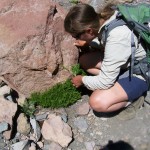
The real question I have, though, is what is the giant root in your pic, what does it taste like, and how do you cook it?
Oh, and I think the first candy corn is good, and the fifth is way too much (kind of like circus peanuts). But keep me away from the Peppermint Patties!
Very nice article. I struggled for a long time trying to explain my job at NASA, before I decided to can all the details and just say "Atmospheric Research". If people are interested, I can delve in a little more, and gauge the interest level.
The real question I have, though, is what is the giant root in your pic, what does it taste like, and how do you cook it?
Oh, and I think the first candy corn is good, and the fifth is way too much (kind of like circus peanuts). But keep me away from the Peppermint Patties!
I once got to spend a long day with a theoretical astrophysicist friend at a park on the CalTech campus, drinking red wine, eating a very wide variety of cheeses, and chatting with all sorts of people with advanced degrees who had gathered for a game of boule de pétanque.
One of my friend’s acquaintances was, literally, a rocket scientist, in that one of her projects was at that moment attached to the Cassini-Huygens mission that was still outbound toward Saturn. (I thought of her a few years later when I heard that her rocket motors worked when Cassini successfully arrived on orbit at Saturn. That still makes me smile.)
I spent the entire day asking folk “what they did”, because I was unexpectedly in a very privileged position to ask people about work about which I could, in most cases, only comprehend a rough outline. Everyone was very careful to also ask me what I “did”, (printer/stagehand/singer) and it all seemed very polite and amicable. I hope that I did not offend anyone there…
My usual response to whatever someone tells me that they do is to find some way to say “That’s SO COOL! Do you like the work? What do you do for an artistic outlet, if the work itself isn’t your artistic outlet?”
I’ve found that this approach works for almost everyone, from house painters to theoretical astrophysicists. To quickly find a way to talk about what people love.
Hey,Science urgently needs more ladies in the field. In all aspects of scientific research, the XX establishment is incredibly under-spoken to, notwithstanding the boundless difficulties before us. That is the reason incredible ladies who are making a huge effect in the field are so essential. Here are five females who are turning the tide of ladies in science today — and making more than a couple of waves all the whil.Thank you so much!!!Sara Markel….
“You must be really smart!”
“No, I just work really, really hard.”