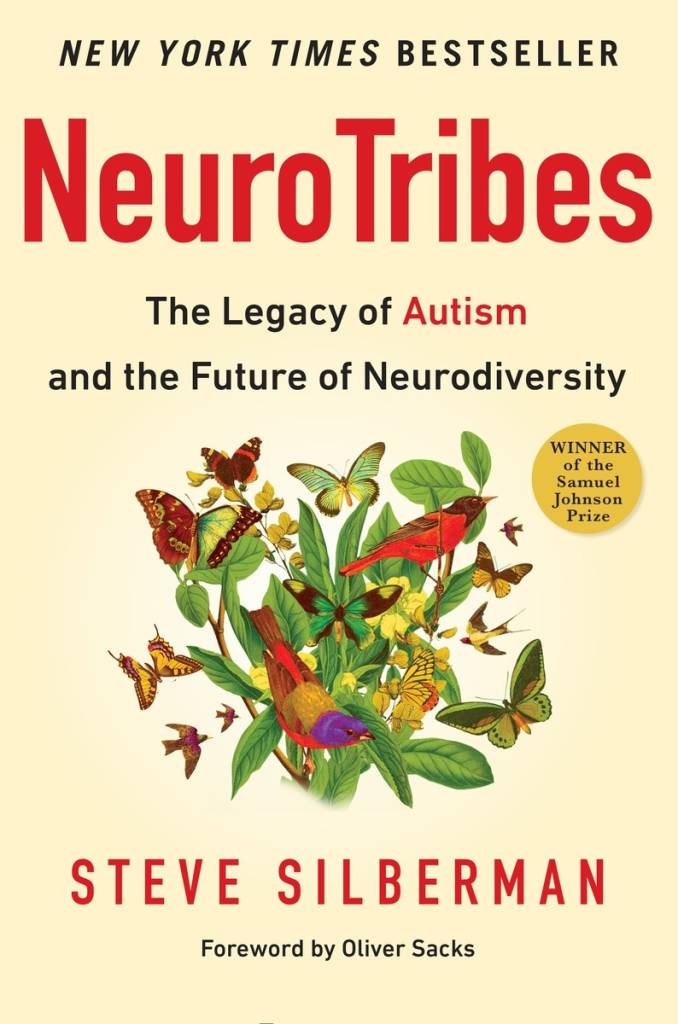
Steve Silberman is the author of NeuroTribes: The Legacy of Autism and the Future of Neurodiversity, which seeks to provide a cultural and historical context for understanding autism. A New York Times bestseller, NeuroTribes was awarded the 2015 Samuel Johnson Prize for Non-Fiction and has also been shortlisted for the 2016 Wellcome Book Prize. Reading NeuroTribes was an intense experience for me—not just because the book digs deep into mistreatment and injustice, but also because of my personal connections to the autism world. NeuroTribes reawakened my sense of commitment and my determination to take action against ableism. In our conversation for The Toast, Steve Silberman and I discussed the shifting conceptions of autism; the intersectionality of race, gender identity, sexuality, and autism; the violence perpetuated against autistic people; and many other issues that he explores in greater detail in his book.
Emily Brooks: From when you first wrote “The Geek Syndrome” in 2001 to when you finished NeuroTribes, you’ve immersed yourself in the autism community and autistic culture, forged personal relationships, and created a masterful work that has made an indelible mark on our present knowledge of autism. How has your personal understanding of autism evolved?
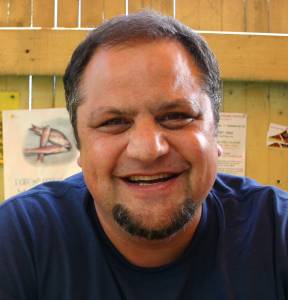 Steve Silberman | Photo credit: Keith Karraker
Back in 2001, like most people — including clinicians — I believed that autism was a rare condition. I thought that the chances of ever interacting with an autistic person in real life were slim. As I explain in the introduction to NeuroTribes, the seed of “The Geek Syndrome” was planted by a woman telling me in a neighborhood café that she believed an “autism epidemic” was underway in Silicon Valley. As a science writer, I wanted to find out if this was true. So my initial exposure to the subject was within what neurodiversity activists now call the pathology paradigm — viewing autism as a disorder, wondering if it was becoming an “epidemic,” and so on. That was definitely the mainstream view in that era, when the panic about vaccines was rising to a peak.
Jumping ahead ten years, one of the crucial things that changed my way of thinking was spending several days at a conference called Autreat, a retreat organized by autistic people for autistic people. There were about 70 folks there of all ages and levels of support needs — from people who didn’t speak at all, to those who use keyboards to communicate, to very chatty folks. The whole environment was set up to suit the social and sensory needs and preferences of people on the spectrum, and the schedule was designed around the principle of “opportunity, not pressure.” Instead of loud bursts of applause after each presentation, people flapped their hands in the air (“flappause”), which transformed a heavily stigmatized behavior — autistic kids used to be literally tortured with electric shocks to eliminate it — into a sign of celebration. It was one of the most relaxed and non-judgmental environments I’ve ever been in.
The most important question is not “What causes autism?” The most important question is, “When are we going to start giving autistic people and their families the kinds of support and services they need?”
My stereotypes of autistic people and autistic behavior were quickly worn down by the complex, nuanced reality of actual autistic lives. I discovered that widely held ideas — like that autistic people don’t “get” humor, or care about making friends — were wrong; in fact, people on the spectrum could be hilarious and social in their own ways. When I first got to Autreat, I saw people rocking, fidgeting, and stimming, which I expected; what I didn’t expect was how soon I would get used to it in an environment that didn’t insist on framing those behaviors as manifestations of pathology. One day I saw a teenage boy who seemed to be having a classic meltdown, wailing and flapping his hands while running down a hallway. Later on, his mother told me that in fact he was doing that because he was so happy to be back with his pals at Autreat.
I found that I acculturated to the environment. Similarly, when I got back into the “real” (neurotypical) world, everyone seemed so loud, rude, and frantic to impress one another. When I returned to my desk in San Francisco to start writing NeuroTribes, I found that the usual ways of writing about autistics — as obsessive, humorless, gaze-avoidant, empathy-deficient people — rang completely hollow. That was the beginning of my trying to write about people on the spectrum in my book in a new way.
The history of autism is both violent and oppressive, so as an autistic person constantly immersed in disability politics, I found reading NeuroTribes extremely emotional. How intense was the research and writing process for you?
Some parts of the book — notably, the first part of the first chapter, about the 18th-century scientist Henry Cavendish — were really fun to research and write. But the third chapter, about Hans Asperger and his colleagues doing their work at the University of Vienna as the Nazis rose to power and began secretly exterminating disabled children, was traumatic for me. I’m a Jew, a gay man, and a son of Communist parents — Hitler and his minions would have killed me three times over. The research for that chapter was all-consuming. So little had been written about Asperger and his colleagues, despite the thousands of books written about Asperger syndrome, that I was in virtually uncharted territory. Crucially, I was able to uncover several papers written by his colleagues that had been totally forgotten, and a very detailed description of his clinic written before the war by a visiting American psychiatrist, that explored the practices of Asperger’s team in depth, and made clear what a progressive place it was before the Nazis took over in 1938. The modern “spectrum” model of autism was really invented there.
Writing about what the Nazis did to the children was so horrifying that I had to listen to music that somehow honored the memory of these lost lives. One of the pieces I turned to most was Steve Reich’s “The Daniel Variations,” written in memory of Daniel Pearl, the Wall Street Journal reporter who was beheaded on video after being forced to say, “My name is Daniel Pearl and I’m a Jewish-American from Encino, California.” Reich, who is one of my favorite contemporary composers, turned that horrible forced statement into an angelic chorus, transmuting the horror into an ecstatic affirmation of humanity. For months on end, I would write about this secret holocaust committed against autistic people while listening to “The Daniel Variations” and weeping. I was not surprised when readers started telling me they would cry when reading those passages.
You write a lot about unintended consequences for autistic people, families, and society –the consequences of Kanner exclusively promoting his restrictive version of autism, the consequences of medical professionals believing that toxic parenting causes autism, the consequences of Lorna Wing advocating for psychiatry to recognize autism as a spectrum again. Is there a lesson here for the current autism community?
Yes. The lesson is that the people we call “autistic” have been here for a long time, quietly making contributions to society when they were given the support and resources to do so, and rotting away in institutions when they weren’t. So much of the anger of the anti-vaccine movement is predicated on the notion that autism is a new thing under the sun, or that there’s been this huge mysterious rise in autism in recent years — whether caused by vaccines, industrial pollutants, or whatever. But John Langdon Down, one of the founders of British psychiatry, wrote beautiful, heartbreakingly precise descriptions of what anti-vaccine parents call “regressive autism” in the mid-19th century, a hundred years before the MMR vaccine was introduced. Similarly, a psychologist in Moscow named Grunia Sukhareva wrote a sharply observed case series of a group of teenagers who clearly had Asperger syndrome in the 1920s.
The most important question facing society is not, “What causes autism?” That’s the question that’s consumed hundreds of millions of dollars in scarce research funding in the past decade. The most important question is, “When are we going to start giving autistic people and their families the kinds of support and services they need?”
What if Hans Asperger’s conception of autism — a spectrum comprised of people of all ages, a source of intelligence and creativity as well as impairment — had dominated the 20th century instead of becoming barely a footnote? How do you think society would be different right now?
In addition to anticipating the spectrum, Asperger believed that autistic traits are common, and that once you learned to recognize them, you saw them everywhere. Imagine if that broad and inclusive framing had prevailed, instead of Leo Kanner’s early view that autism was both monolithic and rare. Eventually, even Kanner would admit that autism could present in a diverse range of forms, but he didn’t do that until 1971, when the clinical conception of what nearly everyone called Kanner’s syndrome was already well established. It was considered strictly a childhood disorder — possibly the prodromal phase of adult schizophrenia — triggered by cold and unloving parents, and was so narrowly defined that very few people who would get a diagnosis of “Autism Spectrum Disorder” now would have qualified.
That’s the big lie behind those hockey-stick graphs spread all over the Internet by fundraising organizations and anti-vaccine groups to terrify parents: the notion that this once “rare” condition has suddenly exploded. And crucially, it’s not just that allegedly high-functioning individuals have been added to the diagnosed population. A study in Utah found that the revised DSM criteria were also better at picking up folks with profound intellectual disabilities who would have slipped through the net before.
Imagine if autism had been recognized as a lifelong condition that encompassed a broad, inclusive spectrum from the 1940s onwards. Imagine if all those years had been spent figuring out ways to help autistic children learn — which was what Asperger and his colleagues were working on before the war — instead of hiding them in brutal institutions and theorizing that they’re incapable of learning. Imagine if decades had been spent building support systems for autistic people and their families, instead of blaming parents for causing their children’s autism. The whole thing is a tragedy of epic dimensions.
Fighting against the monolithic ideal of autism is not just about the spectrum and age, but also about race, class, gender, and sexuality. How different are autism stories at the intersections of other marginalized identities?
That’s a very good question, but as a white, neurotypical, cisgender male, I’m not the best person to answer it. I’d like to refer your readers to a superb anthology coming out in April called All the Weight of Our Dreams (through the combined efforts of Lydia X.Z. Brown, Senior Editor; E. Ashkenazy, Project Manager and Editor; and Morénike Giwa Onaiwu, Assistant Project Manager and Editor), about the intersections between autism and race. The authors talk about the complex pain of feeling excluded for being autistic from the same communities where they find support for being people of color. I hope this book finds a wide audience.
Recently, I was on a plane talking to a young black woman who worked in D.C. When I told her that I’d written a book about autism, she said, “Autism is a white-people thing, isn’t it?” I told her that there was a long history of minority communities not having access to the kinds of services that provide a diagnosis. I’ve heard those kinds of statements before. In a way, they’re an echo of the time when Kanner considered autism a psychological issue that disproportionately affected upper-middle-class families, rather than a developmental disability.
In All the Weight of Our Dreams, E. Ashkenazy writes, “Let’s say that an autistic person of color is being raised in a community and culture that generally tends to view disability as a weakness and embarrassment. This situation is very different from that of an autistic person growing up in a community where seeking a diagnosis and related services are viewed as necessary and proactive. Let’s say than another autistic person of color is a part of a culture that upholds strict expectations of how community members should behave both at home and in the community. This person will likely face more than just autism-related challenges. They might be expected to interpret, understand, and adhere to community roles and expectations that are usually subliminally picked up on in infancy and childhood. This situation can prove difficult for a number of autistic persons regardless of race or ethnicity.”
I loved your detailed portraits of autistic people, and would have appreciated more in-depth stories of autistic women. In your research, did you run across accounts of undiagnosed autistic women from the 18th century, the fandom era, or other time periods that you can share?
I would have appreciated more in-depth stories of female historical figures, too, but I faced an interesting problem. I’ve been criticized in a couple of Amazon reviews for speculating about the autism of people from the periods you mention — like Henry Cavendish, Paul Dirac, and Hugo Gernsback.
But one of the rules that I set for myself at the beginning was that I wouldn’t go throwing around amateur diagnoses, though it’s popular to do so these days with geeky celebrities like Mark Zuckerberg and Marissa Mayer. I’m not qualified to diagnose anyone, including figures from history. So all of the people that I wrote about had been diagnosed by higher authorities, as it were. Neurologist/author Oliver Sacks retro-diagnosed Cavendish in an article in the journal Neurology, and autism pioneer Uta Frith and Cavendish’s biographer Russell McCormmach concurred. Dirac was judged to have been autistic by his biographer, Graham Farmelo, author of The Strangest Man, after a lengthy process of interviewing his friends and family members. And Gernsback’s biographer, a scholar of the golden age of science fiction named Gary Westfahl — who is autistic himself — made that call. In each of these cases, I did a tremendous amount of background research to support the diagnoses. So I was actually quite conservative about that.
But that created a new issue: I was unable to find any women from before the 20th century who had been retro-diagnosed with any level of credibility. People talk about Emily Dickinson and Jane Austen — or, later, the great British chemist Rosalind Franklin, who helped discover the structure of DNA — but in each case, the evidence base for these speculations was thin. So what I tried to do as a kind of corrective measure was to focus on the women in case series like Kanner’s, exploring the characters and fates of Kanner’s female patients much more than the men.
People forget how hard it was for a woman to get a diagnosis well into the 1990s. I write about that in the book. And in the later chapters, which cover modern times, I write about Temple Grandin (one of the first autistic adults to “come out”), quote from female autistic writers, and profile Carol Greenburg, an autistic mother of an autistic son. In the future, I hope to write a bit more about a woman who Kanner retro-diagnosed later in his career from old files and followed into adulthood. She didn’t do well, because autism was considered a childhood disorder, so there was no context to understand what she was going through, and no support systems available. She ended up being institutionalized as psychotic.
In NeuroTribes, there’s a lot going on about gender, from blaming educated mothers for autism to Lovaas’ leadership in the Feminine Boys Project. Could you speak to the gender politics surrounding autism?
That’s such a broad question that I’ll just focus on this: people ask me all the time if I think autism is being overdiagnosed — if I think it’s become this trendy label that’s just slapped on nerdy, socially awkward kids. What I generally say is that I think autism is still terribly underdiagnosed among women and also people of color.
This is partly because of history. In his original paper, Asperger said he had never seen a “fully fledged” case of autism in girls, though he described autistic traits in the mother of one of his male patients, and presciently suggested that mother and son were capable of understanding each other because of their shared traits. Kanner did write insightfully about female patients, but for decades, autism was diagnosed at a much higher rate in boys — typically at least four to one. This has led some geneticists to start looking for what they call a “female protective factor.” But I think it’s more important to launch a whole new wave of research into what autism looks like in girls, because I think most clinicians barely understand that yet.
It’s important to note that many of the most powerful autistic writers have been women: people like Julia Bascom, author of a classic essay about experiencing behavioral therapy called “Quiet Hands“; Lynne Soraya, author of Living Independently on the Autism Spectrum; Sarah Hendrickx, who was diagnosed in mid-life, after she had already written several books on the subject; and of course Temple Grandin — the list goes on and on. Many of the leaders of the neurodiversity movement are women.
Another thing worth noting is that one of the founders of that movement, Jim Sinclair, author of the seminal anti-cure essay “Don’t Mourn for Us,” has identified as “neuter,” as xe puts it. In my book, Jim credits xyr autism for immunizing xem against gender socialization. I think the connections between autism and non-traditional gender and sexual identities — gay, bisexual, asexual, trans, non-binary, and so on — are a huge uncharted frontier for autism research and a promising avenue of autism advocacy.
Words themselves play a large role in autism’s history, whether through communicating constantly changing disability terminology, rebranding harsh aversives, or connecting communities. How does the language we use around autism influence how society treats autistic people?
As long as autism is framed as an “epidemic,” autistic people will be seen as diseased, damaged, and lesser-than. You can see the insidious effects of this on anti-vaccine websites, where autistic children and adults are routinely described in demeaning and degrading terms by the same people claiming to be fighting a war against Big Pharma for their sake.
As long as autistic people are defined only in terms of their deficits and impairments, and not in terms of their potential, society will be missing out on the contributions that only they can make and squandering precious human lives.
Throughout history, autistic people have been framed as automatons and robots, lacking the qualities that make people human — qualities like empathy, the ability to feel emotions like love and caring, and the desire to form meaningful attachments with others. Granted, many autistic people struggle to engage in reciprocal interactions. But that doesn’t mean they lack the desire to have friends, find romantic partners, act creatively, promote justice, and make positive contributions to their communities. Often, they’re denied the resources and kinds of support they need to do these things. As long as autistic people are defined only in terms of their deficits and impairments, and not in terms of their potential, society will be missing out on the contributions that only they can make, and squandering precious human lives.
Hopefully your description of the terrifying, torturous roots of applied behavioral analysis disturbs and shocks readers. Through the lens of autism history, what is the price of making non-autistic behavior a therapeutic goal?
I love the perspective that Barry Prizant and Tom Fields-Meyer take in their superb new book, Uniquely Human: A Different Way of Seeing Autism, which is to advise against thinking in terms of “autistic behavior.” It’s just human behavior — attempts to adapt to the environment. If an autistic person is injuring themselves, they may be responding to a stressor in the environment that you can’t pick up on, like a buzzing fluorescent light, a scratchy collar, or digestive upset. It’s not very helpful to simply characterize the behavior as a “symptom” of autism that needs to be eliminated with more behavioral therapy. It’s better to ameliorate the distress by going to the source of the stress, if you can.
For decades, autistic kids were punished brutally — using methods that really were akin to torture, such as pouring hot sauce on their tongues or zapping them with electric cattle prods — for doing things like rocking and spinning in place. The now-debunked theory behind that was that autistic people couldn’t learn if they were behaving that way; there was also concern that a child acting in eccentric ways would cause other people to judge the whole family.
Now we understand that people on the spectrum regulate their energy levels and soothe their anxiety by “stimming,” and that it’s more important to eliminate stigmatization and bullying from society at large than it is to prevent a little girl from flapping her hands. But that also requires society to be aware of what autism looks like, and to have compassion and appreciation for autistic people.
In NeuroTribes, you tell the story of parents who stood up against professionals who were blaming them for their children’s disabilities and advocated for changing society instead of their children — great allies. Yet today, there’s an enormous gulf between some parents of autistic children and some autistic adults. How could we move beyond pitting parents and autistic people against each other?
I wish I could say, “It’s so simple. Autistic self-advocates and their families want the same things: happier, healthier, more secure and productive lives for people on the spectrum. Can’t we unite behind that common goal and do whatever it takes to get there?” But it’s not that simple. Some parents of kids with high support needs understandably feel confused or hostile when they hear self-advocates angrily rejecting the idea of a “cure”; likewise, some self-advocates understandably hear echoes of Nazi eugenics when they hear organizations like Autism Speaks tout investing millions of dollars into research into the causes of autism — why would they research the causes of something if they don’t intend to eliminate it? It’s easy for people on both sides of these arguments to miss the common ground, which is the shared interest in improving autistic people’s lives. In that regard, the notion that autism is a historical aberration — the unique disorder of our uniquely disordered time — is very destructive, because it renders previous generations of autistic people invisible.
One of the big things I learned in my research for NeuroTribes was that the parents’ movement — as it was originally conceived by people like Lorna Wing and Ruth Christ Sullivan in the 1960s — was all about fighting to create a better world for their children: changing laws so that all kids have a right to an education, preparing for their transition to adulthood, and thinking about building communities where the kids would live when they were no longer kids (like Somerset House in England). But then Andrew Wakefield popularized the notion that autism had become a worldwide epidemic caused by vaccines, and the public face of the parents’ movement became “warrior mother” Jenny McCarthy, who wasn’t battling discrimination against disabled people; instead, she was fighting to make her own son “normal” using special diets and other biomedical interventions. In other words, she was fighting autism itself.
The original autism parents’ movement was more akin to the broader disability rights movement that was unfolding in parallel than what the parents’ movement became once it got diverted into raging against the alleged vaccine/autism conspiracy. One important difference, obviously, was that the disability rights movement is predicated on people speaking for themselves and gaining their own voice in the formulation of public policy, while the original autism parents’ movement was predicated on parents speaking for their children, because many of their children couldn’t speak. That’s one reason that some parents and self-advocates are at odds; now people who communicate through keyboards and other forms of assistive technology are demanding the right to speak for themselves and to set their own priorities. The very name of a parent-run organization like Autism Speaks implies erasure of their voices.
The legacy of how society has treated autistic people is very, very dark, and the only way we’ll be able to move past it is by having an honest accounting of what happened. A reckoning.
It’s not going to be easy to reduce the tensions between the parents’ movement and the self-advocate movement, and maybe some of those tensions are necessary and good. But the amount of infighting in the broader autism community is extraordinary and a tragedy. Not a day goes by when I don’t hear somebody tearing somebody else down or trashing an organization. I’ve known some very excellent bloggers, particularly autistic bloggers, who simply had to go silent because they could no longer bear up under the constant attacks from virtually every side. It’s exhausting and destructive, and saps energy that could be devoted to fighting the real enemy, which is institutionalized ableism in every form.
The idea that NeuroTribes is a comprehensive history of autism seems to trip some readers up. My feeling from reading your book was not that it’s all there is to know about autism and autistic people; your intention was to provide a detailed and important background. If NeuroTribes is a starting point, what do you recommend readers explore next?
My book is not at all meant to be a comprehensive encyclopedia of autism, and it’s not presented that way. It’s not a good book for parents who are interested in researching treatments, and it’s not a substitute for reading about autistic experience written by the people who live it.
My hope for NeuroTribes is that it fills in huge gaps in historical information so that crucial aspects of the present situation are made comprehensible instead of opaque. To put it in very blunt language, one of my goals for the book was to answer the question, “How did things get so fucked up in autismland? Why is everyone so angry?” It turns out there are very good reasons for everyone to be angry. Parents were lied to for decades about their alleged role in causing their children’s autism, and two generations of autistic people lived and died in institutions that were worse than prisons, being subjected to “treatments” that would be considered war crimes if POWs were the victims. The legacy of how society has treated autistic people is very, very dark — and the only way we’ll be able to move past it as a society is by having an honest accounting of what happened. A reckoning. That’s what I intended NeuroTribes to be.
As far as what readers should read next, we’re in a golden age of writing about autism by autistic writers, as books like All the Weight of Our Dreams attest. There are also a number of books by parents now that no longer view autism as an enemy to be conquered with the latest diet, but as a lifelong disability that deserves support and accommodations. A book coming out in April by Susan Senator called Autism Adulthood — which is very frank about the struggles that Susan and her husband have been through to build a promising life for their son, Nat — is a good example of this.
As a society, it’s time we woke up from our collective illusion that autism is a puzzle that’s going to be solved by a medical breakthrough that’s perpetually just around the corner. Autistic people have been here for millennia, but it’s only in the last few years that we’ve been able to see them clearly. Now we have the opportunity to focus our resources on giving them what they need so that their families can finally attain some sense of peace and security about their future. I hope my book moves the world a millionth of an inch toward that goal.
This interview was generously sponsored by a reader. It has been minimally edited for length and clarity.

No comments yet?? Fantastic interview, so much to read and ponder. Thank you.
I’m sitting down to read this now, but I’ll throw in that “Neurotribes” is one of the most in-demand books in my library system. There’s a zillion copies and they’re always checked out with a huge queue of people waiting their turn to check it out.
Are you in Toronto? This is a problem I have too. I’ve been in the queue for six months. Darn well-read public!
Virginia, actually! I’ve been in the queue for ages and ages.
Lots to think about here. Thank you!
Sometimes the best articles have not very many comments, just because the topics are so big and weighty that it’s hard to start a conversation on them. I’m definitely guilty of reading something I really, really like and then just navigating away!
So I’ll say this: this was a great, great read. There’s a lot to process, and this comment isn’t going to add much to the discussion–but I did hop right over to my library website to request the book. I thought Steve did a really nice job presenting his own research and perspective while also drawing attention to the places where his voice isn’t enough, and to the need for to hear more from autistic writers, particularly non-white and non-male. I’m speaking as a neurotypical person, though, so perhaps that’s biasing my perspective.
Based on the book, I’d agree with you – there are a lot of quotations by other folks (particularly in current activist/advocacy circles) that indicate the same need to hear from a more diverse community. In the last few chapters of the book in particular, Silberman is really effective at including individuals in those perspectives/groups who are themselves asking for more inclusion of those perspectives/groups. I dunno if that made sense, but I guess my point is, he’s really good at drawing attention to the people who are saying they want to hear more of their own non-white, non-male voices without being the white male person saying, “We need more of this.”
I think he’s a very good ally, using his platform to educate but also uplift and point toward voices that speak from personal and underrepresented experience.
This is a fabulous interview. I liked the book on many levels, and am interested to see Silberman address criticisms of psychohistory here; I found some portions of the book problematic because, as a historian-by-primary-training (albeit not much anymore), I am unconvinced that it is possible to retroactively diagnose in this way with any accuracy. I feel considerably better about the discussions of Cavendish (and, later in the book, of individuals in Silicon Valley) after reading Silberman’s comments here on retroactive diagnoses.
I devoured NeuroTribes a few weeks back. It was fantastic and this interview is a great companion to it. I particularly appreciate the questions about gender and girls/women with autism, as I did want to hear more about those topics in the book.
Have you read Aspergirls by Rudy Simone? Her book is one of the first I read when I was diagnosed with Asperger’s, and it helped me understand that there were other Autistic women like me (and that there actually were other Autistic women). Each chapter features a different topic concerning women on the Spectrum and showcases some of the women from the forum and things they’ve struggled and triumphed with.
Just bought NeuroTribes from Amazon halfway through this interview. I’m really impressed.
Really awesome interview. I’m looking forward to reading Neurotribes.
Man, I despise Andrew Wakefield and Jenny McCarthy so very, very much. I was glad to see them (subtly and genteelly) called out in this interview.
The book sounds incredibly fascinating and like something I can really learn from. I have a friend whose daughter has Rett syndrome, which is not autism but shares much in common with profound autism. I also have several cousins who are on the spectrum. I’d like to understand them all better, especially the unique challenges they face.
I have nothing to add of any substance, but this is so great.
Steve’s work was so important to me this past year as we navigated our daughter’s diagnosis, and this interview really captures the depth and thoughtfulness of Neurotribes, as well as his delight in referring people to autistic writers for questions above his pay grade. Thank you, Emily, and Steve.
I think/hope there has been a big shift in the ten(!) years since my daughter was diagnosed, when most of the books recommended to parents were about the ‘core deficits’ of people with autism and how to correct them, and I hope this book continues that shift.
Great interview. Thank you so much to both Emily and Steve for sharing this intelligent and insightful conversation with us.
This is a fantastic piece. I need to read it a few more times to have anything constructive to contribute, and I’m going to request the book from my library immediately.
This was great to read. My son (almost three) was just diagnosed with autism, and this was very timely. I’ve been massively bummed out by the tone of many for-parents-of forums, and I can’t wait to read this book, since I want to do what it takes to give my son what he needs to live his best life and develop his gifts (music and physical agility, so far) in a way that’s most fulfilling for him.
The parent forums can be THE WORST. You’ll love NeuroTribes, and also you can email me any time you want to talk about this stuff.
There are a whole lot of us on the spectrum here, and while we have all had different lives, we may also be able to offer some insights as needed. I’m sure you’re a great parent.
People interested in works on gender and autism may want to check out Sarah Richardson. http://scholar.harvard.edu/srichard/publications
This is a fantastic interview. Of all the things in the world to be interested in, autism is not something I read about often, but this was really great.
AWE.SOME.
I had the chance to buy Neurotribes for cheap when I was in London, and I was like “I’m going to regret this but my luggage literally can’t hold any more books”, and, well, here I am, regretting!
Also, here are some opinions from me as a future (hopefully) psychologist: I’m worried about how little training we get in autism and other neurodevelopmental disabilities. I mean, we do get training, but it’s not very focused. At least I don’t feel that it’s enough. In three years, we haven’t had one single lecture dedicated to autism. And we haven’t done any real reading about it. Autism keeps getting mentioned in other lectures (it came up frequently when we learned about affective neuropsychology), but we haven’t focused properly on it. We also haven’t talked about how to diagnose it, but maybe that happens later? I’ve asked for more autism/ADHD/etc content, since adults who want to figure out if they have a neurodevelopmental disability is a HUGE patient group, but it doesn’t seem like it’s going to happen.
Also, we have been taught that ABA is the best possible thing for autism, like it’s almost life-saving. I’m really worried about that. It doesn’t seem like the lecturers are talking about the abusive practices when they praise ABA (when they mention examples, they mention good, normal stuff, none of this “punish the disabled kids with hot sauce”), but they aren’t warning us either, which I really feel they should. They aren’t telling us that ABA is used in this terrifying way. I’ve read the accounts for years. I’ve shuddered, I’ve been disgusted and angry and horrified.
We’re actually learning good therapies that are best described as “applied behavioural analysis” because they’re ACTUALLY “behavioural analysis, applied” – but I know that ABA (and other types of behavioural therapy) is a dogwhistle to lots of people. It was a shock to realise that I’m learning the method that got perverted into abusive ABA. We do get taught to never use punishments and to always be mindful of autonomy. But they aren’t warning us about other things I’ve seen autistic people talk about, like how kids feel when their dearly beloved hobbies get co-opted for therapy (which has the effect that some kids don’t dare be happy about things, because they realistically fear that people will withhold their favourite things in exchange for cooperation).
So, all in all, I’m going to get that book from the library. Seems like I need to read it.
I think about this a lot, bc we do ABA and my daughter freaking LOVES it and her therapists, like “is today a Mary day? Is today a Jana day?” I think this is another point in which resources and choice make a huge difference, unfortunately. When I was doing my homework, it was so important for me to be able to audition ABA companies to see who prioritized helping kids acquire skills instead of discouraging “autistic behaviors.” Our therapists do not try to curtail stimming, and there’s no withholding, and it’s been a great positive for us. But if you’re randomly assigned someone by your insurance and don’t have that flexibility, or the access to resources to educate yourself about the dangers of ABA, that may very well not be the case.
(Ha, I see that I forgot to write that I didn’t buy the book…)
I agree that class privilege is a huge thing here. ABA seems to be abused to discipline not only disabled people but also “lower class” kids. I have read about abusive behavioural therapy in institutions for young people, for example. It’s really seductive to misuse behaviourism when you think someone’s will shouldn’t matter.
Even besides the importance of avoiding abusive practices, I think it’s important to get someone who’s actually good at behavioural analysis, someone who’s actually good at this way of thinking and puzzling things out. And I think that’s going to be extremely difficult for most people.
For example, badly trained therapists misuse the word “behaviour” in a way that laypeople won’t notice, because the misuse is to use it in the everyday way. In psychology, “behaviour” doesn’t mean the usual “misbehaviour”, “deliberate actions”, “specific things the person does because they have a disability/illness” or anything like that. The word “behaviour” is simply a way to name our movements, reactions, instincts and actions – it’s the difference between being a dead body and a live animal. Breathing is a behaviour.
But look at this blogpost, for example: http://loveexplosions.net/2013/01/30/the-cost-of-…
“Last year at school, Evie was “flopping” often. Flopping meaning sinking to the floor. Some of her special educators felt like it was a behavior and by allowing it to continue, they would be reinforcing the behavior.”
These professionals don’t seem to know what “behaviour” means, since they debate whether Evie’s flopping is “a behaviour” or not (of course it is, but they think that “behaviour” means “conscious, goal-directed actions”). And they also don’t truly understand how reinforcement works. And they don’t actually use the “analysis” they’ve come up with (that unpleasant situations make Evie flop down) to set up a better situation that creates a better chain of reinforcement. They just want to make Evie not experience her natural behaviour in the same, unchanged situation. Basically that’s like expecting Evie to solve 1 + 1 for 3 instead of 2. That’s not how behaviourism works! That’s not how ANYTHING works! Except, of course, abuse.
Finally delurking/making an intense debate account to say: As an autistic college student with massive PTSD because of ABA and other compliance training like therapies I would like to share this https://unstrangemind.wordpress.com/2013/01/27/no… and this http://neurowonderful.tumblr.com/post/13528673193… for anyone wondering why it is we get so upset about it. Of course it is from an autistic perspective so I understand why that would not be seen as valid, but I am not comfortable in (with?) every resource on this being from a parents perspective. If anyone would like to get my perspective on this privately I’m always willing to help! (That being said: I have no idea how intense debate works so, like, expect a learning curve in my ability to respond quickly,)
Oh crap, that first link talks about being put in with the emotionally disturbed kids. I only avoided it because my parents were fully willing to give up my mom’s career to homeschool me instead of subjecting me to that. I still have nightmares about our one and only visit to that building.
I hate it when people think that torturing (that’s what happens in these institutions, people! Being shocked, pinned down, or beaten isn’t not-torture just because it happens to someone who’s different than you!) kids will make them ‘better’. No, you idiots, it won’t, the only thing it will do is give your kids PTSD on top of their other issues.
BRB, must think calming kitten-filled thoughts now.
I am so very sorry I did not think to put a trigger warning on that when I know that I really should’ve. It’s too late to edit now but I’ll do better in the future.
Thanks for supplying links when I forgot! I’ve read both of those before, should have posted them myself. Unstrange Minds’ essays are hair-raising, but going through that master post and seeing how wide-spread it is… Chilling.
If you’re wondering, the reason I picked the parent’s blog post was specifically because I read it recently and recalled that she said that they’d debated whether Evie’s flopping “was a behaviour”. I used the link because I wanted to talk about professionals who don’t know behaviourism. For a run-through of abusive ABA, I would have used the master post, because I DEFINITELY think that the parent’s perspective is waaay too over-represented.
I am sorry. I was not trying to imply that you had not read it. I just am extremely disenheartened by the fact that progressive people can agree in every single other conversation about oppression and abuse that the people who are being oppressed and the survivors should be the ones to speak on it, except this. I understand why. I understand that people think I am incapable of being self aware, or am just repeating things I have heard others say (not that echolalia can’t be a valid form of communication it’s just something people point to as invalid), or because I can communicate effectively in text based communication usually that I am too “high functioning” to understand or not actually autistic. So I am extremely sorry I disrespected you but please understand that my pain is not directed at you but is directed at a culture that does not see me as a full person.
Oh, you have nothing to apologise for! I should have been more clear. I agree with you completely. Progressiveness goes straight out the window as soon as disability rights come up. It’s heartbreaking and infuriating at the same time.
And it is 3 am and dangerously close to April, so I’m a little emotional. Thank you for being understanding
Speaking from personal experience:
Your instinct that you are being woefully under-taught on learning disabilities is right on point. Most therapists are.
Learning to hide things from the therapist/parents to avoid having hobbies turned into therapy treats is very real, as is the damage done by teaching kids to do whatever is ‘normal’, i.e. give into peer pressure, regardless of the cost to them.
Social roleplay that didn’t make a big deal about looking people in the face was the most helpful. Eventually I got comfortable enough to get to the point where I could look people in the face (and proceeded to staredown everyone I met, including my cat, for the next 2 years. I was supposed to look people in the eye, right?).
I didn’t learn that body language was important until I got a cat, and had to communicate via body language. I still sometimes display cat mannerisms instead of human mannerisms, but no one really notices.
IME, ‘oppositional’ or ‘defiant’ diagnoses are just adults throwing up their hands because they can’t/won’t deal with the real problem. Often it’s triggered by kids recognizing ABA and other do-what-I-say-and-look-normal ‘therapies’ for the toxic nonsense they are and refusing to play along. We learned that any doctor or teacher who pushed for an oppositional or defiant diagnosis was really saying that they were too inflexible to handle a kid who didn’t read their mind and respond to their unspoken expectations. As you go into the professional therapy world, please be very careful to not default to ‘this kid is willfully defying me’.
YES THIS EXACTLY (i’m not sure about the etiquette regarding caps lock here, but I feel this Very Emphatically), because of my mother’s (who is a special ed teacher) misguided attempts at helping, (and a general family culture of medical neglect but that was for both my allistic siblings and myself) she refused to let me get a clinical diagnoses and did not tell me I was autistic until literally 4 months ago, all of my therapies were conducted through my school. And what you say about “Often it’s triggered by kids recognizing ABA and other do-what-I-say-and-look-normal ‘therapies’ for the toxic nonsense they are and refusing to play along.” brought back the memory of being 12 years old and being upset with my OT because she was not helping me with handwriting or typing like I was told she was supposed to be doing, but instead making me do the same seemingly meaningless tasks to the point where I broke down crying and told her to stop treating me like a trained monkey. She laughed at me in the moment and I got pulled into the guidance office to talk to the consoler who did not like me (small rural school, this was inevitable) about if I didn’t do as I was told I wouldn’t be allowed to have accommodations. Few 12 year olds, no matter how “gifted”, no matter how hyperlexic and well read, no matter how much the adults around them view them as a savant, know what the word dehumanizing means. But that is the point I was trying to get across then by being “defiant.” That I was feeling disrespected, not listened to, and debased in a way I knew my peers were not being. Thank you so much for pointing that out.
It’s so dehumanising.
I seriously don’t get how anyone can pull the trained monkey routine on a person who can communicate at all. At least when it was developed (there’s lots of verrry dehumanising thoughts around it, so this is the one credit that early ABA gets), the point was to find a way to reach extremely disabled kids who couldn’t communicate in any way. They didn’t speak, didn’t look at people, didn’t respond. It really was a breakthrough to figure out that you could start by communicating like humans communicate with animals. Animals can’t speak either, but we can encourage them to respond to us.
The “touch your nose, receive gummi bear” routine is, as far as I know, for talking to someone who doesn’t respond to anything anyone says and may not understand speech. If they suddenly DO touch their nose, you know for sure that you’re getting through. You have a starting point. But… To do that to someone when you already know how to communicate with them? Someone who’s able to communicate to YOU, or even talk? What’s the POINT?? There’s no purpose anymore, because you know perfectly well that they understand you. You DO know that they understand what you want and you DO understand their communication of what they want, including that they don’t want to be treated like this. In that case, to train is to insist that you don’t understand them and they don’t understand you. That’s disgustingly abusive. I’m so sorry that they did this to you, it’s SO WRONG.
Here’s the thing, and I’m not blaming you, or saying you’re a terrible person for saying that, or trying to start a fight, it’s just a personal thing that’s been Majorly Bugging me lately but: I am not the one who needs to be told my abusers were wrong. I /know/ my abusers were (and are, since were implies that it’s over and it won’t be until I’m not longer financially dependent on my parents) wrong. I am the absolute last person who needs to be told that. The people who are doing this to their clients (paitients?) and their own children are the ones who need to be told. The kids, and hell, adults who live in fear of sharing their interests or opinions or making a choice in case it’s the Wrong Choice because every choice is a test and if you don’t make the right one you won’t get a sticker on your sticker chart and will have to work while the Good Kids, the Real Kids get to have fun, or, if you make the Wrong Choice, have the Wrong Opinions or the Wrong Intetests no one will ever want to be around you. So I know you’re trying to help, but the fact alone that I am able to talk to you about this without immeditly having a panic attack means I do not need to be told this. The people who are currently hurting people and being hurt do. Thank you for trying to be comforting and I’m sorry to be ungrateful but that’s something that really gets to me. Maybe I’m being too literal, I don’t know.
I’m disabled myself, and my disabled self is like “HELL YEAH” right now.
Because HELL YEAH you don’t need to be told that people wronged you, we can tell when people mistreat us! I didn’t mean to explain as if you didn’t understand, I wanted to flesh out the thinking behind the abuse a bit (I know it helped me to understand where the principles came from) and speak out against abusing people and calling it therapy.
Also, I speak out in class too! I have access to a whole bunch of future professionals, and I don’t want anyone to stay ignorant about these practices. They’re out there and we’re going to have to develop the moral courage to fix it.
I hope that this discussion reaches lurkers too. I love the Internet, you never know who’s listening.
That rant wasn’t so much about you and this conversation as it was my ongoing discomfort on how we talk about abuse in general. Bc like, validation is important, but I feel like if we’re stopping at validation of a survivor that’s like, bare minimum, but I’m not sure what the next step would /be/ exactly. Obviously in cases like what I’ve experienced which was steeped in ableism 95% of the time it’s combating ableism, but in cases that aren’t as clear cut I’m not sure what the answer is. I just know that after having been more open about my experiences both w/ therapy & my parents the last couple weeks the way people engage with that is weirdly unsettling? I think my partner (who is also autistic so maybe it’s a social nuance neither of us are grasping) does it best when they ask if I need validation in they moment or if I just need to let myself be angry. I’m not exactly sure if this makes sense but I really hope it does because I feel like it can apply in a lot of different conversations besides this
Yeah, validation is often a good FIRST step (real validation, not just “I’m sorry you feel bad”). But I’ve noticed that when people say “well, it’s a first step!” about something, they usually mean that it’s the last step, because they don’t want to do any more steps…
I feel that abusive ABA (and abusive therapy in general) is medical abuse, malpractice. I think people should have the right to be paid for damages. But money can’t buy back a childhood.
These clinical practices need to be stopped. Personally I think that we need education reforms (REAL reforms, BIG reforms) for therapists, psychologists, doctors and teachers at the very least. Regular inspections of clinics, involving patient’s organisations. But it’s not enough.
I hope that the neurodiversity movement will be as successful as the LGBT movement. I try to do my part, but we haven’t got off the ground yet.
This was weirdly hard to find research on but if I may leave this here: O. Ivar Lovaas and his contemporaries used ABA as a form of conversion therapies for young boys they thought were in “danger” of being trans or gay, which as a queer autistic person I find important not to forget: http://neurodiversity.com/library_rekers_1974.htm… http://sbpress.com/2010/03/feminine-boy-project/
Those links gave me chills. Absolutely terrifying, and you’re right, important to not forget. Thank you for posting them, and thank you also for this entire thread! Yours and neuromanticism’s discussion has been enlightening and thought-provoking the whole way through.
While I have my links up I’d like to share this <a href=”http://shttp://theparentsproject.com/my-autistic-child-came-out-to-me/” target=”_blank”>shttp://theparentsproject.com/my-autistic-child-came-out-to-me/ the title is misleading it’s really an advice column type thing and I’ll let this quote speak for itself
“For years, society has denied people with disabilities like autism spectrum disorder the opportunities to express their gender identities and sexualities. It’s not a problem that your autistic child views themselves as bisexual and genderqueer. The only problem would be viewing their LGBTQIA identities as issues or “symptoms” to eradicate or treat, just because they’re autistic. Of course, identities intermingle and it can be hard to know where one begins and another ends. The way your child understands and expresses their identities may be different than you expected, and that might have to do with their communication style or way of processing from being autistic, but then again, it might not. Even if they do approach their identities in a different way, it doesn’t mean that they don’t know what it means to be bisexual or genderqueer, or that they aren’t entitled to identifying that way.” But of course the whole thing is worth reading (edited a typo)
Thanks for this. I have a disability myself, but not autism. But I do recognise a lot of the terrifying (and bullshit!) treatment. I will NEVER do that to ANYONE.
I am sorry we came across as if we were accusing you as being abusive. I cannot speak for Annie but at this point in the conversation I had thought we had seuged from talking about your experiences to talking about our own. I misunderstood and I am so sorry I hurt you.
It’s okay, I wasn’t very hurt, I just felt a bit misunderstood 🙂
I think this thread is awesome and I really like talking to you!
(Now that I am more awake I can say what I was actually trying to express) At this point we were not discussing you, we were discussing our own experiences with people in the same profession. It’s not unlike the #notallmen thing. If a person feels the need to say in a conversation about abuses perpetuated by a group that they are a part of that they do not do that, then they really need to take a step back and look at why they’re getting defensive. I’m sorry I misunderstood and engaged with Annie on her experiences versus only framing the discussion in terms of yours, but as part of a dominant group that many autistic people including myself have very good reason to be wary around I would urge you to please not take that, or people talking about their experiences, personally.
The lack of education on ASD and ADHD isn’t surprising. I have ADHD and talk to other adults with ADHD all the time, and it’s alarming how many psychologists completely misunderstand ADHD. Just appalling levels of misinformation: You can’t have ADHD because you graduated college, you can’t have ADHD because you’re an adult, you can’t have ADHD because you’re not hyperactive, you just need to be better organized, you’re just depressed and anxious (yes, because they had uncontrolled ADHD!)……I’ve talked to people who’ve had those exact phrases said to them by psychologists and therapists.
WOW. I’m so impressed by this interview and will immediately add this book to my to-read list! Although the idea of retro-diagnosing people makes me feel a bit icky, I appreciated Steve’s approach to it. And like many other commenters here, I was also happy to see that Steve directs us to works by autistic people, which I am also excited to check out. Thank you for publishing this!
Neurotribes is an outstanding read, one of my favorites of 2015. Steve is such a fantastic author and ally (also great on Twitter!), and Emily is the perfect interviewer. Well done, Toast!
I love that this interview came up just in time to aggressively share it in contrast to Autism $peaks’ yearly awareness bullshit.
Last year my workplace did a thing that raised money for them (ie- if you come down to the caf and do x, $y will be donated!)….. and it was really difficult to explain why I was absolutely not going to get involved.
Kudos on you for standing up on that though!
“That’s a very good question, but as a white, neurotypical, cisgender male, I’m not the best person to answer it.”
Has any human ever uttered a more romantic sentence? I seriously swooned.
But seriously, fantastic interview. I’ll definitely be sharing.
Thank you! Cannot wait to read the book and pass this interview along to disability advocates.
Now I’m crying at work.
I’m one of the ‘high functioning’/whatever people on the spectrum, and it’s such a relief when articles come out that aren’t 100% about making people like me and a significant fraction of my extended family not exist (sidenote: Autism Speaks is a vile, vile organization that openly advocates harming children in an effort to ‘cure’ them. They have recently begun cleaning up their image, but it’s still the same ignorant bigots running the show).
I have a right to live as I am, and if that includes quiet repetitive motions, recognizing people by haircuts, carrying earplugs everywhere I go and an obsessive interest in chemistry, so be it. I don’t get why other people can’t mind their own business.
Yes, it’s horrible and frustrating to have a kid that is different from you. Especially when that difference is something that’s going to make your and their lives harder. But you know what? That doesn’t mean your child is better off dead (urg, Autism Speaks). It doesn’t mean that your child needs to be ‘cured’ of something fundamental to their neurochemistry. It does mean your child needs to be loved, supported, and gently taught to be the best person they can be. It also does mean that your expectations as a parent need to change. And if you can manage that, you might be surprised at how well and functional your kid will turn out.
No one knows I’m on the autistic spectrum until I tell them, because my parents sacrificed the time and energy to defend me from self-centered or well-meaning but clueless doctors and teachers, and worked with me to figure out how I could interact with the rest of the world effectively. I’m not normal and I’m never going to be, and getting here was a long, hard road, but I’m not a fully successful adult by anyone’s measure.
*now a fully successful adult
Typing while blurry-eyed is hard. :/
I’m so glad your parents were able to provide you with the type of parenting you needed despite the harmful and confusing messages that so often surround families. It points to how important it is that professionals support and listen to the people who know and love a child, rather than advising them from a distance.
“I have a right to live as I am, and if that includes quiet repetitive motions, recognizing people by haircuts, carrying earplugs everywhere I go and an obsessive interest in chemistry, so be it. I don’t get why other people can’t mind their own business. ”
100% this.
THIS: “But that doesn’t mean they lack the desire to have friends, find romantic partners, act creatively, promote justice, and make positive contributions to their communities.”
I’m a special education teacher, and this is the most important thing that I wish more people understood. My students on the spectrum care deeply about the well-being of others (well, at least at the same rate that teenagers generally do). The notion that “autistic” means “anti-social” is a persistent and damaging myth.
I have been planning to read this book for some time, and now I fully intend to treat myself to a trip to the bookstore tomorrow afternoon.
This is a lovely interview. I have some hesitations about commenting with this, but I’ve seen some criticism of this book from people in the ASD population/community, too, and I do think they are worth reading and considering for anyone who is not ASD and for whom this might be their introduction to ASD issues. This in particular was floated my way: http://caros-blog.tumblr.com/post/139400083299/mu… Great article though. Silberman seems very thoughtful.
Thanks so much for posting this link – although I’m interested to read Neurotribes, this criticism really resonated for me and with some of my thinking around disability rights in general.
So, I wrote the essay that Kelsey linked to (I’m also the sparklebutch, in case anyone remembers that–hey Toast readers, you all seem really nice). Thanks friend, for commenting despite your hesitation. It does make me, at least, feel less alone.
I wasn’t going to comment but there are just a couple things that I wish people would hear and understand.
1. I am 500% sure that Steve Silberman is nice, and he certainly seems earnest and thoughtful. I recall briefly meeting him at a conference–not such that he would remember me or anything, but my impression was that he is very sweet.
But here’s the thing: At the end of the day, he’s still some non-autistic guy who is reaping praise and profit for co-opting autistic voices and experiences. If that sounds like a harsh assessment, consider how justifiably angry we lgb/not-straight people would be if a straight person wrote and benefited from a similar history/treatise on gay rights, no matter how many times that person said “Oh, maybe also deign to read some stuff by this gay person I happen to have heard of.” Yet most people seem to think the same situation is totally fine and acceptable and even laudable when autistic people are side-lined from our own movement.
2. Silberman says “…the notion that autism is a historical aberration — the unique disorder of our uniquely disordered time — is very destructive, because it renders previous generations of autistic people invisible.” Part of his book’s thesis is that “autistic people have been around for millenia” and that autism is “a gift from our deep past.”
Autism is an idea. It’s a diagnostic label and a social category. It’s the name that we, collectively, have given to certain behavioral differences. It IS very much the product of a certain culture at a certain historical moment. What’s dangerous is the idea that autism is a natural, fixed, or immutable category. Maybe that sounds too abstract, like I’m nitpicking or being too much of a social constructivist or something. But the mentality that autism–a category marked as “different,” as abnormal and deviant EVEN in the conceptual framework espoused by Silberman–is transhistorical or somehow pre-discursive has material consequences. We will ALWAYS be outsiders, always objectified, in that kind of paradigm. Being forever marked as atypical/abnormal/not-quite-whole/not-quite-human–no matter how benevolently–results in things like being spoken over by non-autists and having our work and experiences hijacked, among other very real, very tangible ill-effects.
I encourage folks to please keep an open political imagination, at the very least. And please, PLEASE not only listen to but defer to actual autistic people when it comes to *our own experiences* and control of *our own movement*. Please. Stop stealing and consuming our stories and actually stand up (or, in this case, sit down, honestly) and be trustworthy allies.
Yes this thank you, it really really bothers me when allistic authors can say things that autistic authors have been saying for /years/ and be lauded for it while we get harassed at worst and ignored usually and used as tokens at best. But if you /say/ this you are a Horrible Person who is a Threat to Your Movement because people are /so unwilling/ to believe we have thoughts and feelings of our own because then they have to engage with us as people and not idealized or tragic permanent children.
Thank you for yet another “I couldn’t possibly love The Toast more OH WAIT I CAN” moment.
So, I wrote the essay that Kelsey linked to (I'm also the sparklebutch, in case anyone remembers that–hey Toast readers, you all seem really nice). Thanks friend, for commenting despite your hesitation. It does make me, at least, feel less alone.
I wasn't going to comment but there are just a couple things that I wish people would hear and understand.
1. I am 500% sure that Steve Silberman is nice, and he certainly seems earnest and thoughtful. I recall briefly meeting him at a conference–not such that he would remember me or anything, but my impression was that he is very sweet.
But here's the thing: At the end of the day, he's still some non-autistic guy who is reaping praise and profit for co-opting autistic voices and experiences. If that sounds like a harsh assessment, consider how justifiably angry we lgb/not-straight people would be if a straight person wrote and benefited from a similar history/treatise on gay rights, no matter how many times that person said "Oh, maybe also deign to read some stuff by this gay person I happen to have heard of." Yet most people seem to think the same situation is totally fine and acceptable and even laudable when autistic people are side-lined from our own movement.
2. Silberman says "…the notion that autism is a historical aberration — the unique disorder of our uniquely disordered time — is very destructive, because it renders previous generations of autistic people invisible." Part of his book's thesis is that "autistic people have been around for millenia" and that autism is "a gift from our deep past."
Autism is an idea. It's a diagnostic label and a social category. It's the name that we, collectively, have given to certain behavioral differences. It IS very much the product of a certain culture at a certain historical moment. What's dangerous is the idea that autism is a natural, fixed, or immutable category. Maybe that sounds too abstract, like I'm nitpicking or being too much of a social constructivist or something. But the mentality that autism–a category marked as "different," as abnormal and deviant EVEN in the conceptual framework espoused by Silberman–is transhistorical or somehow pre-discursive has material consequences. We will ALWAYS be outsiders, always objectified, in that kind of paradigm. Being forever marked as atypical/abnormal/not-quite-whole/not-quite-human–no matter how benevolently–results in things like being spoken over by non-autists and having our work and experiences hijacked, among other very real, very tangible ill-effects.
I encourage folks to please keep an open political imagination, at the very least. And please, PLEASE not only listen to but defer to actual autistic people when it comes to *our own experiences* and control of *our own movement*. Please. Stop stealing and consuming our stories and actually stand up (or, in this case, sit down, honestly) and be trustworthy allies.
This is a great interview and I too ordered the book half way through. (I also finally ordered Maggie Nelson's The Art of Cruelty but that's a different story). I love hearing from a thoughtful researcher, especially about this topic. Can't wait to read the whole book.
I’d like to thank the toast for their coverage of this issue. It’s personally important to me, and many others, I’m sure.